Languages
Thursday, October 15, 2026



News and Views from the Global South
Asia-Pacific

Weaving Wisdom and Science: Pacific Voices Call for Ocean Protection
In the packed conference hall of the Heritage Hotel, the sound of Pacific voices filled the air—not just through speeches, but in song, rhythm, and poetry. The Dreamcast Theatre Performing Arts group opened the Second Pacific Island Ocean Conference with an evocative performance, reminding leaders and practitioners why they had gathered: to listen. To listen to science. To listen to communities. To listen to the ocean itself.
Are Youth-led Revolutions in South Asia a Cause for Concern?
In the Global South, where people under the age of 18 comprise more than 50 percent of the population, youth activism is increasing rapidly. Youngsters are more agile and volatile than older people, less restrained by family, prestige and work. However, many suffer from marginalisation, lack of employment, and poverty. Furthermore, insecurity and limited life experience make young people an easy target for manipulating and unscrupulous politicians, criminal networks, and religious fanatics.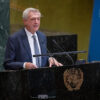
International Community, Civil Society Urge Minority Rights and Accountability Amid Ongoing Violence Against Rohingyas in Myanmar
On September 30, the United Nations (UN) convened a high-level meeting on the situation of Rohingya Muslims and other minorities in Myanmar shortly following the end of the 80th session of the General Assembly (UNGA80). The conference was an opportunity to draw global attention once more to the Rohingya refugee situation with dialogue from UN officials, world representatives and civil society organizations.
UN Conference Recommits to Solidarity With Rohingyas, People of Myanmar
The international community convened for a high-level meeting at UN Headquarters, this time to mobilize political support for the ongoing issue of the persecution of the Rohingya Muslims and other minorities in Myanmar.
‘The North Korean Human Rights Movement Is Facing Its Greatest Crisis since It Began in the 1990s’
CIVICUS discusses North Korea’s closed civic space with Hanna Song, Executive Director of the Database Center for North Korean Human Rights (NKDB). Based in Seoul, South Korea, NKDB documents systematic human rights violations in North Korea through testimonies from escapees, and has built the world’s largest private database of such abuses.

Climate Finance Will Be the First Casualty of Rising Militarism: Ali T. Sheikh Warns Ahead of COP30
As the COP30 approaches amid darkening geopolitical clouds—marked by rising rightwing extremism, corporate backtracking and rising militarism—Ali T. Sheikh, Pakistan’s leading expert on sustainable development and climate change, views the world’s largest diplomatic gathering with a mix of apprehension and caution.
Ending Child Marriage Needs a Culture of Accountability, Respect for the Rule of Law
Global leaders came together at the sidelines of this year’s UN General Assembly to commit to ending child marriage, calling on all world leaders to make concerted efforts to ensure accountability and enforce the laws that prohibit it.
Food Insecurity Rising in Africa, Falling in Latin America and Caribbean
The 2025 State of Food Security and Nutrition in the World (SOFI) report shows a modest global decline in hunger since 2022, with 673 million people facing hunger in 2024, indicating a decrease of 22 million compared to 2022. While progress is seen in Asia and South America, hunger is rising in Africa and Western Asia.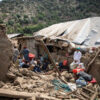
Afghan Women Die Needlessly After Natural Disasters
In normal times, women in Afghanistan face dire living conditions relative to their counterparts in other parts of the world, given the iron grip of Taliban repression. However, the powerful 6.0-magnitude earthquake that struck the eastern Afghan provinces of Kunar, Nangarhar, and Laghman at the end of August was out of the ordinary.
From Fishers to Forest Keepers: Women and Communities Reviving India’s Mangroves
As the climate crisis intensifies, long-term adaptation strategies have become urgent. Among the most effective nature-based solutions are mangroves—resilient coastal forests that protect communities, preserve biodiversity, and capture carbon.
Prospects for the Upcoming High-Level Conference on Rohingya
Last month marked eight years since hundreds of thousands of Rohingya were forcibly displaced from Myanmar’s Rakhine State to Bangladesh by the Myanmar military.
Nepal’s Gen Z protest: How Fake News Tried to Rewrite a Revolution
Claims that Ravi Laxmi Chitrakar, wife of former Nepali Prime Minister Jhala Nath Khanal, was burned alive in her home—fake. The reports of an angry mob destroying and vandalizing the Pashupatinath Temple—fake. Allegations that protesters were demanding a Hindu nation in Nepal—fake. As Kathmandu and other Nepali cities erupted in unrest last week, the fire of fake news spread just as fiercely across Nepal and into neighboring India and the rest of the world.
‘The Authoritarian Regime Uses Collective Punishment to Discourage Any Challenge to Its Authority’
CIVICUS discusses the deaths of Indigenous activists in custody in Tajikistan with Khursand Khurramov, an independent journalist and political analyst.

Why the Awaza Declaration Could Rewrite the Future for the World’s Landlocked Nations
The theater of diplomacy can be more revealing than the speeches. Under a scorching Caspian sun in Awaza, two marines lowered their flags with the precision of a ballet. The green silk of Turkmenistan, folded into a neat bundle before the UN’s blue-and-gold standard, fluttered briefly and vanished into waiting hands.
Closing the US$1.5 trillion Gap: How FDI can Help Achieve SDGs in Asia & the Pacific
Over the past two decades, foreign direct investment (FDI) has been the single largest and most stable source of external development capital in Asia and the Pacific (see Figure).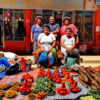
South-South Cooperation: Innovation and Solidarity for a Better Tomorrow
As the United Nations commemorated the UN Day for South-South Cooperation last Friday, we are reminded that solidarity among the countries of the Global South is not just a matter of history or principle, but a proven pathway to building a fairer, more sustainable future.
Afghanistan’s Overlapping Crises Deepen Following 6.0 Magnitude Earthquake
Over the past week, Afghanistan’s humanitarian situation has deteriorated significantly following the August 31 earthquake, which measured over 6.0 in magnitude and caused an immense loss of life and widespread destruction of critical infrastructure. Compounded by the nation’s fragile economy, severe shortages of essential resources, and persistent access challenges, humanitarian organizations have found it increasingly difficult to reach vulnerable communities—especially women and children.
Nepal Faces Political Crisis after Deadly Gen-Z Protests
Nepal entered into a new era of constitutional and political crisis after deadly protests by the deeply frustrated young generation (Gen-Z). Prime Minister KP Sharma Oli resigned on Tuesday after protests grew out of control.
Do We Need a Pacific Peace Index?
Globally, there is a 0.36% deterioration in average levels of peacefulness, as more countries are increasing their levels of militarisation against the backdrop of rising geopolitical tensions, increasing conflict, and rising economic uncertainty.

Kerala’s Human-Elephant ‘Conflict’: Time To Understand a Complex Relationship
In the early part of this year, two deaths in Kerala garnered major media attention. A farmer in Wayanad and a female plantation worker in Idukki were killed in two separate events, within a matter of a few days, by wild elephants. Arikomban, another wild elephant, has become a media favorite recently due to his brushes with human settlements near his habitat. Named so because of his love for ari (rice), the elephant had been relocated from Kerala to Tamil Nadu in 2023 following constant protests from people who also claimed him to be ‘life-threatening.’ Kerala's news outlets widely covered Arikomban's relocation.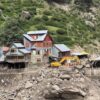
‘Tell Us When the Next Storm Will Come’—Human Stories From Kashmir’s Deadliest August
The relentless rain that battered the mountains and valleys of Jammu and Kashmir this August shattered lives and records.« Previous Page — Next Page »





The Week with IPS

NEXT STOP - SDGs
Tracking global progress towards a sustainable world
Tracking global progress towards a sustainable world
