Languages
Thursday, November 26, 2026



News and Views from the Global South
Asia-Pacific

SRI LANKA: Help For Embattled Civilians Missing
An estimated 230,000 people are in dire need of assistance in the northern areas of Sri Lanka that remain under the control of Tamil separatist rebels, according to international humanitarian agencies.
PAKISTAN: ‘Militants Are Not Taliban, We Are’
The world knows the Taliban as armed fighters who have unleashed a wave of violence in Afghanistan and neighbouring Pakistan including devastating suicide bomb attacks, the most recent on the luxurious Marriot Hotel in high-security Islamabad last week.
IRAN: Ahmadinejad Open to U.S. Talks, Denounces Threats
At a press conference following his speech to the U.N. General Assembly Tuesday, Iranian President Mahmoud Ahmadinejad said he would welcome discussions with the U.S. presidential candidates, but added that "the condition is that our meeting should be open so that all media know what happens."POLITICS-JAPAN: Aso Has Dragons to Slay Before Calling Polls
Japan's new Prime Minister Taro Aso has little more than personal charisma to carry out his main task of leading the venerable Liberal Democratic Party (LDP) into an election that will sorely test the conservative party's 50-year grip on power.RIGHTS-NEPAL: ‘Inter-Country Child Adoption Policy Weak’
When reports in the Nepali and international media exposed a market in orphans, and the taking away from this country of children without the consent of biological parents, the government responded with a ban on inter-country adoptions.ASIA: Calamities, Climate Change – Reprieve for Mangroves
Lack of access to military-ruled Burma has not stopped a global environmental body from setting its sights on the country’s Irrawaddy Delta, which was devastated by a powerful cyclone in early May. Rehabilitating mangroves is the draw.
KENYA: Tea Market Tumultuous as Trading Partners Change
Tea used to be Kenya’s major cash crop earner but ever since the world’s largest consumer of tea, Pakistan, entered into a free trade agreement with seven of its Asian neighbours, the local tea industry has been haemorrhaging.POLITICS-PAKISTAN: No Military Solutions to Suicide Bombings
Political analysts have long been warning the United States and Pakistan governments that there are no easy military solutions in prosecuting the global ‘war on terror’ which may now have become inextricable from ‘home-grown’ militancy.AUSTRALIA: Wary of Asia Pacific’s Modernising Militaries
Australian Prime Minister Kevin Rudd has warned that Australia needs to prepare for "the increased militarisation" of the Asia-Pacific.
IRAN: Activists Spotlight Rights Abuses on Eve of U.N. Meet
A day before Iranian President Mahmoud Ahmadinejad addresses world leaders at the United Nations, human rights activists criticised his government's record and urged the international community to hold the president accountable during his visit to New York.DEVELOPMENT: Poverty Reduction Claims Under Scrutiny
The World Bank's recent estimates on global poverty, particularly in relation to China, are being challenged by an international non-governmental organisation (NGO) which monitors poverty eradication and gender equality.
AFGHANISTAN: Severe Hunger Can Help Taliban
If 11-year old Zayainullah doesn't bring home enough money today, he says he will get beaten. "We don't have food and my aunt threatened me, saying I have to bring back enough money to buy bread," he says.RIGHTS-BURMA: Monks Jailed, Disrobed For Challenging Junta
In military-ruled Burma the jails are filling up with Buddhist monks. Currently, 136 members of the clergy are behind bars, most of them in the notorious Insein Prison in Rangoon, the former capital.JAPAN: Tainted Rice Scam Shakes Consumer Confidence
Consumer confidence in quality-conscious Japan has been badly shaken by a scandal over contaminated rice that was discovered to have been imported and distributed to restaurants, hospitals, schools and stores.
POLITICS-INDIA: Polls Uncertain With Jammu Divided From Kashmir
Plans by the central government to conduct elections in Jammu and Kashmir, due originally in November, remain uncertain because of the serious regional and religious differences that have cropped up between the two main regions that make up the composite territory.
SRI LANKA: Supplies to Tamil Rebel Areas Firmly in Gov't Hands
With the United Nations and other international humanitarian agencies vacating the Tamil rebel stronghold of Kilinochchi, now under army siege, the onus of maintaining essential supplies to tens of thousands of civilians in the area called the Vanni has fallen on the government.INDIA/AUSTRALIA: Sticking to Uranium Export Ban – For Now
The Rudd government has reiterated its refusal to sell uranium to countries which have not signed up to the Nuclear non-Proliferation Treaty (NPT), such as India, despite supporting the decision by the Nuclear Suppliers Group (NSG) to back the United States-India nuclear cooperation agreement.POLITICS-MALAYSIA: Showdown Imminent
Malaysian politics is heading for a showdown with opposition leader Anwar Ibrahim demanding that the government of Prime Minister Abdullah Badawi subject itself to a confidence vote in parliament by Sep.23.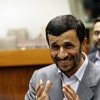
POLITICS: Iranians Hope for Temperate President at the U.N.
When Iran's President Mahmoud Ahmadinejad attends the 63rd session of the General Assembly next week in New York, many Iranian academics and political activists hope he will avoid the kinds of controversial statements that have hurt Iran's international image since he was elected to the office in 2005.POLITICS-THAILAND: New PM Faces Baptism of Fire
Thailand’s new prime minister - the second this year - begins his term in an unprecedented climate of hostility against elected parliaments.RIGHTS-NEPAL: Return to Peace Threatened by Vigilante Groups
Prime Minister Pushpa Kamal Dahal’s defence in parliament of continued vigilante action by the Young Communist League (YCL), the youth wing of his Communist Party of Nepal - Maoist (CPN-M), has disappointed rights activists as detrimental for a quick return to the rule of law.« Previous Page — Next Page »


The Week with IPS

NEXT STOP - SDGs
Tracking global progress towards a sustainable world
