Languages
Thursday, October 15, 2026



News and Views from the Global South
Biodiversity

How Encroachments, Willows and Silt Ate up Half of Kashmir’s Own Sea
Warming himself with a kangri (a firepot) kept under his pheran (a long winter cloak worn by Kashmiris), 66-year-old Mohammad Subhan Dar sat chatting with a bunch of his fellow villagers on a January afternoon on the edge of the road overlooking Wular Lake in Saderkote-Bandipora, northern India.
Coping with Australia’s Surfeit of Natural Disasters & Lessons to be Learned
I love visiting Canberra in the summer. The air is clean. The water in lake Burley Griffin is crystal clear and the "go boats" merrily bob up and down with their wine sipping occupants while black swans frolic in peace.
India’s Unique Water Purification Wetland Could Soon Become Extinct
Ramkumar Mondal’s farm is awash in a brilliant yellow mustard bloom. A flock of grey cranes peck for food amidst the shallow watergrass. But Mondal’s fishpond digs in there like a do-or-die last sentinel as nearby high-rise buildings, a symbol of development and encroachment, menacingly tower over the fishpond, permanently blocking the eastern sun so essential for the pondwater to convert sewage into fish-feed.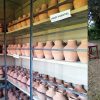
‘Organic is the Future’
Vandana Shiva, a pioneer of organic farming in India, is incensed by the 2019 draft law to compulsorily register all seeds used by farmers. On a wintry afternoon, at her farm Navdanya in the Himalayan foothills, the noted ecologist spoke on the future of the organic farming movement in India. Excerpts: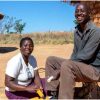
Biofortified Crops Improve Farmers’ Livelihoods in Zimbabwe
Steven Seremwe, who is 57 years old, was retrenched from his job as an administrator at Lake Shore Missions in 2012. He decided to focus on farming, and he started growing various crops—white maize, sugar beans, and sweet potatoes, among others—for consumption and sale.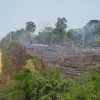
Nature Losses Threaten Emerging Economies
More than half of worldwide GDP is moderately or highly dependent on nature, putting biodiversity loss among the top five risks to the global economy, according to a report presented at the World Economic Forum (WEF) in Davos, Switzerland.
Blue Innovation in the Commonwealth
With 95 per cent of the ocean still unexplored by humans, we are only just beginning to understand its profound influence on life on earth, including its effect on global climate and ecosystems.
Climate Change and Financial Risk
Climate change is already a reality. Ever-more-ferocious cyclones and extended droughts lead to the destruction of infrastructure and the disruption of livelihoods and contribute to mass migration.
Bushfires Hasten the Death Knell of many Australian Native Animals and Plants
The chatter of cockatoos and lorikeets has given way to an eerie silence in smoke enveloped charred landscapes across south-eastern Australia. The unrelenting bushfires have driven many native animal and plant species to the brink of extinction and made several fauna more vulnerable with vast swathes of their habitat incinerated.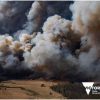
Australia’s Wildfires Part of a Vicious Cycle of Food & Fire
“Unprecedented.” “Hell on Earth.” “Catastrophic.” In Australia, these terms are being used to describe 17.9 million acres of burned land so far. While fires of this magnitude are certainly unprecedented, they’re far from unexpected.
Australia’s Bushfires Bring Mounting Pressure to Reduce Greenhouse Gases
As nature's fury wreaked havoc across Australia, reducing to ashes all that came in its way - people, flora, fauna, picturesque historic towns and villages once popular with local and overseas tourists – it was unlike anything the country had witnessed before. The staggering scale and intensity of the devastation could best be summed up as apocalyptic.
2019 – A Devastating Year in Review
By any measure this has been a devastating year: fires across the Amazon, the Arctic and beyond; floods and drought in Africa; rising temperatures, carbon emissions and sea levels; accelerating loss of species, and mass forced migrations of people.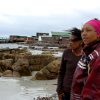
Sustainable Fisheries are Key in Addressing Food Security — and Women can Play an Important Role
Experts gathered in November to discuss the importance of sustainable fisheries and its role in eradicating world hunger at a fisheries symposium in Rome.
Indigenous Knowledge, a Lesson for a Sustainable Food Future
Local knowledge systems rooted in traditional practices and culture passed down generations provide sustainable solutions to food and nutritional insecurity on the back of climate change, a conference heard this week.
World’s Crisis-Stricken Oceans Doomed to Destruction Without a Global Treaty
The greatest single climate-induced threat facing the world’s 44 small island developing states (SIDS) is rising sea waters which could obliterate some of the low-lying states, including Maldives, Marshall Islands, Kiribati, Nauru, Solomon Islands, Tuvalu, Palau and Micronesia.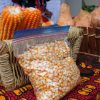
Biofortified Food, a Business Boost for Smallholder Farmers
A start-up in Zimbabwe is producing high nutrition foods using biofortified crops in a bid to fight micronutrient deficiency. Vitamin A deficiency (VAD) leads to night blindness, illness and death from childhood infections. In Zimbabwe, 36 percent of children under five years of age suffer from Vitamin A deficiency, according to the World Health Organisation (WHO).
Water Is Worth More than Milk in Extrema, Brazil
"They called me crazy" for fencing in the area where the cows went to drink water, said Elias Cardoso, on his 67-hectare farm in Extrema, a municipality 110 km from São Paulo, Brazil's largest metropolis.
Climate Change and Loss of Species: Our Greatest Challenges
Mottled and reddish, the Lake Oku puddle frog has made its tragic debut on the Red List, a rapidly expanding roll call of threatened species. It was once abundant in the Kilum-Ijim rainforest of Cameroon but has not been seen since 2010 and is now listed as critically endangered and possibly extinct.
The Ocean in Us: Ocean Action for Climate Ambition
In just under a month, countries around the world will gather for UNFCCC COP 25. The hashtag for this year’s “Blue COP” is yet another reminder to us all that it is “Time For Action”. We can no longer afford to wait as the effects of the climate crisis become ever more present. Vulnerable populations, whether from Small Island States, the rural heartland or the world’s megacities, are becoming ever more vulnerable, and the wellbeing of people and planet continues to face its most existential threat.
Mother Earth’s Café Dares Climate Crises in India
The sun has barely risen when Phlida Kharshala shakes her 8-year-old grandson awake. He hoists an empty cone-shaped bamboo basket on his back, sets the woven strap flat across his forehead and off they go into the wilderness.
Bangladesh’s Climate Change Victims Safeguard the Sundarbans’ Endangered Dolphins
Israfil Boyati lives along the shoreline of the Bay of Bengal. In the past he used to catch fish in the canals and rivers of Bangladesh’s Sundarbans mangrove forest — one of the world’s largest and habitat to many endangered species, including the Bengal tigers and freshwater dolphins.« Previous Page — Next Page »





The world's diverse flora and fauna are facing urgent threats due to pollution, climate change, commercialization of nature and other forms of harmful human intervention. The widespread loss of biodiversity is worrying not simply because of the disappearance of exotic species which deserve saving, but because tampering with nature's equilibrium means that the loss of one form of life is a threat to another. IPS taps into its own diverse network of correspondents around the world to report on continuing and emerging dangers to nature's riches - and the struggle to protect them.

The Week with IPS

NEXT STOP - SDGs
Tracking global progress towards a sustainable world
Tracking global progress towards a sustainable world
