
Wednesday, October 21, 2026



News and Views from the Global South
Climate Change

The Human Cost of a Green Energy Transition Without Safeguards
The world is moving away from fossil fuels towards so-called “green” energies as a solution to the climate crisis, which has increased the demand for strategic minerals such as cobalt, copper and lithium.
Innovative Business Models, Critical for African Governments to Unlock Carbon Markets
With current efforts to boost Africa's carbon credit production by 2030, experts believe the commitments will require Governments to switch from a voluntary to a compliance market by generating renewable energy for a portion of national and regional electricity supplies.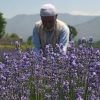
Wrecked by Climate Change, Farmers in Kashmir Shift to Lavender Cultivation
Mohammad Subhan Dar diligently tends to some bright purple plants on a four-acre farm in Bijbehara, a hamlet south of Kashmir’s capital, Srinagar. As you draw nearer, you’ll be mesmerized by the sight of sprawling lavender fields, where about 10 to 15 farmers, including Dar, prepare for a promising harvest.
Wanted: A New Local Oversight Structure to Achieve SDGS, Climate Action & Biodiversity Preservation
The links between Agenda 2030 and SDGs, including climate action and biodiversity preservation are clear and straightforward. Yet, leveraging them, and bringing them to together in a unified framework, remains extremely challenging.
Peru Faces Challenge of Climate Change-Driven Internal Migration
Nearly 700,000 people have migrated internally in Peru due to the effects of climate change. This mass displacement is a clear problem in this South American country, one of the most vulnerable to the global climate crisis due to its biodiversity, geography and 28 different types of climates.
Zimbabwe’s Food Security Ambitions in El Niño’s Crosshairs
Zimbabwe is riding a wave of food security assurances after what officials said was last year’s bumper grain harvest, but recent El Niño forecasts could test the country’s agriculture production ambitions.
Pemex Exploits Fossil Fuels with Money from International Banks
At the entrance to the municipality of Paraíso, in the southeastern Mexican state of Tabasco, there is a traffic circle that displays three things that are emblematic of the area: crabs, pelicans and mangroves.
Why Floods ‘Beyond Our Imagination’ Hit Nepalese Himalayan Town
When a flash flood descended on a Himalayan community in the Mustang district in Nepal, it shocked the residents, climate change experts, and disaster risk management. Anil Pokharel described it as "beyond our imagination." He has experienced many disasters as the Chief Executive at the National Disaster Risk Reduction and Management Authority for the Government of Nepal.
Alarm Bells are Ringing at Halfway Point of the 2030 Agenda
The world is now half way to 2030 but the ambitious goals agreed in 2015 including the Paris Agreement and the Sustainable Development Goals (SDGs) are under threat, action is urgently needed.
Beyond Words: The Urgent Call for the US to Address Global Inequality Through Climate Action
With its global representation, one would expect the UN General Assembly to touch on many diverse issues. And it does. But talks have repeatedly come back to one unifying call: if we want to save ourselves, our planet, and our future, we must act now.
UN Meets on Effective Responses to Loss and Damage Ahead of COP28
African countries are increasingly in the eye of deadly climate-induced disasters. Recent devastating extreme events include intense shattering earthquakes in Morocco, followed shortly by catastrophic floods in Libya this September that left 11,300 people dead, according to Libya’s Red Crescent.
The Ocean Offers Rich Solutions for Climate Change
For the people of Seychelles, the ocean is more than just a source of livelihood. It is also a way of life. About 80% of our homes and infrastructure are located along the coast and those homes and infrastructures are impacted by the ocean in various ways.
Why Root Crops Are the Future of Food Security in Africa
Despite the dominance of the “Big Three” cereal crops and a steady rise in meat consumption, an overlooked food sector is projected to become ever more central to Africa’s food security and rural economic growth between now and 2050.
With Hope and Courage, They Inspire Us
“My dream is to become a teacher,” says 13-year-old Alia. A small glimmer of hope can be traced in her beautiful, almond-shaped, brown eyes. Together with her mother, siblings and aunt, Alia has fled the conflict in Sudan to Chad. With extraordinary courage to survive, she made the harrowing journey at night across checkpoints, threatened by guns and militia roaming around in the dark. While her eyes are still hollow from the flight, I see that sparkle for a split second: she still has hope.
We Must Act to Bridge the Gap Between Words and Deeds
In today's increasingly interconnected world, marked by grave economic, environmental, and security crises that transcend global boundaries, it's abundantly clear that our interdependence is an undeniable reality.
Treated Wastewater Is a Growing Source of Irrigation in Chile’s Arid North
The reuse of treated wastewater in vulnerable rural areas of Chile's arid north is emerging as a new resource for the inhabitants of this long, narrow South American country.
Youth Rally for Peace Through Climate Justice at the UN
“What do we want? Climate justice! When do we want it? Now!” youth chanted in an unusually lively conference at the United Nations Headquarters.
The Vast Potential of the Human Spirit
With hope and courage, we must rise to the challenges before us. We must rise to the challenge of a world set afire by climate change, forced displacement, armed conflicts and human rights abuses. We must rise to the challenge of girls being denied their right to an education in Afghanistan. We must rise to the challenge of a global refugee crisis that is disrupting development gains the world over. We must rise to the challenge of brutal and unconscionable wars in places like Sudan and Ukraine that are putting millions of children at risk every day.
UN Report Offers Solutions for Decarbonization of Buildings, Construction Sector
The building sector may be overdue for a significant overhaul of the processes in which infrastructure is built to be more environmentally conscious and reduce carbon emissions, a new UN report reveals.
The Africa Climate Summit: Anti-Colonial Rhetoric Meets Green Colonialism
In the wake of the recent Africa Climate Summit, which convened in Nairobi from September 4-6, 2023, the world’s attention was drawn to the pressing challenges facing the African continent as it grapples with the devastating effects of climate change.
What Happens in the Arctic Does Not Stay in the Arctic
While climate change is relentlessly progressing, threatening life on earth, world leaders continue to meet while planning for a future where this immense menace to human existence remains a minor item on the agenda.« Previous Page — Next Page »





As unsustainable human consumption and production systems are driving changes in average temperatures and weather patterns, "abnormal" is increasingly becoming the norm. So far, a lack of financing has been standing in the way of a comprehensive global plan for climate adaptation, and a global financial crisis has contributed to an increasing reliance on public-private partnerships. Our Climate Change page provides you with the latest news about international and local efforts to address what's frequently been called "the challenge of our time", the forces behind the climate change and the impact it has on the world's most vulnerable populations. Along the way, we bring you stories on growing citizen awareness, new scientific data, and emerging climate policies towards sustainable development.

The Week with IPS

Tracking global progress towards a sustainable world

