Languages
Tuesday, September 15, 2026



News and Views from the Global South
Conservation

Pacific States, Territories Gift the World its ‘Largest Conservation Project’
While the island states in the Pacific may be modest, the ocean that surrounds them represents a huge oceanic state—an area equivalent to the entire European Continent.
UN Pushes for 10,000 Ships To Track Ocean Changes
A groundbreaking initiative to revolutionize global ocean observation is being launched this week at the UN Ocean Conference side event, aiming to enlist 10,000 commercial ships to collect and transmit vital ocean and weather data by 2035.
Oceans at Risk: Report Warns Global Fossil Fuel Expansion Threatens Marine Biodiversity
A newly released report by Earth Insight in collaboration with 16 environmental organizations has sounded a global alarm on the unchecked expansion of offshore oil and gas projects into some of the most biologically rich and ecologically sensitive marine environments on the planet.
Girls in Kenya Are Repurposing the Invasive Mathenge Tree Into Furniture
Char Tito is hammering nails into wood at Kakuma Arid Zone Secondary School in Turkana County, northern Kenya. The 16-year-old is making a traditional chair under the scorching sun outside one of the classroom blocks.
Why we Must Put Ocean-Positive Solutions at the Heart of Global Development
The ocean is far more than a vast expanse of water; it is a cornerstone of life and a critical driver of sustainable development. The intricate relationship between human development and the ocean underscores why ocean governance and sustainability are pivotal to global progress. Its significance becomes particularly evident in Small Island Developing States (SIDS), where the ocean is not just a resource but an intrinsic part of identity and survival.
In a Changing World, Protecting Nature is Protecting Our Future
In a world marked by armed conflict, threats to democracy, technological disruptions, and geopolitical tensions, many people are asking: Why should we prioritize environmental crises when there are other, more visible or perceived as more urgent challenges?
Life Below Water Goes Deep: Our Planet’s Greatest Untold Story
As David Attenborough reflects in his new documentary Ocean, “After living for nearly 100 years on this planet, I now understand the most important place on Earth is not on land, but at sea". We wholeheartedly agree - and urge governments convening at the 3rd United Nations Ocean Conference (UNOC3) in France next month to remember that life below water goes deep.
Glaciers More Sensitive to Global Warming, Now in Extreme Danger—Study
Almost 40 percent of glaciers that exist now are already in danger of melting even if global temperature stabilized at present-day conditions, a study says. An international study published in the journal Science finds that glaciers are even more sensitive to global warming than previously estimated.
Can These Prehistoric Sea Creatures Survive Climate Change?
In November, tens of thousands of male olive ridley sea turtles (Lepidochelys olivacea) start congregating on just five kilometers of nearshore in Odisha in eastern India. They wait for the females of the species to arrive. The survival of these prehistoric sea species has largely depended on suitable pairing and mating. However, research findings from around the world indicate that, in the long term, there may be a limited number of males at these mating sites compared to an overwhelming number of females.
Kenya Pilots AI System to Protect Black Rhino Calves in Aberdare National Park
Conservationists in Kenya’s Aberdare National Park have piloted an artificial intelligence (AI) system designed to detect and deter hyenas—as part of an effort to protect black rhino calves ahead of their reintroduction to the zone.
Islands are Solutions: the Case for Island-Ocean Coalitions
As the world confronts escalating climate impacts, biodiversity loss, and ocean degradation, islands stand as critical test cases—not just as sites of vulnerability, but as living laboratories of resilience, restoration, and innovation. Too often, they are framed as victims of global circumstances, awaiting salvation from external forces.
Economic Growth is the Wrong Metric for Our Time
As the United States lurches toward isolationism and authoritarianism, its political problems are now bleeding into pocketbook anxieties that Trump's policies will torpedo economic growth, both domestically and globally.
In Harmony with Nature: A Dryland Perspective on Development and Biodiversity
Nowhere is this more apparent than in the world’s drylands. Covering 41% of the Earth’s land surface, these regions are home to over two billion people and support 50% of the world’s livestock and 44% of its cultivated systems (UNCCD). Far from being marginal, drylands are central to global food security, biodiversity, and climate resilience.
UN Ocean Conference Must Inspire Global Ambition
The United Nations Ocean Conference (UNOC) takes place every three years and in just a few weeks, the international community will gather in Nice, France, at a time when the International Science Council has called for the world to address the new reality of a disrupted Earth system.
Seafood Without Transparency is a Recipe for Disaster
Seafood is a staple in my house – fish tacos, paella, sushi. But no matter how good it tastes, I can’t help but wonder: was my fish caught responsibly? Or did something go horribly wrong before it ever reached my plate?
Transitioning to a Circular Economy: The Future We Cannot Afford to Delay
From environmental degradation to biodiversity loss and mounting waste, we are facing the dire consequences of a reckless economic model that extracts, consumes, and discards. But there is an urgent alternative—one that is not just possible, but essential.
Korea’s Troubled Waters: Traditional Women Divers Protecting an Ocean in Crisis
Ahead of the 10th Our Ocean Conference, with the theme "Our Ocean, Our Action," comes a global call to protect the world's oceans.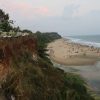
Rampant Tourism, Climate Change Threatens Varkala’s Unique Geodiversity
From the top of the cliff, the beach down below appears like a box of sand, with people scattered on it like tiny ants. This is Varkala, arguably the most sought-after coastal tourism spot in Kerala, India, right now. The Varkala cliff—spanning across Edava Cliff, North Cliff, and South Cliff—is 7.5 km long and has a maximum height of 40 m. Religious rituals take place at the part of Papanasam beach that divides the North and South Cliffs.
Chel Snakehead: A Fish That Time Forgot, Rediscovered
The Chel Snakehead fish, thought to be extinct, has made a dramatic comeback to the eastern Himalayan ecosystem after more than 85 years of absence near its source river in India.
Four Rare Snow Leopards Spotted Together on Pakistan’s Northern Peaks
In a remarkable conservation achievement, four rare and elusive snow leopards have been spotted together in the rugged peaks of northern Pakistan, highlighting the success of the ongoing global efforts aimed at protecting this critically endangered species and preserving its fragile habitat.
The ‘Plastic Man’: Turning Trash into Treasure
In a quiet corner of Medina Gounass, on the outskirts of Dakar, Senegal, one man has taken it upon himself to breathe new life into a place many had abandoned.« Previous Page — Next Page »


The Week with IPS

NEXT STOP - SDGs
Tracking global progress towards a sustainable world
Tracking global progress towards a sustainable world
