Languages
Friday, September 25, 2026



News and Views from the Global South
Conservation

Leather Cooperative Stops Unemployment in Northeast Brazil
The small community of Ribeira stands out in the Northeast, the poorest region of Brazil. There is no unemployment here. One in five inhabitants make a living directly or indirectly from the Arteza Cooperative of Tanners and Leather Artisans.
Arab Region Leaders, Experts Gather to Find Solutions to Water Scarcity, Sustainable Development
The Arab region is among the most water-scarce areas globally, as nearly 392 million people live in countries facing water scarcity or absolute water scarcity. So dire is the situation that, of the 22 Arab countries, 19 fall below the annual threshold for water scarcity in renewable resources, defined as 1,000 cubic meters per person.
As Forests Felled Wood Shortage Hits Villagers in Zimbabwe
Linet Makwera (28) has a baby strapped on her back as she totters barefoot, picking tiny pieces of wood on both sides of a dusty and narrow road, peering fearfully at people passing by along the road in Chimanimani’s Mutambara area in Gonzoma village located in Zimbabwe’s Manicaland Province, east of the country.
COP16 Delivers on Indigenous Peoples, Digital Sequencing, But Fails on Finance
The curtains fell on the 16th Conference of the Parties of UN Biodiversity (COP16) on Sunday without any formal closing. In a voice message, David Ainsworth, the Communications Director of the UNCBD, confirmed that the COP was suspended due to a lack of quorum in the plenary and would be resumed sometime later. However, before being suspended, the parties managed to adopt a historic decision to open the door for Indigenous Peoples (IPS) and local communities (LCs) to influence the global plan to halt the destruction of biodiversity.
Building Water Security for the Next Generation in the Pacific Territories
The Pacific Islands region is both the frontline of the wrath that climate change is lashing on the environment and human life and the drive for innovation and solutions to stem the destruction and strengthen island environments for the future. The survival of life, even nations, in the Pacific depends on it.
IPBES Calls for Holistic Solutions, Transformative Change in Tackling Biodiversity Loss
A holistic approach and transformative change of systems are needed to tackle biodiversity loss and to put the world on a sustainable path, an assessment by the Intergovernmental Science-Policy Platform on Biodiversity and Ecosystem Services (IPBES) has recommended. The world is facing an interconnected crisis of unprecedented biodiversity loss, food insecurity, and environmental degradation that can no longer be tackled through fragmented and piecemeal solutions, a forthcoming assessment by IPBES will show, calling for holistic approaches instead.
Cuba’s Coastal Dwellers Mitigate the Effects of Climate Change
Every time a hurricane clouds the skies over the city of Manzanillo, in the eastern Cuban province of Granma, the sea pounds the Litoral neighbourhood, forcing many of the 200 families who live there to evacuate inland because of flooding. When the weather is calm, the sea penetrates subtly and constantly, salinizing the water table and eroding the coast, affecting the foundations of houses and artesian wells.
Rejuvenating Tradition To Help Save Ancient Engineering Marvel—Dhamapur Lake
Dhamapur is a small village in Malvan taluka of west Sindhudurg district, housing the famous Dhamapur Lake. The Vijayanagar kings constructed an earthfill dam in 1530 A.D., creating a man-made lake surrounded by hills on three sides. Canals connect it to the Karli river, irrigating lush paddies and farms that grow the red Sorti and Walay rice varieties typical to the region.
Rural Survival: Guardians of Mother Earth Saving Mau, Revitalizing Native Lands
The Great Rift Valley is part of an intra-continental ridge system that runs through Kenya from north to south. A breathtaking, diverse mix of natural beauty that includes dramatic escarpments, highland mountains, cliffs and gorges, lakes and savannas. It is also home to one of Africa’s greatest wildlife reserves—the Maasai Mara National Reserve.
Explainer: COP16—What’s It About and What Does It Need to Achieve?
‘Peace with Nature’ is the theme for the 16th meeting of the Conference of the Parties (COP16) to the Convention on Biological Diversity (CBD), which will take place in Cali, Colombia, between October 21 and November 1, 2024.
Clean Energy Boosts Autonomy for Brazilian Women Farmers – VIDEO
 A community bakery, family production of fruit pulp, and the recovery of water springs are some of the initiatives of the Energy of Women of the Earth, organised since 2017 in the state of Goiás, in central-western Brazil.
The International Seabed Authority Must Change Course Amid Series of Scandals
The International Seabed Authority (ISA) has enormous importance as responsible for the fate of the largest, and most untouched, biome on the Planet. Ahead of elections for its leadership, governments cannot ignore that its current Secretary-General has become the subject of both media investigations and criticism from other parts of the UN.
Mayurbhanj Kai Chutney: From Forests to Global Food Tables
On a scorching May morning, Gajendra Madhei, a farmer from Mamudiya village, arrives at the local bazaar in Udula, a town in Odisha's Mayurbhanj district. He displays freshly caught red weaver ants, known locally as kai pimpudi, in the bustling tribal market. Thanks to the recent recognition of Mayurbhanj's Kai chutney, or red weaver ant chutney, with a Geographical Indication (GI) tag awarded in January, his business of selling the raw ants has seen a significant surge in profitability.
Small Island Nations Demand Urgent Global Action at SIDS4 Conference
“This year has been the hottest in history in practically every corner of the globe, foretelling severe impacts on our ecosystems and starkly underscoring the urgency of our predicament. We are gathered here not merely to reiterate our challenges, but to demand and enact solutions,” declared Antigua and Barbuda Prime Minister Gaston Brown at the opening of the Fourth International Conference on Small Island Developing States on May 27.
Biodiversity Meet Suggests New Guidelines on Synthetic Biology Amid Persisting Questions
After a week-long discussion by delegates from 196 countries, the 26th meeting of the Subsidiary Body of Scientific, Technical, and Technological Advisors (SBSTTA) of UN Biodiversity has concluded with a set of recommendations on several issues, including living modified organisms (LMOs) and synthetic biology. All nations must consider the recommendations, discuss them, and possibly adopt them at the Biodiversity COP in October. However, many questions remain unanswered and unclear.
Biodiversity Masterplan: Negotiations on Crucial Science, Technology for Implementation Underway
The triple planetary crises of climate change, biodiversity loss, pollution, and waste are escalating. At the current pace, the world is on track to lose one quarter of all plant and animal species by 2030, with one species already dying out every 10 minutes. One million species face extinction. Human activity has already altered three-quarters of the land on Earth and two-thirds of the ocean.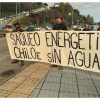
Rainy Chiloé, in Southern Chile, Faces Drinking Water Crisis
The drinking water supply in the southern island of Chiloé, one of Chile's rainiest areas, is threatened by damage to its peatlands, affected by sales of peat and by a series of electricity projects, especially wind farms.
We Should Aim to be at Peace with Nature, Says David Cooper of UN Convention on Biological Diversity
In a world faced with habitat loss and species extinction, climate change, and pollution, it’s crucial that countries develop their national action plans and create a society that lives in harmony with nature, says David Cooper, Acting Executive Secretary of the UN Convention on Biological Diversity (CBD), in an exclusive interview with IPS.
No Turning a Blind Eye to Protection of Dominican Republic’s Natural Resources, Says Environment Minister
In 2020, general elections were held in the Dominican Republic. This took place while the COVID pandemic was becoming an increasingly serious threat, causing severe social and economic disruption. The elections were two months late as a result of the initial chaos COVID caused. The governing Dominican Liberation Party’s 16-year rule ended after the Modern Revolutionary Party’s candidate, Luis Abinader, received a majority of the votes. Elections are now scheduled for May 19 this year and IPS took the opportunity to ask Miguel Ceara Hatton, the country’s Minister of Environment and Natural Resources, how he perceived the past four years' efforts to mitigate a global crisis that now threatens us all, namely climate change and environmental degradation.
Can Preserving Goa’s Khazans Address Climate Threats?
Growing up in a khazan ecosystem, the traditional agricultural practice followed in the south-western Indian state of Goa, Elsa Fernandes would love sitting in a koddo, a woven bamboo structure for storing paddy. Her family members would pour paddy around her and with the growing pile, she would rise to the top and then jump down with joy.
Conservation Efforts by Ethnic Communities in Bangladesh Bolster Water Security
Just a few years ago, Sudarshana Chakma (35), a resident of the remote Digholchari Debarmatha village under Bilaichari upazila in the Rangamati Hill District, had to traverse a long hilly path to fetch water for her household because there were no local water sources. "Unchecked deforestation and degradation of village common forests (VCFs) led to the drying up of all-natural water sources in our village. We struggled to collect drinking and household water," Chakma explained to IPS.« Previous Page — Next Page »


The Week with IPS

NEXT STOP - SDGs
Tracking global progress towards a sustainable world
Tracking global progress towards a sustainable world
