Languages
Wednesday, November 11, 2026



News and Views from the Global South
Crime & Justice
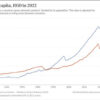
The Tale of Two Countries: Elite Stake and Development
Philippines was the most advanced Southeast Asian country with the highest per capita GDP until about the early 1960s. Its per capita GDP in purchasing power parity terms were about the same as South Korea’s and above that of Thailand in the early 1970s.The Nobel Laureate economist, Gunnar Myrdal, did not have much hope for “disease infested” Indonesia when in 1968 he published his famous Asian Drama: An Enquiry Into the Poverty of Nations. But Indonesia surged ahead since the late 1960s with growth acceleration exceeding that of Philippines; thus, eventually overtaking Philippines in GDP per capita in the mid-1980s. What factors separated Indonesia from Philippines?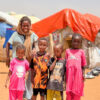
UN Raises Alarm Over A Sharp Rise in Human Rights Abuses and Cholera-Related Deaths in Sudan
Throughout 2026, the humanitarian crisis in Sudan has deteriorated significantly, prompting the United Nations (UN) to raise alarm over the escalation of human rights violations. Persistent clashes between the Sudanese Armed Forces (SAF) and the Rapid Support Forces (RSF) continue to cause mass civilian casualties, drive widespread displacement, and obstruct the delivery of life-saving aid. As a result, war-torn communities are being pushed further into catastrophe, struggling with severe shortages of essential basic services and the rapid spread of infectious disease.
Women Peacebuilders: The Missing Voices at the Negotiating Table
 For most individuals, the process of peace starts with the signing of a ceasefire or an agreement among politicians. However, those who live in regions experiencing violence understand that peace is made long before politicians meet at the negotiating table. Peace is created among communities by people who work everyday to ensure that no violence takes place, and that disputes are sorted out.

MEXICO: ‘Our Call for Justice for Our Missing Loved Ones Must Reach the World Just as World Cup Goals Do’
CIVICUS speaks about efforts to use the 2026 FIFA World Cup to highlight Mexico’s enforced disappearance crisis with Ana Enamorado, a Honduran national who continues to search for her missing son in Mexico, and founder of the Regional Network of Migrant Families.
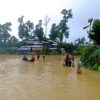
Where did the Billion Dollar Funding for Rohingya Refugees Go?
Landslides and flooding triggered by heavy monsoon rains swept through the world’s most densely populated concentration of refugee camps this week, killing at least 14 Rohingya refugees, most of them women and girls.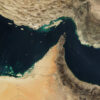
Renewed Attacks on Strait of Hormuz Deepen Global Supply Chain Concerns
Renewed attacks on commercial vessels in the Strait of Hormuz have intensified concerns over global energy markets along with supply chain disruptions, as the United Nations calls for an end to escalating hostilities within the Persian Gulf.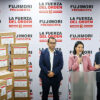
Peru’s Gridlock a Licence for Autocracy?
Right-wing candidate Keiko Fujimori has won Peru’s presidential runoff, narrowly defeating leftist Roberto Sánchez to become the country’s ninth president in a decade. She inherits a system so engineered for dysfunction that rather than making compromises, she may decide the concentration of power is her only means of survival. The constitution that created this trap was written by her father.
When an Ally Becomes a Liability
For a generation, no foreign leader bet more heavily on a single American president than Benjamin Netanyahu bet on Donald Trump. Trump moved the US embassy to Jerusalem, tore up the 2015 nuclear accord with Iran, recognized Israeli sovereignty over the Golan Heights, and in February 2026 joined Israel in the opening strikes of a war against Iran that Netanyahu had spent three decades urging Washington to wage.
MEXICO: ‘The World Cup Is an Opportunity to Raise Global Awareness of the Crisis of Enforced Disappearances’
CIVICUS discusses Mexico’s enforced disappearance crisis with Angélica Orozco, a member of Fuerzas Unidas por Nuestros Desaparecidos en Nuevo León (FUNDENL), a collective of relatives of disappeared people and people who support them. Since 2012, FUNDENL has been searching for the disappeared and documenting the human rights crisis.
Tunisia: Civil Society Criminalised
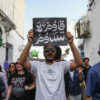
In May, Tunisian lawyer and journalist Sonia Dahmani was handed her second conviction of the year. Her latest sentence, a two-year jail term, came in reaction to her criticism of poor prison conditions. She previously received an 18-month sentence for calling out the government’s anti-migrant policies. Dahmani faces five more charges under a 2022 cybercrime law that criminalises the spreading of what it calls ‘false information’.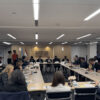
Building Peace Infrastructures: African Leaders Reflect on Peacebuilding
As the United Nations held its first-ever Peacebuilding Week (June 22-26), UN officials and developmental partners gathered at Egypt's Permanent Mission on June 23 to hold a dialogue on the main question that emerged from the 2025 Peacebuilding Architecture Review (PBAR): “How can global commitments to peacebuilding translate into tangible results on the ground?”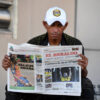
Colombia’s next President: A Reckoning for Peace, Climate and Human Rights
On 21 June Colombians made their choice. By the narrowest of margins, Abelardo de la Espriella, a far-right criminal lawyer who’s never held elected office, became president-elect. Climate activists, human rights defenders, Indigenous communities and peace advocates have the most to lose from the incoming government’s agenda.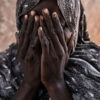
Beyond Commemoration: Why Conflict-Related Sexual Violence Demands Urgent Global Attention
Three years ago, during a mission to the Central African Republic from United Nations Headquarters, I met a woman whose story has remained with me ever since. She had survived rape during the conflict. Yet what stayed with her most was not only the violence she had suffered, but the stigma that followed it. When she returned home, her family refused to take her back. In a society where survivors of sexual violence are too often burdened with shame that rightfully belongs to perpetrators, she found herself isolated and struggling to rebuild her life. In that moment, it became painfully clear that for survivors, the violence does not end when the assault ends, it continues through stigma, exclusion, and the resulting silence for most.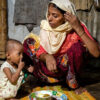
Dwindling Humanitarian Aid Devastates the Rohingyas in the World’s Largest Refugee Camp
Nearly nine years after the violent persecution of the Rohingya minority population in Myanmar and the following mass exodus of refugees, over 1.2 million Rohingya currently reside in neighbouring Bangladesh, where they face immense challenges. With the United Nations (UN) recording significant shortfalls in global humanitarian funding, alongside Bangladesh’s diminishing ability to support these populations, experts warn of a deepening humanitarian crisis.
In 2025, Government Forces were the Greatest Perpetrators of Violence Against Children in Armed Conflicts
A record number of children were subject to grave violations by parties to armed conflicts, the highest since the UN mandate for children and armed conflict (CAAC) was established in 1996.
Hong Kong: No Safety in Exile
When performance artist Sammu Chen tried to tie a red thread to a streetpost, plainclothes police stopped him before he could finish. Chen has twice been detained for his symbolic acts of commemoration of the 4 June 1989 Tiananmen Square Massacre, when Chinese authorities killed hundreds, perhaps thousands, to crush democracy protests.
Erdoğan’s Race to Avoid Orbán’s Fate
When Hungary’s Prime Minister Viktor Orbán lost by a landslide to a unified opposition in April, Turkey’s President Recep Tayyip Erdoğan was watching. The lesson he drew was not that he should be more moderate; it was that he needed to crack down harder. He had already arrested Istanbul Mayor Ekrem İmamoğlu, the opposition Republican People’s Party (CHP)’s leading presidential contender, in March 2025. After Orbán’s defeat, he has accelerated his campaign to fracture the opposition and rewrite the rules before the next election in 2028.
The World Cup of Human Rights
This planet’s biggest sporting event—the FIFA Men’s World Cup—will soon kick off. Millions of people around the world will sit up, bleary eyed, watching matches at unreasonable hours and inventing feeble excuses for why we won’t be at work in the morning. More than one billion are expected to watch the finale on TV in mid-July. That’s a bigger audience than any Olympic sporting event and more than the number of people who have viewed Squid Game on Netflix.
UN Urgently Calls for Increased Aid in Yemen Following IPC Warnings of Food Insecurity
In Yemen, increasing funding constraints on humanitarian operations have put millions of civilians in dire need of life-saving assistance amid overlapping crises. Acute food insecurity is a persistent issue, as recent reports from the Integrated Food Security Phase Classification (IPC) give a stark warning of conditions without urgent intervention.
Violence, Climate Shocks, and Hunger Push The Sahel To The Brink of Collapse
Over the past few years, the humanitarian crisis in Africa’s Sahel region has expanded considerably, largely driven by a surge of violence—particularly in the Central Sahel. Although the crisis has been described by the United Nations (UN) as having “largely faded from the headlines” since its wake in 2012, millions of people across the region are in dire need of humanitarian assistance as civilian displacement, climate shocks, and widespread hunger rapidly spill across borders.
Trump Administration Weaponises Sanctions Against Human Rights
For a few days in May, Francesca Albanese could live more easily. On 13 May, a US federal judge ruled that sanctions the Trump administration imposed on her violated her right to free expression. The government was forced to remove the UN Special Rapporteur on the Occupied Palestinian Territories from its sanctions list. But the reprieve lasted barely a week. On 27 May, after an appeals court suspended the ruling, the US Treasury restored sanctions.« Previous Page — Next Page »





Issues of crime and justice are as pertinent to development as they have ever been. The struggle for abolition of the death penalty is not over, and penal reform is desperately needed in many countries around the world. From violence to religious persecution, white-collar crime to police brutality, we keep you updated with reports from around the world. IPS correspondents focus on the causes of crime, attempts to prevent it, and the process of bringing those who commit crimes to justice. We also cover the campaign against capital punishment, and for legal and prison reforms that would give prisoners the right to life, and also to justice and decency.

The Week with IPS

NEXT STOP - SDGs
Tracking global progress towards a sustainable world
Tracking global progress towards a sustainable world
