Languages
Saturday, September 5, 2026



News and Views from the Global South
Democracy

The UN Needs a Summit for the Present
The Summit of the Future has now ended, but the real and present world is still on fire. As the General Assembly, an annual ritual where dozens of heads of state descend on New York, kicks off, key questions about the role and future of the United Nations, a body that was created to maintain international peace and security almost 80 years ago, remain unanswered.
UN Charter: the Final Hurdle for Reform of the Security Council
When the "founding fathers" –regrettably, no "founding mothers"—created the United Nations 79 years ago, one of the biggest anomalies was bestowing the power of the veto to the five permanent members (P5) of the UN Security Council (UNSC): the US, UK, France, Russia and the Republic of China (later the People’s Republic of China).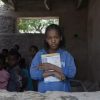
Cultivating a Culture of Peace
The longing for peace transcends time, geography and religion. Based on justice, human rights and universal values outlined in the UN Charter, a culture of peace brings us all together in our common agenda for humanity. We can only co-exist by aligning ourselves with such a world order.
Building Inclusive Smart Cities: Bridging the Gender Gap
When the Beijing Declaration was adopted in 1995, it called for the removal of systematic and structure barriers that prevent women and girls from enjoying their human rights across social, economic, political and environmental domains. Over the last decade, the proportion of population with access to the internet has increased from 36 per cent in in 2013 to 67 percent today.
International Day of Democracy

Democracy is as much a process as a goal. For the ideal of Democracy to be enjoyed by everyone, it requires participation and support. The international community, national governing bodies, civil society, and individuals - all have a part to play.

25TH Anniversary Message to the UN: Prioritize the Culture of Peace in its Leadership Agenda
This opinion piece is being published exactly on the date when twenty-five years ago today the UN took its most forward-looking stride in ensuring a peaceful planet for all of us since the signing of the Charter of the United Nations in 1945.
The Deadly US Weapons of Civilian Destruction
As the devastating 11-month-old conflict in Gaza keeps escalating, with over 41,000 mostly civilian killings, and more than 92,000 Palestinians injured --in retaliation for the 1,200 killings inside Israel last October-- the Israelis continue to defy the United States which maintains its uninterrupted flow of heavy weapons to Tel Aviv.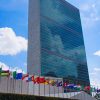
A UN 2.0 Needs Robust People’s Civil Society Participation
A cascade of crises endangers our world. Wars conducted without rules, governance devoid of democratic principles, surge in discrimination against women and excluded groups, accelerating climate change, greed-induced environmental degradation and unconscionable economic deprivation in an age of excess are threatening to roll back decades of human progress made by the international community.
TOGO: ‘The International Community Must Send a Clear Message That Power Grabs Won’t Be Tolerated’
CIVICUS discusses the crackdown on civil society in Togo with a human rights defender who asked to stay anonymous for security reasons.
Women Lead Record Number of Central Banks, but More Progress is Needed
Women are leading more central banks than ever before, thanks to appointments in the past year, but recent gains still leave the share of female governors far short of parity.
Africa’s Strong Case for Reforms of UN Security Council Led by Sierra Leone Presidency
At most international forums, including the annual UN General Assembly high-level debate, Sierra Leonean President Julius Maada Bio consistently highlights the injustices of the global system, particularly Africa’s absence in the permanent category and underrepresentation in the non-permanent category of the United Nations Security Council (UNSC).
Knowledge is Power. Gaza War Supporters Don’t Want Students to Have Both
With nearly 18 million students on U.S. college campuses this fall, defenders of the war on Gaza don’t want to hear any backtalk. Silence is complicity, and that’s the way Israel’s allies like it.
Latin American Rulers Embrace Harsh Prisons
Invoking the fight against terrorists and sending those who can be charged with this crime to new maximum security prisons are increasingly emerging in the toolbox of Latin American leaders who want to show an iron fist against criminals and opponents.
Nicaragua, China, India among 55 Nations Restricting Freedom of Movement
At least 55 governments in the past decade have restricted the freedom of movement for people they deem as threats, including journalists, according to a Freedom House report published last Thursday.
Things Can Only Get Better for Bangladesh
The student movement in Bangladesh demanding reform of the quota system for public jobs was the straw that broke the camel’s back. The Awami League (AL) government led by Sheikh Hasina, in power continuously since 2008, collapsed on 5th August 2024. With Sheikh Hasina fleeing to India and leaving the country in disarray, her authoritarian rule of 15 years just melted away.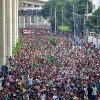
Does the Uprising in Bangladesh have Similarities with Arab Spring?
“I hope the outcome [of the recent revolution in Bangladesh] would be different. I hope the end result will not be the same,” says Shireen Huq, women’s rights and human rights activist and Founder of Naripokkho organization, to IPS about the many similarities with the Arab Spring.
Venezuela Struggles to Hold on to Hope
There was an unusual sense of hope going into Venezuela’s 28 July presidential election. Democracy seemed on the horizon. María Corina Machado, the opposition’s rallying figure, had inspired a rare level of enthusiasm, promising millions of exiles they’d soon be able to return to a new Venezuela.
Rizwana Hasan Vows to Ensure Justice for Those Killed During Bangladesh’s Quota Reform Movement
Justice for all those who died and suffered injuries during the recent student-led quota reform movement in Bangladesh and reforms to the systems to ensure that this justice takes place are not negotiable, an adviser to the Bangladesh interim government, Syeda Rizwana Hasan, told IPS in an exclusive interview
The Plight of Women Three Years after Taliban Takeover in Afghanistan
I’ve just come back from the north of Afghanistan. I asked the women I met what they want the world to know about their lives. One woman, Nasima told me: “I was married at 16. I couldn’t finish school. My hope was that my daughter’s life would be better. Now I’m worried her life is going to be worse. To those who are still listening to our voices, please help us fight for our freedom.”
Will the New Cybercrime Treaty be Used as a Tool for Government Repression?
A new UN Cybercrime Treaty, which is expected to be adopted by the UN General Assembly later this year, is being denounced by over 100 human rights activists and civil society organizations (CSOs) as a potential tool for government repression. The treaty is expected to be adopted by a UN Ad Hoc Committee later this week and move to the 193-member General Assembly for final approval.
UN Calls for ‘Peaceful, Orderly and Democratic Transition’ Following Protests in Bangladesh
After weeks of violent clashes against protestors, Bangladesh Prime Minister Sheikh Hasina resigned from her position and fled the country on Monday. Preparations are underway for an interim government to take over with the backing of the military, political parties, student leaders of the protest movement and all other groups involved in the transition. A UN spokesperson has urged that all parties involved in the current transition should work together to ensure a peaceful and democratic transition.« Previous Page — Next Page »


The Week with IPS

NEXT STOP - SDGs
Tracking global progress towards a sustainable world
Tracking global progress towards a sustainable world
