Languages
Saturday, September 5, 2026



News and Views from the Global South
Democracy
When the truth becomes a lie: What Trump’s election means for the world as we know it
On the day following the US election, UN Secretary General, Antonio Guterres issued a brief statement commending the people of the United States for their active participation in the democratic process. He wisely omitted mention that the election of Donald J. Trump – who attempted to overturn the people’s mandate by inciting an insurrection in 2021 - is a major setback for the UN’s worldwide quest to advance human rights and the rule of law. Trump is a self-avowed admirer of authoritarian strongmen like Russia’s Vladimir Putin and Hungary’s Viktor Orban who disdain international norms that the UN seeks to uphold.
How Megatrends Affect Advancement of Gender Equality & Women’s Empowerment in Asia and the Pacific
The Beijing Declaration and Platform for Action, adopted in 1995 during the Fourth World Conference on Women, remains a cornerstone in the global pursuit of gender equality and women's empowerment. With the Asia-Pacific Ministerial Conference on the Beijing+30 Review fast approaching, now is the time to reflect on the progress made and the challenges that remain in Asia and the Pacific.
Africa’s Most Important Election is Underway
Africa has had a terrible record dealing with extreme poverty. The late Adebayo Adedeji, the legendary head of the United Nations Economic Commission for Africa (ECA), campaigned vigorously but unsuccessfully in the 1980s against the IMF and World Bank-imposed structural adjustment programmes, contending that these contributed to poverty’s increase.
Springfield Confidential: Dishing with Miss Sassy
A small incident in the mounting mayhem of the 2024 elections crystalized the state of the dark art of politics in these United States. In Springfield, Ohio, a small midwestern industrial city, a woman named Anna Kilgore noticed that her cat, Miss Sassy, had been missing for a few days. Kilgore notified the police that she feared her kitty might have been caught and eaten by the Haitian immigrants who lived next door.
Democracy’s Dilemma: Can We Overcome Short-Termism to Build Lasting Peace?
While the expansion of democracy is a key condition for peace, the Achilles’ heel of democracies is that their leaders are constrained by electoral calendars, forcing them to push for peace or delay, whereas autocracies can afford to play the long game to achieve the favorable outcomes they desire.
Hope Springs Eternal—Dashed it’s Deadly
The most solemn and terrifying words ever uttered are those inscribed over the gateway to Hell in Dante’s Inferno: “Abandon all hope, ye who enter here!” Hope is essential for human survival both as individuals and as nations.
This Is Not a Drill. Fascism Is on the Ballot. But…
The conclusion that Donald Trump is a fascist has gone mainstream, gaining wide publicity and affirmation in recent weeks. Such understanding is a problem for Trump and his boosters.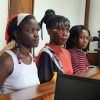
Meet the Young Women Arrested for Fighting Corruption in Uganda
Until recently, Margaret Natabi would never have dreamed of taking her anti-corruption fight on the streets of Uganda’s capital, Kampala.
Russia-Africa: Developing Media Partnership
At a recent media briefing, Maria Zakharova, the spokesperson for Russia's Foreign Ministry, criticized the United States for its support of educational programs, media and NGOs in Africa. Zakharova argued that these efforts are part of a broader attempt by the U.S. to impose Western values and governance models on sovereign African states, framing it as a form of neo-colonialism.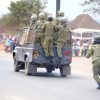
A Glimpse into Tanzania’s Political Turmoil Ahead of 2025 Election
At a rally to mark International Youth Day on August 12 in Tanzania’s southern Mbeya region, John Mnyika stood with a determined expression, addressing his supporters. The air was charged with anticipation. Mnyika, the Secretary-General of Tanzania’s opposition party, Chadema, was preparing to speak about the upcoming elections when the chaos erupted. Without warning, heavily armed police officers stormed the event, grabbed Mnyika, and dragged him away.
What is the World’s Most “Demanding and Impossible Job”?
When Dr Gamani Corea, a former Secretary-General of the Geneva-based UN Conference on Trade and Development (UNCTAD) was holding court in the delegate's lounge, I asked him what he thought of the bitter dispute between then Secretary-General (SG) Boutros Boutros-Ghali (1992-1996) and the United States over the Egyptian's determination to win re-election for a second term.
Empowering Indigenous Communities: A Path to Sustainable and Just Development
In a world where the fight for land rights often pits the powerful against the marginalized, Indigenous communities stand as resilient defenders of their ancestral lands.
‘The new law’s purpose is to increase government control over civil society’
CIVICUS discusses a recently passed law regulating civil society organisations (CSOs) in Paraguay with Marta Ferrara and Olga Caballero, executive directors of Semillas para la Democracia (Seeds for Democracy) and Alma Cívica (Civic Soul), two of the organisations leading the civil society response to the closing of civic space.
The Growing Gender Gap in Social Protection
Published ahead of the International Day for the Eradication of Poverty on 17 October, UN Women issued the 2024 World Survey on the Role of Women in Development Report. This is the UN Secretary-General’s Report, which is mandated by the Economic and Financial Committee (Second Committee) of the UN General Assembly, and focuses on macroeconomic policy, sustainable development, financing and poverty eradication.
A Staggering 2.0 Billion Women Live With No Access to Social Protection
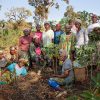
The growing gender gap between men and women is reflected not only in the world’s highest political hierarchies but also in the daily social and economic lives—with most women fighting a losing battle against poverty. The latest flagship report from UN Women reveals a widening gender gap in social protection -– the raft of policies, including cash benefits, unemployment protection, pensions and healthcare – which leaves women and girls more vulnerable to poverty.
Abortion is a Fundamental Human Rights Issue
The right to abortion is a human rights issue that no government agency, courts, local and state legislators, or anyone else has the right to violate or impede in any shape or form. It is a fundamental right that every woman must be free to exercise with impunity, in consultation with her doctor only, who acts based on his/her professional ethics and responsibility.
Stigmatization is the Entry Door for Repression and Violence
Information manipulation and misinformation are not new phenomena, but they have taken on exaggerated importance, especially with the massive use of social media.
Azerbaijan Turns into a “Massive Open-Air Prison” before UN Climate Change Conference
On November 20, 2023, Ulvi Hasanli, director of AbzasMedia —an independent media outlet in Azerbaijan—was arrested when he was about to board a taxi to Baku airport. Meanwhile, uniformed officers raided AbzasMedia's headquarters in the Azerbaijani capital, claiming to have found 40,000 euros in cash, which was used as evidence to accuse Hasanli of currency smuggling.
Pakistan’s Digital Censorship—The Real Cost of Internet Disruptions
Over the past few months, Pakistan has been grappling with a persistent and disruptive internet slowdown, leaving millions of citizens frustrated.
‘The Focus Should Be on Holding Social Media Companies Accountable, Not Punishing Individual Users’
CIVICUS discusses the recent Twitter/X ban in Brazil with Iná Jost, lawyer and head of research at InternetLab, an independent Brazilian think tank focused on human rights and digital technologies.

Bangladesh’s Chief Advisor Addresses UNGA Calling for International Cooperation, Freedom and Rights
In his first major address at the United Nations, the Chief Advisor of Bangladesh’s interim government, Dr. Muhammad Yunus, appealed to the international community to engage with a ‘new Bangladesh’ in the shared efforts to cooperate on global issues. Yunus arrived earlier in the week to attend the 79th United Nations General Assembly (UNGA) in New York. In the four days he was here, Yunus held meetings with a range of world leaders, notably UN Secretary-General António Guterres and US President Joe Biden. This would indicate there is good support for him and what he represents. On Friday, Yunus addressed the General Assembly, speaking in his native language, Bangla.« Previous Page — Next Page »


The Week with IPS

NEXT STOP - SDGs
Tracking global progress towards a sustainable world
Tracking global progress towards a sustainable world
