Languages
Friday, September 4, 2026



News and Views from the Global South
Democracy

Davos Leaders Pledge Support for Bangladesh Reform Agendas
As Bangladesh Chief Adviser Professor Muhammad Yunus emerged from a meeting during the World Economic Forum (WEF), Timor-Leste President Jose Ramos-Horta came forward to greet him, a demonstration of how warmly the global leaders and dignitaries received the person tasked with leading the interim government.
Rising Opposition Movement Looks to Political Renewal, Stemming Erosion of Democracy in Hungary
The Central European nation of Hungary is officially a democracy. But civil society, the media and democratic norms have increasingly come under threat as the Fidesz-KDNP coalition government, led by Prime Minister Viktor Orbán, has entrenched autocratic rule over the past 14 years. Now a new wave of energy and popularity is driving the younger opposition movement into the spotlight ahead of next year’s parliamentary election.
Journalists Behind Bars: China, Israel & Myanmar the Worst Offenders in 2024
The year 2024 has been one of the most devastating for journalists covering conflicts worldwide-- with 361 behind bars, the second highest since the global record of 370 imprisoned back in 2023.
UN Claims to Strengthen Battle Against Racism in Workplace—Amid Reservations
As the United Nations plans to commemorate its 80th anniversary later this year, it is “reflecting on the steps taken to advance implementation of the Secretary-General’s Strategic Action Plan for addressing racism in the UN Secretariat. The UN’s Anti-Racism Office, which was created in 2023, has hosted several online events that reached over 13,500 participants and generated 2,000 comments, and welcomed 2,700 visitors to its iSeek page (accessible only by staffers)—possibly a reflection of the rising complaints and concerns of UN staffers.
How US Media Hide Truths About the Gaza War
A few days before the end of 2024, the independent magazine +972 reported that “Israeli army forces stormed the Kamal Adwan Hospital compound in Beit Lahiya, culminating a nearly week-long siege of the last functioning hospital in northern Gaza.”
South Korea’s Democracy Defended
Democracy is alive and well in South Korea. When President Yoon Suk Yeol tried to impose martial law, the public and parliamentarians united to defend it. Now Yoon must face justice for his power grab.
UN Commits to Supporting Syria in Political Transition, Adapting Humanitarian Support
In overthrowing Bashar al-Assad and his regime, Syria reaches the process of re-affirming its sovereignty, a process that the United Nations chief asserts must be led by the Syrian people.
Did Togo Reforms Entrench President Gnassingbé’s Power?
In May 2024, Togo's President Faure Gnassingbé signed a new constitution, transitioning the country from a presidential to a parliamentary system. Under this new framework, lawmakers are responsible for electing the president.
New Legislation Outlaws Dissenters in Venezuela
In Venezuela you can no longer say in public that the economic sanctions applied by the United States and other countries are appropriate, or even be suspected of considering any of the authorities illegitimate, because you can be sentenced to up to 30 years in prison and lose all your assets.
‘My Father Was Arbitrarily Arrested and Convicted for Denouncing Government Corruption’
CIVICUS speaks with Ramón Zamora, son of Guatemalan journalist José Rubén Zamora, about restrictions on press freedom and the challenges of defending human rights in Guatemala.

New Geopolitics Worse for Global South
The new geopolitics after the first Cold War undermines peace, sustainability, and human development. Hegemonic priorities continue to threaten humanity’s well-being and prospects for progress.
Bangladesh in Crisis: Which way out?
This piece is not about the crisis or the chaos that the country is now facing after successfully toppling the autocratic regime of Sheikh Hasina. Rather, it is about the crisis of confidence and social capital or trust — interlinked, nonetheless.
Camps of Death, Terror: Syrian Survivors Face Long Road To Recovery
Detained without trial for over three years for trial for allegedly treating "terrorists" (as opponents of former Syrian President Bashar al-Assad were deemed), Alaa al-Khalil, a 33-year-old nurse from the Syrian city of Hama, recounts the agony of her time in a prison cell she shared with at least 35 women.
When Ousted Leaders Seek Safe Havens to Escape Jail Time & Hangman’s Noose..
When some of the leaders in the Middle East and Asia are dethroned and driven into exile, the cynics jokingly ask: Is he politically dead or is he dead and buried? The distinction between the two seems significant because the fluctuating political fortunes of some leaders-- and their will to survive against heavy odds-- have always defied Western logic.
This Year Saw Most of the World Repressed – but in Civil Society there is Hope
Today is International Human Rights Day, Normally, it should be an occasion to celebrate the work of those who strive to create peaceful, just, equal and sustainable societies. But conditions for human rights defenders and their organisations to operate freely are extremely challenging around the world.
Another Tsunami Sweeps Sri Lanka
On 26 December 2004 a powerful Asian tsunami swept over many of Sri Lanka’s coastal provinces, killing thousands of people and wildlife, devastating habitats and even washing away a trainload of passengers far from the rail tracks.
Sudanese Women & Human Rights Defenders Call for Solidarity to Stop the Bloodshed
On 15 April 2023, the outbreak of war between the Sudanese army and the Rapid Support Forces (RSF) drastically altered the face of Sudanese society. The fighting left thousands of dead, wounded, displaced people and refugees.
US Envoy-in-Waiting Blasts UN as Corrupt – & Threatens Funding Cuts
John Bolton a former US ambassador to the United Nations (2005-2006) once infamously declared that if the 39-storeyed UN Secretariat building in New York “lost 10 stories, it wouldn’t make a bit of difference.” That statement triggered a sarcastic response from a New York Times columnist who said Bolton would have done better as an urban planner than a US diplomat --while another newspaper described him as “a human wrecking ball”
Now it’s Officially the Israeli-American Genocide in Gaza
As of last week, in the wake of the Nov. 21 issuance by the International Criminal Court (ICC) of arrest warrants for Israeli Prime Minister Benjamin Netanyahu and former IDF Defense chief Yoav Gallant, all eyes turned to Washington to see the what the response of Israel’s main backer would be.
UN May Face Another Calamity– Under a Second Trump Presidency
US President Donald Trump’s return to the White House on January 20 next year may be another calamity for the United Nations—particularly if the second term turns out to be a re-run of his first presidency (2017-2021). Trump’s past track record included the US withdrawal from the UN Educational, Scientific and Cultural Organization (UNESCO); threats against member states voting for anti-Israeli resolutions and slashing funds to a 72-year-old UN agency for Palestinian refugees.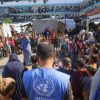
Scorched Earth Colonizing of Gaza is a Horrible Idea
For religious, humanitarian, and scientific reasons, Israel’s increasingly apparent plan for the de facto colonization of the Northern Gaza Strip is a bad idea. When that program was rejected recently by Israel’s own Defense Minister Yoav Galant, he was summarily fired by Prime Minister Netanyahu.« Previous Page — Next Page »


The Week with IPS

NEXT STOP - SDGs
Tracking global progress towards a sustainable world
Tracking global progress towards a sustainable world
