Languages
Monday, August 31, 2026



News and Views from the Global South
Democracy

African Women on the Frontline of Peacekeeping
For over a year, a group of United Nations peacekeepers from Ghana led by Captain Esinam Baah regularly patrolled the “blue line” or the demarcation line between Lebanon and Israel, and visited neighbourhoods in the area, checking in with local families and making sure they were safe.
Is Bangladesh Sleep Walking to Dictatorship ?
The parliamentary elections held in Bangladesh on 7 January, 2024, has created much controversy in the country, terming it an “election of the Awami League (AL) government, for the AL government and by the AL government", by many. Internationally, China and India have congratulated the government for victory and organization of a fair election. But, several western countries have termed it as unsatisfactory. However, irrespective of the diverse views, everyone agrees that it was not participatory elections. Voter turn out was significantly low and it was boycotted by the main opposition Bangladesh National Party (BNP).
Turning Protracted African Conflicts into Sustainable Peace
Among East Africa’s dozens of pastoral tribes, major conflicts have erupted repeatedly, largely over land and water disputes. Generational trauma and anger have built to create tensions and grievances that carry emotional weight even hundreds of years later.
Guatemala’s Chance for a New Beginning
Guatemala’s new president, Bernardo Arévalo, was expected to be sworn in on 14 January at 2pm –the 14th at 14:00, as people repeated in anticipation for months. It was a momentous event – but it wasn’t guaranteed to happen.
Hindu Woman Doctor Confident of Election In Pakistan Polls
A woman medical graduate from the Hindu community is making waves, as she is the first minority woman to contest the Pakistan Parliamentary election for a general seat, and she does so in the face of deep-rooted religious traditions and wealthy political opponents. Dr Saveera Parkash, a nominee of the Pakistan People’s Party (PPP) for the February 8 polls, is sure of her victory despite her religion.
Bangladesh: Election with a Foregone Conclusion
Bangladesh just held an election. But it was far from an exercise in democracy. Sheikh Hasina won her fourth consecutive term, and fifth overall, as prime minister in the general election held on 7 January. The result was never in doubt, with the main opposition party, the Bangladesh National Party (BNP), boycotting the vote over the ruling Awami League’s refusal to let a caretaker government oversee the election. This practice, abolished by the Awami League government in 2011, was, the BNP asserted, the only way to ensure a free and fair vote.
Martin Luther King’s Message Shook the Powerful: Vital People can Hear it Today
All through this week, leading up to January 15th, the world will commemorate Martin Luther King. In a world as wounded as ours is today, the lessons of his life’s work offer a vital opportunity for healing.
Is it Time for Palestine to be Voted UN Member State?
The atrocities against Palestinians in a ruthlessly devastated Gaza — with over 21,000 mostly civilian deaths in retaliation to the killings of 1,200 inside Israel —have resurrected a longstanding question: is it time for Palestine to be recognized as a full-fledged UN member state? The question has also been triggered by a statement by China, a veto-wielding permanent member of the UN Security Council (UNSC).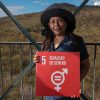
There Is No Democracy Without Gender Equality
Violence against women and girls is one of the most widespread and persistent abuses of fundamental rights at a global level that, to a certain extent, derives from what we consider "normal" in our societies. In addition to firmly condemning that every three women in the world suffer from physical or sexual violence, we must question what we are normalizing as a society for this to happen.
Will the Human Rights Movement Survive the Gaza War?
In its military campaign in Gaza, Israel faces a seemingly endless list of alleged human rights violations. International monitors argue the Israel Defense Forces have starved Gazans, targeted journalists attempting to cover the carnage, tortured detainees, and attacked hospitals full of wounded civilians.
Fear as Russian Anti-LGBT Law Comes into Effect
“This is what you get after ten years of state propaganda and brainwashing,” says Anatolii*. The Moscow-based LGBT rights activist’s ire is directed at a recent ruling by Russia’s Supreme Court declaring the “international LGBT movement” an extremist organization.
From Bureaucratic Labyrinths to Accessible Civil Registration
Have you ever tried to register a birth, a death or maybe your own marriage? Unfortunately, many of these vital events in Asia and the Pacific remain unregistered often with dire consequences for individuals, families and communities.
UN Volunteers – and Their Over Reaching Mission
If there is an agency or program within the UN that I really admire and wish the best for, this is the United Nation Volunteers or UNV. Its overarching mission, mandate and key objectives are paramount for humanity.
Israel-Jordan Relations in The Wake of The Gaza War
Although the dire impact of the Israel-Hamas war has touched many countries in the region and beyond, no foreign country has been so profoundly affected by the war than Jordan. Israel must mitigate Jordan’s concerns to save its critical alliance with its neighbor while fully collaborating in the search for a permanent resolution to the Israeli-Palestinian conflict
Argentina Plunges into the Unknown
For many of Argentina’s voters the choice on 19 November was between the lesser of two evils: Sergio Massa, the minister overseeing an economy with the world’s third-highest inflation rate, or Javier Milei, an erratic far-right libertarian outsider promising to shut down the Central Bank, adopt the US dollar as the currency, cut taxes and privatise public services.
Autocracy on the Rise, Warn Civil Society Groups, Seeking UN Expert on Democracy
The rise in authoritarianism worldwide has prompted a coalition of over 85 civil society organizations (CSOs) to call on the Geneva-based Human Rights Council to appoint a Special Rapporteur—an independent UN expert-- to protect democracy and reverse its decline. The joint appeal comes ahead of the 75th anniversary of the Universal Declaration of Human Rights which will be commemorated on 10 December 2023.
What Will Tomorrow’s World Order Look Like?
Ukraine, the Caucasus and the Middle East. The latest eruptions of violence mark the end of Pax Americana. The rise of new powers is shifting the global balance of power. Whether tomorrow’s world will be bipolar or multipolar still remains to be seen.
The World’s Right-Wing & Left-Wing Torturers
Jeanne Kirkpatrick, a former U.S. ambassador to the United Nations, once made the distinction between "friendly" right-wing authoritarian regimes (which were mostly U.S. and Western allies) and "unfriendly" left-wing totalitarian dictatorships (which the U.S. abhorred). Among the “dictators” the U.S. shunned in the 1970s and 80s were Zimbabwe's Robert Mugabe, Myanmar's General Than Shwe, Iraq's Saddam Hussein, Cuba's Fidel Castro, Libya’s Mummar al-Qaddafi, Syria’s Hafez al-Assad and North Korea’s Kim IL-Sung.
Will the UN Ever be Able to Eradicate Systemic Racism Within?
In the midst of the Israel-Hamas conflagration, a significant anniversary at the United Nations --October 24th was the 78th year since its founding--went unremarked by the larger world. But the work of--and significant problems with--the UN continues. Among the problems is embedded institutional racism. It's time that it be deeply addressed--not just by lip service.
A Bigger and More Relevant Role for Youth Within the UN System – Part II
The UN Secretary General’s Policy Brief on Meaningful Youth Engagement in Policy and Decision-making Processes offers several ideas on how to ensure youths have a bigger and more relevant role within the UN System.
A New Youth Envoy: Symbolic Change or Real Hope?– Part I
The recent appointment of Dr. Felipe Paullier of Uruguay as the first Assistant Secretary-General for Youth Affairs is a good news for the United Nations. Yet we need to ask ourselves the following question: Can such development also become a real hope, rather than just a symbolic change, for millions of youths from around the world?« Previous Page — Next Page »


The Week with IPS

NEXT STOP - SDGs
Tracking global progress towards a sustainable world
Tracking global progress towards a sustainable world
