Languages
Tuesday, September 8, 2026



News and Views from the Global South
Democracy
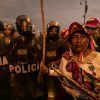
Privilege and Centralism in Lima Goad Protesters in Peru
The current political and social upheaval in Peru is not a temporary problem, but has to do with deeply-rooted inequality and social hierarchies, according to historian José Carlos Agüero.
Salvadoran President’s Secrecy about New Mega-Prison – a Harbinger of Corruption
The construction of a mega-prison, in which the government of El Salvador intends to imprison some 40,000 gang members, is in line with President Nayib Bukele’s tendency to hide public information on public projects, classifying them as "reserved."
Eswatini: Democracy a Matter of Life and Death
Thulani Maseko knew speaking out in Eswatini was a risky business. An activist and well-known human rights lawyer, he’d previously spent 14 months in jail for criticising the country’s lack of judicial independence. Now he’s dead, shot in his home by unknown assailants.
Zimbabwe Political Violence Casts Spotlight on Free and Fair Polls
With political violence escalating in Zimbabwe, national elections slated for later this year face questions about whether the polls will meet free and fair international benchmarks.
NGOs Campaign for a Torture-Free UN Trade Treaty
Hinting at “Western hypocrisy”, a senior UN official once told a group of reporters, perhaps half-jokingly: “When you go on one of those sight-seeing tours in Europe, they will show you their palaces and castles-- but never their medieval prisons or torture chambers.”
Democracy on the Blink
On February 4, Sri Lanka commemorates 75 years of Independence. But it will not be the extravaganza of the past years, the minaturised imitations of the grand displays on Moscow’s Red Square or China’s Tiananmen Square.
Peru’s Democracy at a Crossroads
On 25 January, roughly six weeks after being sworn in following her predecessor’s removal, Peruvian president Dina Boluarte finally recognised that elections were the only way out of political crisis. Elections were rescheduled for April 2024, much earlier than the end of the presidential term she’s been tasked with completing, but not soon enough for thousands who’ve taken to the streets demanding her immediate resignation.
ASEAN Parliamentarians Cannot Escape ‘Lawfare’ or Violations of their Human Rights
Parliamentarians worldwide face increasing human rights violations and a greater risk of reprisal simply for exercising their mandate or expressing their ideas and opinions.
Erdogan’s Desperate Bid to Become the New Atatürk
As Turkey approaches its centennial anniversary this October, President Erdogan is stopping short of nothing to win the election in June to fulfill his life-time dream of presiding over the celebration. The Turkish people should deny him this historic honor because of the reign of terror to which he has mercilessly subjected his countrymen.
Chile’s Mapuche Indians Hurt by Rejection of a Plurinational Constitution
Mapuche indigenous leaders were hit hard by what they see as a collective defeat: the rejection in a September referendum of a plurinational, intercultural constitution proposed to Chile by an unprecedented constituent assembly with gender parity and indigenous representatives.
In Venezuela, Radio Stations are Shut Down and Information Is Just Another Migrant
More than 100 radio stations were shut down by the Venezuelan government this year, accentuating the collapse of the media and further undermining the already meager capacity of citizens to stay informed.
Can the UN do a Better Job with Democracy?
The UN Democracy Fund, also known as UNDEF, is an interesting tool but it is too small and lacking resources to mark a difference. How can the UN do a better job at promoting democracy? This is a key question that high-ranking policy makers at the UN should ask themselves.
The Decline and Fall of Democracy Worldwide
A head of state who presided over an authoritarian regime in Southeast Asia, was once asked about rigged elections in his country. “I promised I will give you the right to vote” he said, “but I didn’t say anything about counting those votes.”
UN Assessed Contributions Needed to Generate Core Funding for Climate Loss & Damage
For decades, there have been non-conclusive deliberations regarding how the international community could support poor and vulnerable countries in their efforts to cope with and recover from the havoc wreaked on their territory by the ill-effects of global warming such as severe droughts, floods, storms, or rising sea levels.
COP27: Landmark Win on Loss and Damage Fund
COP 27 delivered on what was the ‘litmus test’ for its success – consensus on the establishment of a fund on loss and damage. What seemed impossible was made possible, largely due to the unity of the G77 and China and the role of the Egyptian Presidency. Also important were efforts by civil society groups who put pressure on the United States, the main blocker to having the fund.
Making the UN Charter a Reality: Towards a New Approach to Development Cooperation?
We are living in a world where both our bilateral and multilateral achievements, consensuses on human rights and social justice, and our resolve to public good are being tested like never before.
COP27: Egypt’s Repressive Regime Under Fire—While it Hosts a Key Climate Summit
The COP27 climate summit in Sharm el-Sheikh has triggered a negative fallout for Egypt’s authoritarian regime which stands accused of human rights abuses -- and has been widely condemned for its longstanding repressive campaign against dissidents and civil society organizations (CSOs).
A Beacon of Light in Dark Times: the Dublin Platform for Human Rights Defenders
Before she was murdered in Honduras in 2016, the Lenca Indigenous woman and human rights defender Berta Cáceres poignantly said: “They are afraid of us because we are not afraid of them.”
What Does it take to Build a Culture of Equality & Inclusion at the UN? Reflections from Inside a Change Process
The organisational is personal. Every day since the two of us were asked back in 2020 to co-lead the process of culture transformation at UNAIDS, the United Nations organisation which drives global efforts to end AIDS, we have both felt at our very core how crucial it has been to get it right.
Iranian Women Fight in the Streets, But Also from Home
It’s been over a month since Bayan, a 30-year-old Persian language teacher, last left her home in the Kurdish city of Piranshahr, 730 northwest of Tehran. Her parents believe they must protect her from what might happen to a protester in Iran.
Public Development Banks Can’t Drag Their Feet When It Comes to Building a Sustainable Future
A coalition of civil society organisations is demanding public development banks (PDBs) to take radical and innovative steps to tackle human rights violations and environmental destruction. No project funded by PDBs should come at the expenses of vulnerable groups, the environment and collective liberties, but should instead embody the voices of communities, democratic values and environmental justice.« Previous Page — Next Page »


The Week with IPS

NEXT STOP - SDGs
Tracking global progress towards a sustainable world
Tracking global progress towards a sustainable world
