Languages
Sunday, November 8, 2026



News and Views from the Global South
Development & Aid
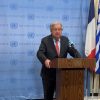
UN Chief, Brazil Gather World Leaders to Reaffirm Commitments Paris Agreement
UN Secretary-General António Guterres and President Lula da Silva of Brazil on Wednesday, April 23, held a closed-door meeting with heads of state to discuss strengthening global efforts against the climate crisis and to ensure a just energy transition.
Climate Groups Report 2025 Is Unlikely To Be Hotter Than 2024
On March 19, the World Meteorological Organization (WMO) and the Copernicus Climate Change Service (C3S) issued a report on the State of Global Climate in 2024, detailing the numerous heightened natural disasters that were a consequence of human-induced climate change. With the past three years having been recorded as the three hottest years in human history, climate scientists are optimistic that 2025 will see slightly cooler global temperatures.
How Science Solutions Are Saving Africa’s Livestock and Livelihoods
Livestock are a lifeline for millions of farmers in Africa as a source of food and wealth. But devastating diseases are threatening the health and productivity of their animals. Now scientists at the International Livestock Research Institute (ILRI) have unleashed a toolbox of science solutions by outsmarting the parasites and pathogens that cost millions of dollars in livestock losses across Africa. The toolbox includes everything from vaccines that protect livestock from ‘cattle malaria’ to genetics to breed animals tolerant to East Coast fever.
Trump Wants World to Subsidise US Empire
Donald Trump’s top economic advisor claims the President has weaponised tariffs to ‘persuade’ other nations to pay the US to maintain its supposedly mutually beneficial global empire.
Children at the Center
Creativity and innovation are essential to finding extraordinary solutions to abnormal problems. Now more than ever we must continue finding creative solutions to protect the world’s most vulnerable children from the excruciating pain of war, dispossession and destruction of their last hope: a quality education. The current humanitarian and development funding levels are falling. However, with creativity we can prevent further deterioration and instead turn towards an upward direction.
Essential Supplies Run Critically Low in Gaza While Displacement Soars
Since the deterioration of the ceasefire agreement between Israel and Hamas in March, the Israeli Defense Forces (IDF) have issued numerous evacuation orders and bombardments on the Gaza Strip, resulting in exacerbated rates of displacement and a significant amount of civilian casualties. Roughly two million Palestinians within the enclave struggle to stay alive amid repeated blockages of humanitarian aid.
Shaken and Strained: Myanmar’s Earthquake Adding to the Misery of 4 Years of Conflict
As I walked through the streets of Sagaing and Mandalay, the scenes unfolding in the wake of the 7.7 earthquake were hard to comprehend. Tall buildings and hundreds of homes are now lying in rubble. Of those that are still standing, many are lurching at dangerous angles, defying gravity for now, but could collapse at any moment.
Four Rare Snow Leopards Spotted Together on Pakistan’s Northern Peaks
In a remarkable conservation achievement, four rare and elusive snow leopards have been spotted together in the rugged peaks of northern Pakistan, highlighting the success of the ongoing global efforts aimed at protecting this critically endangered species and preserving its fragile habitat.
Hooves Vs. Habitats: Striking a Sustainable Balance Between Livestock and the Environment Is Crucial to Africa’s Future
In my country, Senegal, almost 70 percent of our land is used to graze livestock. Here and across Africa, pastoralists and livestock keepers sustain herding systems which are closely bound up with our landscapes and crucial to nationwide food security, economic growth, and ecological balance.
Bringing Resilience to the Table to Achieve Development Goals
The global risk landscape is evolving at an unprecedented pace, posing significant threats to attaining the Sustainable Development Goals (SDGs). As extreme weather, macroeconomic shocks, conflict, and other risks intensify and intertwine, they can create ripple effects that amplify existing vulnerabilities and put both human and development progress in peril.
Smallholder Farmers Are Not ‘Beneficiaries’, but the ‘Co-Creators of Change’
Eliud Rugut comes from generations of farmers, yet his family expected him to move out of their home and pursue another career.
Amputated Limbs, Enduring Pain: The Suffering of Syria’s War Wounded
The Syrian war has left countless Syrians with devastating injuries, ranging from limb amputations and burns to the loss of sensory functions. These injuries have profoundly impacted their lives, compounded by the limited attention and support they receive from civil society organizations.
The ‘Plastic Man’: Turning Trash into Treasure
In a quiet corner of Medina Gounass, on the outskirts of Dakar, Senegal, one man has taken it upon himself to breathe new life into a place many had abandoned.
ECOSOC Forum Highlights the Importance of Educational and Economic Empowerment for Youth
This year, the Economic and Social Council (ECOSOC) Youth Forum’s theme is “Youth at the Forefront: Leveraging Science and Social Inclusion for Sustainable Development”, bringing together government representatives, young leaders and policymakers among other relevant stakeholders, to deliberate over youth involvement in the ongoing efforts to implement the 2030 Sustainable Development Goals (SDGs).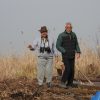
While India’s RAMSAR Sites Tally Rises, Wetlands Remain Endangered
Late in February, India’s noted ornithologist and conservationist, Asad Rahmani, wrote a letter to a wildlife warden in north India expressing his satisfaction about the availability of water in four important wetlands in Kashmir, where migratory birds from central Asia and Europe arrive annually for wintering.
Food Insecurity an Unprecedented Crisis Worldwide
Last year, 343 million people were experiencing acute food insecurity, according to the World Food Programme (WFP). That’s 10 percent higher than in 2023.
The Long Goodbye: The Rise of Dementia
As the world’s population of 8.2 billion people increases in size and becomes older due to demographic ageing, the number of people experiencing the long goodbye, or dementia, is rapidly rising.
Standing Firm: Civil Society at the Forefront of the Climate Resistance
The recent US court case that ordered three Greenpeace organisations to pay damages of over US$660 million to an oil and gas company was a stunning blow against civil society’s efforts to stop runaway climate change and environmental degradation. The verdict, following a trial independent witnesses assessed to be grossly unfair, came in reaction to Indigenous-led anti-pipeline protests. It’s vital for any prospects of tackling the climate crisis that Greenpeace’s appeal succeeds, because without civil society pressure, there’s simply no hope of governments and corporations taking the action required.
Genocide Prevention & Responsibility to Protect
April marks Genocide Prevention and Awareness Month, a time to reflect on the history, causes and victims of past genocides and to mobilize the necessary resolve to confront risks facing populations around the world today who face the threat of genocide and other mass atrocity crimes not for anything they have done, but for who they are.
Trump’s ‘Shock and Awe’ Tariffs
US President Donald Trump has again seized global attention by arbitrarily imposing sweeping tariffs on the rest of the world. He reminds us America is still boss, claiming to ‘make America great again’ (MAGA) by ensuring ‘America first’ at everyone else’s expense.
Is it Time to Say RIP to the SDGs?
Is it only a decade since the Sustainable Development Goals (SDGs) and the Paris Agreement on climate change were agreed? The two deals were inked to a groundswell of hope.« Previous Page — Next Page »





 2026 High-level Political Forum on Sustainable Development. Credit: UN Photo/Eskinder Debebe
In 2015, the United Nations and its Member States adopted the Sustainable Development Goals (SDGs) in an effort to make the world a more sustainable and peaceful place for future generations. Progress on the 17 SDGs has been uneven, and inequality persists across the globe. 10 years after adoption, the 2025 UN SDGs Report revealed that only 35% of the SDG targets are on track, with more than half moving too slowly, and 18% moving backwards from the 2015 baseline. Poverty remains one of the world’s most pressing issues, with hunger, violence, and inequality impeding the opportunities for all people to achieve success. In September 2024, the United Nations Summit of the Future introduced a new goal: to eradicate global poverty by 2030, ensure universal rights to basic services, and increase the overall standard of living in terms of industrialization, economic well-being, citizen health, and literacy. Furthermore, recent shifts in United States foreign aid policy – notably, major budget cuts to USAID and the termination of thousands of development programmes– have severely threatened vital lifelines of financial aid to impoverished communities around the world. Additionally, the United States’ withdrawal from the Paris Climate Agreement has undercut international efforts at sustainable development. With the upcoming 2030 deadline, the UN Secretary-General has called for urgent multilateralism across six priority areas: food systems, energy, digital connectivity, education, jobs and social protection, and climate and biodiversity. IPS sheds light on marginalized communities that struggle on a daily basis to survive and have their stories heard and respected.
Updated by Yilan Batista and Shuli Wong August 2026

The Week with IPS

NEXT STOP - SDGs
Tracking global progress towards a sustainable world
Tracking global progress towards a sustainable world
