Languages
Monday, November 23, 2026



News and Views from the Global South
Economy & Trade

The Arctic: Earth´s Last Frontier
The last frontier for utilizing and maybe even exhausting Earth´s natural resources is opening up in the Arctic and some of the world´s wealthiest nations are trying to secure their piece of the cake. Some act openly, others are more secretive – recently one of the competitors entered the game in a remarkably unwieldy manner.
Our Food Systems Need Transformation
The right to food is a universal human right. Yet, over 820 million people are going hungry, according the latest edition of the State of Food Security and Nutrition in the World (SOFI 2019). In addition, 2 billion people in the world are food insecure with great risk of malnutrition and poor health” 1.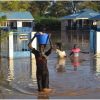
Let’s Walk the Talk to Defeat Climate Change – African Leaders Told
African leaders have been asked to walk the talk, and lead from the front, in order to build resilience and adaptation to the adverse impacts of climate change on the continent.
Disaster Risk Resilience: Key to Protecting Vulnerable Communities
The past five years have been the hottest on record in Asia and the Pacific. Unprecedented heatwaves have swept across our region, cascading into slow onset disasters such as drought. Yet heat is only part of the picture. Tropical cyclones have struck new, unprepared parts of our region and devastatingly frequent floods have ensued. In Iran, these affected 10 million people this year and displaced 500,000 of which half were children. Bangladesh is experiencing its fourth wave of flooding in 2019. Last year, the state of Kerala in India faced the worst floods in a century.
Kenya: The troubles of a science PhD from the West
Graduate students of the London School of Economics and Political Science gathered at Kenya’s coast in September 2018, where the Secretary-General of the United Nations Conference on Trade and Development (UNCTAD) Dr Mukhisa Kituyi told them: “With your international credibility, it is easier and tempting to leave and take out of the continent the little intellectual resource that could solve problems their countries face.”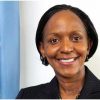
Pushing For a Green Economy & Clean Energy
Africa is grappling with myriad environmental and climate challenges, from drought to loss of biodiversity, cyclones and plastics pollution.
Trade, Currency War Weapons Double-Edged
The US-China trade war has flared up again less than two weeks after US President Donald Trump delayed new tariffs of US$160 billion on Chinese imports until December, purportedly to avoid harming the holiday shopping season.
What Would It Really Take to Plant a Trillion Trees?
Tree planting is capturing the minds of those who look for fast climate action. Earlier this month, the Ethiopian Government announced a new world record: thousands of volunteers planted 353 million trees in one single day. This came shortly after a team of scientists identified suitable places in the world where up to 1 trillion new trees could be planted. Such a massive effort could absorb about 20 years’ worth of global greenhouse gas emissions. And on 8 August 2019, the Intergovernmental Panel on Climate Change launched a Special Report on the importance of land use for the climate. About 23 per cent of all emissions come from the agriculture, land use and forest sector. The Intergovernmental Panel on Climate Change outlines land management opportunities with benefits for food security, biodiversity, and the climate, such as agroforestry.
How to Bring the Indus Delta Back to Life – Give it Water
Gulab Shah, 45, is having sleepless nights. He and his family are worried about their imminent migration from their village in Jhaloo to a major city in Pakistan, thanks to the continued ingress of sea water inland.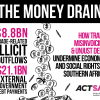
Southern African Development Community Loses Billions in Illicit Outflows
The Southern African Development Community (SADC), which comprise 16 member states, loses about 8.8 billion dollars in trade-related illicit outflows and about 21.1 billion dollars in external government debt payments annually, according to a new report released here.
South Must Also Set International Tax Rules
Recently, Christine Lagarde, outgoing Managing Director of the International Monetary Fund (IMF), argued that developing ‘countries need a seat at the table’ to design rules governing international corporate taxation. This acknowledges recent IMF findings that developing countries lose approximately USD200 billion in potential tax revenue yearly, about 1.3 per cent of their GDP, due to companies shifting profits to low-tax locations. Oxfam estimated in 2018 that extreme poverty could be eradicated for USD107 billion annually, i.e., about half the lost revenue.
Establishing a Science & Technology Park is No Walk in the Park
The success of Silicon Valley has been inspirational for many countries worldwide wishing to establish science and technology parks. In Asia, successful science and technology parks can be found in many economies, including China, Japan and Thailand.

Producing Energy from Pig and Poultry Waste in Brazil
Romário Schaefer is fattening up 3,300 pigs that he receives when they weigh around 22 kg and returns when they reach 130 to 160 kg - a huge increase in meat and profits for their owner, a local meat-processing plant in this city in Brazil.
Are Jair Messias Bolsonaro and Donald John Trump a Menace to the Planet?
We live in different worlds. The ones of friends, family and work colleagues. Worlds which are overshadowed by other, much bigger ones. Global spheres of international finance, politics, climate change, etc., contexts that might threaten our smaller circle of relationships; our family, our income, our general wellbeing, in short – our entire existence. However, even at those levels there exist small circles of acquaintances and associates able to make decisions that affect the entire humankind. Let me take one example – the regimes of U.S. President Donald J. Trump and Brazilian President Jair Messias Bolsonaro, which are menacing our global natural habitat.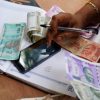
The Missing Women in Finance
Women comprise a very small proportion of the financial industry workforce, and this has implications on the way female clients use and benefit from financial services.
Towards a Sustainable Future: Case of China’s Economic Transformation
The Asia-Pacific region is at a crossroads. The traditional export-oriented, manufacturing-driven growth is facing headwinds from sluggish external demand and rising protectionist trade measures.
‘Beggar Thy Neighbour’ Policy Advice
The harmful effects of falling corporate tax rates have been acknowledged in a recent International Monetary Fund (IMF) research paper. This trend, since the early 1980s, has been especially detrimental for developing countries, which rely on direct taxation much more than developed economies.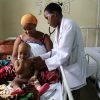
To Uplift a Woman is to Uplift a Village
Khadija Zuberi, 23, from Ruaha Mbuyuni village in Tanzania’s central highlands, is a single mother to her four-year-old son, Hashim.
How India’s Indigenous Female Forest Dwellers Feel about Owning Their Own Land
 Kumaribai Jamkatan, 51, has been fighting for women’s land rights since 1987.
Though the constitution of India grants equal rights to men and women, women first started to stake their claim for formal ownership of land only after 2005–the year the government accorded legal rights to daughters to be co-owners of family-owned land.
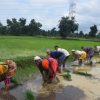
In the Midst of Conflict, India’s Indigenous Female Forest Dwellers Own their Land
Jam Bai, an Indigenous farmer from Korchi village in western India, is a woman in hurry. After two months of waiting, the rains have finally come and the rice saplings for her paddy fields must be sown this week while the land is still soft.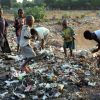
The World Bank Needs to Understand Poverty and What it Actually Costs a Family to Live on
The World Bank claims poverty is decreasing around the world but UN research shows it depends on what you measure. If we are serious about reducing poverty, we need to start by properly identifying it.« Previous Page — Next Page »


 UN Commission on International Trade Law Holds Colloquium on Harmonizing Law in Age of Digital Trade and Finance. Credit: UN Photo/Manuel Elías
Trade has historically been a geopolitical tool that can both be used to propel development as well as entrench inequalities. In various nations in East Asia and Latin America, increased trade, as often seen in export booms, has allowed them to achieve influential standings within the global economy. On the other hand, many low-income countries in Sub-Saharan Africa, Asia, and Latin America struggle to maintain a robust trade performance, and oftentimes are subjugated to exploitative trade dynamics through intense extraction of their natural resources. In recent decades, international trade has reached a new era as emerging economies across the world are rising in economic preeminence. Stable international trade is crucial to world peace as global interconnectedness facilitates reliable diplomacy. Nevertheless, significant challenges are on the rise. Notably, a major wave of United States tariff escalations in January 2025 lifted US import taxes to their highest level since the 1930s, changing market dynamics and forcing renegotiations with global trading partners.These articles are aimed at informing readers about the complexities of trade and its varying effects on development, with a special focus on the consequences of the global economic crisis, the potential of fair trade and the gender implications of trade policies.
Updated by Yilan Batista and Shuli Wong August 2026

The Week with IPS

NEXT STOP - SDGs
Tracking global progress towards a sustainable world


