Languages
Tuesday, September 22, 2026



News and Views from the Global South
Economy & Trade

Defending Democracy in a “Topsy-Turvy” World
It is a bleak global moment—with civil society actors battling assassinations, imprisonment, fabricated charges, and funding cuts to pro-democracy movements in a world gripped by inequality, climate chaos, and rising authoritarianism. Yet, the mood at Bangkok’s Thammasat University was anything but defeated.
From Slogans to Systems: Five Practical Steps for Turning Social Development Commitments into Action at Doha and Beyond
Thirty years ago, world leaders gathered in Copenhagen and made a promise: people would be at the center of development. This November, Heads of State and Government will meet again in Doha, Qatar, for the Second World Summit for Social Development or WSSD2.
Guatemalan Peasants Overcome Drought in the Dry Corridor
Water scarcity that relentlessly hits the rural communities in eastern Guatemala, located in the so-called Central American Dry Corridor, is a constant threat due to the challenges in producing food, year after year. But it is also an incentive to strive to overcome adversities.
Will COP30 Reenergize Nigeria’s Great Green Wall Project?
In 2017, 45-year-old Jabiru Muhammed could hardly contain his excitement when the village head of Batu in Jigawa State, northwestern Nigeria, announced that their community would work with officials from the National Agency for the Great Green Wall (NAGGW) to plant trees across a large stretch of land in the village.
Children’s Education Must Be Put At The Forefront of Climate Discussions At COP30
In 2024, the climate crisis has disrupted schooling for millions of students worldwide, weakening workforces and hindering social development on a massive scale. With extreme weather patterns preventing students from accessing a safe, and effective learning environment, the United Nations (UN) and the Geneva Global Hub for Education in Emergencies (EiE Hub) continue to urge the international community to assist the most climate-sensitive areas in building resilient education systems that empower both students and educators.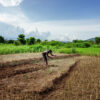
Indigenous Communities Are the Frontlines of Climate Action—It’s Time COP Listened
I had hoped to attend this year’s Conference of the Parties (COP) in person, to stand alongside fellow Indigenous leaders and advocate for the rights of our communities.
UN Agencies Calls for Urgent Action as Sudan’s Humanitarian Crisis Reaches Breaking Point
In recent weeks, Sudan’s humanitarian crisis has deteriorated considerably, as escalating hostilities, mass displacement, disease outbreaks, and a widespread lack of access to basic, essential services continue to endanger civilians across the country. The situation has been further compounded by a sharp increase in attacks on healthcare facilities throughout October, which has severely weakened the country’s already fragile health system and deprived thousands of people of lifesaving care.
Data Centre Investments Bad Deals
Opposition to data centres (DCs) has been rapidly spreading internationally due to their fast-growing resource demands. DCs have been proliferating quickly, driven by the popularity of artificial intelligence (AI).
The Time for a Decade of Island Resilience is Now
As biodiversity loss including ocean degradation, pollution and climate change threaten our planet, islands, and particularly global small island nations, often don't get the spotlight they deserve. Often labeled as vulnerable, the world’s small island nations are in fact powerful beacons of resilience.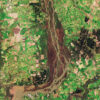
Eyes in the Sky: How Satellites Are Helping to Reduce Emissions from Livestock
Thousands of years ago, we looked to the stars for guidance — constellations like Taurus and the Pleiades signalled the changing of the seasons and the best times to plant, harvest and move animals.
In Zimbabwe, Secondhand Clothes From the West Are Collapsing the Local Textile Industry
Shamiso Marambanyika assists a male customer in selecting a pair of jeans on a Saturday morning in Mutare, a city in the eastern part of Zimbabwe.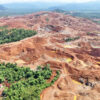
The Dangers of Green Mining
Even amidst the regressive resistance of the current U.S. administration, the world is shifting toward a green energy future. As governments pledge to phase out fossil fuels, companies tout electric vehicles, and financiers pour billions into solar, wind and batteries, it seems the necessary transition from fossil fuels to clean energy is finally picking up pace.
New Climate Goal: To Quadruple Sustainable Fuels
Quadrupling the production and use of sustainable fuels by 2035 is the goal of a new international initiative to drive energy transition and mitigate the climate crisis, which will be launched during Brazil's climate summit in November.
When Taliban Shut Down the Internet, Women Lost their Lifeline to Aid, Education & Each Other
When the Taliban recently cut off the Internet and phone networks across Afghanistan, millions of women and girls were silenced. For those with connectivity, the blackout severed their last link to the outside world – a fragile connection that had kept education, work, and hope alive.
Desalination is Booming in Chile, but Farmers Hardly Benefit
Desalination projects are booming in Chile, with 51 plants planned to process seawater and a combined investment of US$ 24.455 billion. However, these initiatives hardly benefit small-scale farmers, who are threatened by the prolonged drought, and cause environmental concerns.
Explaining Strong Credit Growth in Brazil Despite High Policy Rates
At 15 percent, Brazil’s monetary policy interest rate (called Selic) is one of the highest among major economies. Yet in 2024, bank credit grew by 11.5 percent and corporate bond issuance rose by 30 percent.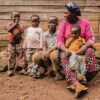
World Food Programme Warns of Emergency Levels of Hunger Amid Severe Funding Cuts
In 2025, unprecedented cuts to foreign aid and humanitarian funding have exacerbated global hunger crises, leaving millions without access to food or basic services. Funding shortfalls have forced aid agencies to scale back or suspend lifesaving programs in some of the world’s most food-insecure regions, particularly across the Global South—exacerbating already dire conditions caused by conflict, displacement, economic instability, and climate shocks.
Chile Aims for Sustainable Port Expansion – VIDEO
 Maritime transport is key for Chile, which has 34 free trade agreements with countries and blocs of nations, one of the broadest trade networks in the world with access to over 86% of the global gross domestic product (GDP).
Connecting the Dots: Policy Shifts, Realities and Lessons
The Asia-Pacific region has long served as a springboard for transforming socio-economic implementation gaps into development opportunities. With the 2030 deadline for the Sustainable Development Goals fast approaching, policymakers are stepping up efforts to translate policy announcements into tangible impacts.
A Hungry World Knows No Borders
When crops fail, people move not by choice, but by necessity. As families are displaced by droughts and failed harvests, the pressures do not always stop at national boundaries. In short, hunger has become one of the most powerful forces shaping our century.
Vanishing Wisdom of the Sundarbans–How climate change erodes centuries of ecological knowledge
Bapi Mondal's morning routine in Bangalore is a world away from his ancestral village, Pakhiralay, in the Sundarbans, West Bengal. He wakes before dawn, navigates heavy traffic, and spends eight long hours molding plastic battery casings. It's not the life his honey-gathering forefathers knew, but factors like extreme storms, rising seas, and deadly soil salinity forced the 40-year-old to abandon centuries of family tradition and travel miles away to work in a concrete suburban factory.« Previous Page — Next Page »


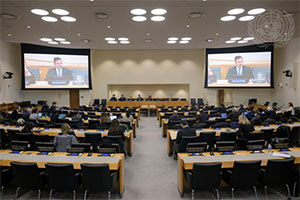 UN Commission on International Trade Law Holds Colloquium on Harmonizing Law in Age of Digital Trade and Finance. Credit: UN Photo/Manuel Elías
Trade has historically been a geopolitical tool that can both be used to propel development as well as entrench inequalities. In various nations in East Asia and Latin America, increased trade, as often seen in export booms, has allowed them to achieve influential standings within the global economy. On the other hand, many low-income countries in Sub-Saharan Africa, Asia, and Latin America struggle to maintain a robust trade performance, and oftentimes are subjugated to exploitative trade dynamics through intense extraction of their natural resources. In recent decades, international trade has reached a new era as emerging economies across the world are rising in economic preeminence. Stable international trade is crucial to world peace as global interconnectedness facilitates reliable diplomacy. Nevertheless, significant challenges are on the rise. Notably, a major wave of United States tariff escalations in January 2025 lifted US import taxes to their highest level since the 1930s, changing market dynamics and forcing renegotiations with global trading partners.These articles are aimed at informing readers about the complexities of trade and its varying effects on development, with a special focus on the consequences of the global economic crisis, the potential of fair trade and the gender implications of trade policies.
Updated by Yilan Batista and Shuli Wong August 2026

The Week with IPS

NEXT STOP - SDGs
Tracking global progress towards a sustainable world
Tracking global progress towards a sustainable world
