Languages
Friday, October 16, 2026



News and Views from the Global South
Economy & Trade

Beyond Lives Saved: Why Early Warning Systems Are a Smart Investment
Significant progress has been made globally in implementing national and local disaster risk reduction strategies. Yet, the impact of disasters on lives and economies persists and disaster resilience is one of the most regressed areas in Sustainable Development Goal implementation.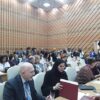
Women From Landlocked Developing Countries Set Sights on Open Horizons
“Progress towards gender equality and equity remains uneven and far too slow. One in four women in landlocked developing countries (LLDCs) live in extreme poverty, and this is nearly 75 million women,” said Rabab Fatima, Secretary-General of the Third United Nations Conference on Landlocked Developing Countries or LLDC3 ongoing in Awaza, Turkmenistan.
Africa’s ‘Land-Linked’ Nations Chart a New Trade Route to Prosperity
Once relegated to the periphery of Africa’s economic map due to their lack of coastline, the continent’s landlocked developing countries (LLDCs) are now reframing their geographic constraints as gateways to opportunity.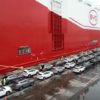
Latin America’s Electric Mobility on China’s Path
Residents near the port of Itajaí in southern Brazil celebrated the arrival of 7,292 electric and hybrid vehicles from China aboard the ship BYD Shenzhen on May 28 as a "historic event," with unloading taking four days.
Landlocked Developing Countries’ Group to Negotiate Way Out of Agricultural Catastrophe
Agriculture is a critical sector in landlocked developing countries, as more than half (55 percent) of the population is employed in the agriculture sector – significantly higher than the global average of 25 per cent. As such, the deterioration of food security in landlocked developing countries (LLDCs) is an unfolding catastrophe.
‘We Must Build Healthier Digital Environments Where Reliable Information Plays a Leading Role’
CIVICUS discusses Bolivia’s upcoming presidential election with Juan Carlos Uribe and Lucas Illanes from ChequeaBolivia, an initiative that monitors and verifies social media content.
UN Chief Hails Turkmenistan’s Quiet Diplomacy as Launchpad for Landlocked Solidarity
In the glass-panelled hallway straddling Buildings 2 and 3 at the Awaza Congress Centre, two smartly dressed young Turkmens stood behind an ornate national pavilion—anxious, alert, and surprisingly eloquent.
International Day of the World’s Indigenous Peoples 2025

Artificial Intelligence is changing how we live, learn, work - and who gets heard. It holds promise for humanity but, without safeguards, it risks becoming a new tool of domination.

How One Caribbean Country Is Changing the Face of Debt
The beauty of the majestic Piton mountains, vibrant culture, dazzling beaches and lush landscapes of Saint Lucia are invaluable assets. The country also takes pride in having two Nobel laureates, which is remarkable for a nation with a population of over 180,000.
Equal Footing: Building Pathways for Landlocked Developing Countries to Participate in Global Economy
Heads of State, ministers, investors and grassroots leaders are gathered in Awaza on Turkmenistan’s Caspian coast for a once-in-a-decade UN conference aimed at rewiring the global system in support of 32 landlocked developing countries whose economies are often ‘locked out’ of opportunity due to their lack of access to the sea.
Biogas to Wipe Out Poultry Industry Pollution in El Salvador – VIDEO
El Granjero, the second-largest egg producer in El Salvador, invested US$2.5 million in 2017 to build a biogas plant, proving that there is a solution to the thorny issue of environmental pollution caused by most poultry companies in the country. 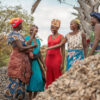
For LLDCs, the Next Decade Must be About Unlocking the Untapped Potential
As the world’s youngest and fastest-growing nations, LLDCs are home to immense untapped potential, yet remain cut off from the currents of international commerce and opportunity. Imagine being surrounded by opportunity, yet separated from it by mountains, borders, and vast distances from the nearest port—this is the daily reality for the world’s landlocked developing countries (LLDCs).
UN Trade and Environment Agencies Target Plastic Pollution through Global Negotiations and Trade Measures
They are lightweight, cheap, and able to be used in every sector of every supply chain. Few materials have revolutionized manufacturing and the global economy as much as plastics have. They are essential in almost everything, however this comes at a cost. A cost of 1.5 trillion annually in environmental damage, and a 75 percent waste ratio of all plastic ever produced.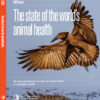
The Missing Link in Africa’s Climate Plans: Animal Health
One would expect that this year’s wetter than average rainy season in parts of Africa would be viewed with relief, not fear. Yet many areas in the region sits at a knife’s edge—still recovering from years of drought and a historic famine, too much rain leads to flooding and water-borne diseases. Both varieties of extreme weather place enormous stress on livestock systems across the region, on which communities rely for both sustenance and livelihoods.
Japan’s Right-wing Populist Rise
Rice queues – something once unthinkable – began appearing around May. As the country’s staple food hit record prices, frustrated shoppers found themselves breaking a cultural taboo by switching to rice from South Korea. It was a symbol of how far Japan’s economic certainties had crumbled, creating fertile ground for a political shift.
Belem City Limits: How to Host a Successful Climate COP
There is no question that most climate activists and governments were delighted when Brazil offered to host the 2025 UN Climate Conference taking place this November.
Spotlight on Landlocked Developing Countries Ahead of Third UN Conference
Landlocked developing countries face a unique set of challenges. Without coastal ports, they rely on transit nations, causing higher trade costs and delays.
Climate Reparations are Necessary but Not Sufficient: World Needs Less Growth & More Justice
While recent heat waves were causing thousands of deaths, the Trump administration was busy dismantling policies that regulate greenhouse gases on the theory they don’t harm human health.
Why Locally Led Development Works and How Funders Can Get It Right
In Uganda, local communities are routinely sidelined in development processes, despite knowing most about their own needs. When a Moroto District officer remarked, ‘This is the first time local leaders were truly heard’, it offered a powerful reminder of what so often goes wrong: development fails when communities are excluded.
Historic Inter-American Court Ruling: A Game-Changer for Environmental Defenders?
The Inter-American Court of Human Rights has issued one of the most progressive climate justice decisions of our time. Its historic Advisory Opinion on the climate emergency and human rights, released on July 3, 2025, was unequivocal: States have legal obligations under international human rights law to reduce, prevent, and address climate damage, including reining in big polluters.
Africa’s Development at a Crossroads: Report Warns of Missed SDG Targets Without Urgent Action on Jobs, Equity, and Financing
Africa is making progress on over two-thirds of the Sustainable Development Goals (SDGs), but the pace remains far too slow to meet the 2030 targets, especially in areas like decent employment, gender equality, and access to social protection.« Previous Page — Next Page »





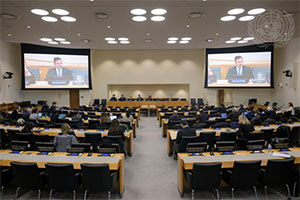 UN Commission on International Trade Law Holds Colloquium on Harmonizing Law in Age of Digital Trade and Finance. Credit: UN Photo/Manuel Elías
Trade has historically been a geopolitical tool that can both be used to propel development as well as entrench inequalities. In various nations in East Asia and Latin America, increased trade, as often seen in export booms, has allowed them to achieve influential standings within the global economy. On the other hand, many low-income countries in Sub-Saharan Africa, Asia, and Latin America struggle to maintain a robust trade performance, and oftentimes are subjugated to exploitative trade dynamics through intense extraction of their natural resources. In recent decades, international trade has reached a new era as emerging economies across the world are rising in economic preeminence. Stable international trade is crucial to world peace as global interconnectedness facilitates reliable diplomacy. Nevertheless, significant challenges are on the rise. Notably, a major wave of United States tariff escalations in January 2025 lifted US import taxes to their highest level since the 1930s, changing market dynamics and forcing renegotiations with global trading partners.These articles are aimed at informing readers about the complexities of trade and its varying effects on development, with a special focus on the consequences of the global economic crisis, the potential of fair trade and the gender implications of trade policies.
Updated by Yilan Batista and Shuli Wong August 2026

The Week with IPS

NEXT STOP - SDGs
Tracking global progress towards a sustainable world
Tracking global progress towards a sustainable world
