Languages
Tuesday, October 20, 2026



News and Views from the Global South
Economy & Trade

Make Use of all Urban Waste, a Utopia in Brazil?
In 2014, Santa Catarina became the first and only state free of open-air garbage dumps in Brazil. Now, 14 of its municipalities are seeking to also free themselves from landfills and make use of nearly all urban solid waste.
France Rallies World Leaders to Seal Ocean Protection Deal at UN Conference in Nice
With the future of the world’s oceans hanging in the balance, global leaders, scientists, and activists gathered in the French Riviera city of Nice this week for the historic UN Ocean Conference, where France declared a new era of high seas governance and marine protection.
UN Ocean Conference Closes with Historic Commitments, But Activists Demand Action Beyond Words
The third United Nations Ocean Conference (UNOC3) concluded today in Nice with an urgent call for governments to translate bold words into concrete action to protect the world’s oceans. Co-hosted by France and Costa Rica, the summit brought together more than 15,000 participants, including 50 heads of state and government, civil society leaders, scientists, youth, and Indigenous communities in an 11-day event hailed as both a milestone for ocean diplomacy and a test of global resolve.
Biggest-Ever Aid Cut by G7 Members a Death Sentence for Millions of People
Aid cuts could cost millions of lives and leave girls, boys, women and men without access to enough food, water, education, health treatment. G7 countries are making deliberate and deadly choices by cutting life-saving aid, enabling atrocities, and reneging on their international commitments
Mexico, Spain, East Africa, Awarded For their Ecosystem Restoration Programs
At the 2025 United Nations Ocean Conference (UNOC3), the United Nations Environment Programme (UNEP) and the Food and Agriculture Organization (FAO) recognized three countries and regions for their large-scale programs to restore their native ecosystems.
End Child Labour Forever through Education for All Children
As we mark today’s World Day Against Child Labour, we must confront an urgent global truth: over 160 million children around the world are engaged in child labour – many of them in the most dangerous, degrading and life-limiting conditions imaginable. These are children forced to work in fields, factories and conflict zones – deprived of their right to safety, to dignity and, above all, to an education.
From Villain to Vanguard: How the Shipping Industry Could Help Save Our Seas
Once cast as a culprit of ocean degradation, the global shipping industry is quietly reshaping its image—with experts now betting on it as a key ally in saving our seas.
Atoll Nation of Tuvalu Faces Climate Existential Crisis, Frustration With Slow Funding
Prime Minister of Tuvalu, Feleti Teo, describes himself as an optimist—despite the existential crisis his atoll nation faces with climate change-induced sea level rise and frustration with existing international financial mechanisms to fund adaptation and mitigation.
UNOC3: A Cry for Global Action to Save Small-Scale Fisheries
Just before dawn, the worn wooden dhows begin gliding toward the shore at Magogoni fish market in Tanzania’s port city of Dar es Salaam. Their tattered sails flutter against the orange sky. Exhausted fishers step out onto the muddy sand, hauling frayed nets and plastic crates, their sun-creased faces tight with fatigue.
‘A Wake-Up Call from the Womb’—Indigenous People Rally for a Binding Plastics Treaty
As the sun peeked through the French Riviera clouds and a dozen reporters sipped orange juice aboard the WWF Panda Boat docked at Port Lympia, Frankie Orona, a Native American rights advocate from the Society of Native Nations in San Antonio, Texas, stunned the room into a moment of absolute stillness.
Artificial Intelligence Presents Risks and Opportunities for the Disabled
On June 10, the United Nations (UN) held a conference titled Artificial Intelligence for Inclusion: Strengthening Workforce Participation for Persons with Disabilities. This conference, which was organized by the Permanent Mission of Canada to the UN, featured a discussion by a panel of experts from various sectors, looking to shed light on the ways AI tools can be used to create inclusive workforces that maximize fairness and accessibility.
Chumbe Island: How Tanzania is Leading the Charge to Save Our Oceans
Under the surface of Tanzania’s turquoise waters, a miracle unfolds quietly every day.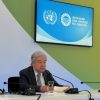
‘Ocean Health Is Inseparable From Human Health, Climate Stability’—UN Chief Urges Swift Action, Partnership for Ocean Conference
“When we poison the ocean, we poison ourselves,” UN Secretary-General António Guterres told reporters on the second day of the UN Ocean Conference (UNOC3).
UNOC3: World Leaders Recognize Urgent Need for Ocean Action
The world has converged along the Mediterranean Sea to affirm their commitments to the sustainable use and protection of the ocean.
‘The Regime Seeks to Consolidate Absolute Control by Eliminating All External Oversight’
CIVICUS discusses Nicaragua’s withdrawal from the United Nations Educational, Scientific and Cultural Organization (UNESCO) and other international organisations with Wisthon Noguera, an activist, student and deputy coordinator of the National Youth Platform of Nicaragua.
How to Spur Economic Growth in Africa’s Fragile and Conflict-Affected States
More than half of sub-Saharan Africa’s population lives in fragile and conflict-affected states (FCS)—economies that face profound challenges such as stagnant economic growth, weak institutions, inadequate public services, extreme poverty, war, and forced internal displacement.
Oceans at Risk: Report Warns Global Fossil Fuel Expansion Threatens Marine Biodiversity
A newly released report by Earth Insight in collaboration with 16 environmental organizations has sounded a global alarm on the unchecked expansion of offshore oil and gas projects into some of the most biologically rich and ecologically sensitive marine environments on the planet.
UN Ocean Decade vs. Coastal Reality: ‘They Took Our Sea,’ Say Vizhinjam Fishworkers
As the UN Ocean Conference (UNOC) approaches, bringing renewed attention to SDG 14 (Life Below Water) and the rights of ocean-dependent communities, India’s Vizhinjam coast highlights the environmental injustice and human cost of unchecked coastal development.
Girls in Kenya Are Repurposing the Invasive Mathenge Tree Into Furniture
Char Tito is hammering nails into wood at Kakuma Arid Zone Secondary School in Turkana County, northern Kenya. The 16-year-old is making a traditional chair under the scorching sun outside one of the classroom blocks.
While Population Rises, Jobs Decline: Global Job Markets Tied to U.S. Consumerism
While Asia and the Pacific seem to be booming in employment and GDP growth, reports reveal a possible volatile and fragile market pegged to U.S. consumerism.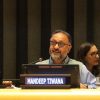
CIVICUS’ New Leader Speaks on Global Declines in Civic Freedom
On June 1, CIVICUS Global Alliance, announced the appointment of Mandeep Tiwana as its new Secretary-General. With his tenure underway, Tiwana sat down with an IPS correspondent to discuss CIVICUS’s work in promoting civic freedom and solidarity in an increasingly autonomy-restrictive world.« Previous Page — Next Page »





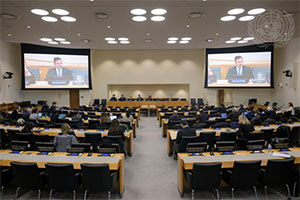 UN Commission on International Trade Law Holds Colloquium on Harmonizing Law in Age of Digital Trade and Finance. Credit: UN Photo/Manuel Elías
Trade has historically been a geopolitical tool that can both be used to propel development as well as entrench inequalities. In various nations in East Asia and Latin America, increased trade, as often seen in export booms, has allowed them to achieve influential standings within the global economy. On the other hand, many low-income countries in Sub-Saharan Africa, Asia, and Latin America struggle to maintain a robust trade performance, and oftentimes are subjugated to exploitative trade dynamics through intense extraction of their natural resources. In recent decades, international trade has reached a new era as emerging economies across the world are rising in economic preeminence. Stable international trade is crucial to world peace as global interconnectedness facilitates reliable diplomacy. Nevertheless, significant challenges are on the rise. Notably, a major wave of United States tariff escalations in January 2025 lifted US import taxes to their highest level since the 1930s, changing market dynamics and forcing renegotiations with global trading partners.These articles are aimed at informing readers about the complexities of trade and its varying effects on development, with a special focus on the consequences of the global economic crisis, the potential of fair trade and the gender implications of trade policies.
Updated by Yilan Batista and Shuli Wong August 2026

The Week with IPS

NEXT STOP - SDGs
Tracking global progress towards a sustainable world
Tracking global progress towards a sustainable world
