Languages
Tuesday, October 27, 2026



News and Views from the Global South
Economy & Trade

How Mangroves Save Lives, Livelihoods of Bangladesh Coastal Communities
Golenur Begum has faced 12 cyclones in her life. As a child, she witnessed her father’s house destroyed, and as an adult, she watched her home smashed. Saltwater brought by the tidal surges that accompanied the cyclones wrecked their farms and livelihoods. And with climate change, these impacts are becoming more intense and frequent.
From Grief to Action: Demands for Democratic Renewal in the Balkans
Three catastrophic events in the Balkans have sparked powerful movements for systemic change. A train collision that killed 57 people in Greece, a nightclub fire that claimed 59 young lives in North Macedonia and a collapsed railway station roof that left 15 dead in Serbia have ignited sustained anti-corruption protests in all three countries. These weren’t random tragedies but the culmination of systemic failure – neglected safety regulations, illegally issued permits and compromised oversight – with corruption the common denominator.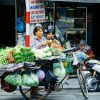
Asia-Pacific Region Moves into a Resilient Future with International Cooperation
As the United Nations celebrates its 80th anniversary, one message from the UN Charter remains particularly relevant: promoting cooperative solutions to international economic, social, health, and related problems.
Young Africans Priced Out of Cities as Urban Housing Crisis Deepens
After graduating in 2019, Jeremiah Achimugu left Sokoto State in northwestern Nigeria for Abuja, the nation’s capital, in search of better opportunities. But life in the city brought unexpected challenges, especially the high cost of housing.
Mask Off – Recapping the 2025 World Bank Land Conference
Last week, at its annual Land Conference in Washington D.C., (May 5-8), the World Bank showed allegiance to the new US administration by dropping the pretense of promoting land reform for climate action and confirming that its land agenda is about boosting corporate profits.
Amidst Choking Garbage, Locals Join Hands to Build a Zero-Waste Bali
It was Christmas Eve last year when visitors across several tourism hotspots in Bali woke up to a ghastly scene they hadn’t expected: layers of cans, bags, bottles, and driftwood covering their favorite sandy beaches, washed up by hours of rain and high tide. So bad was the situation that from Kuta to Legian and Seminyak to Jimbaran—none of the island’s picturesque beaches was clean enough to attract the visitors for a swim.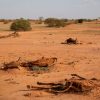
A Natural Disaster that Has Affected More People Worldwide Than Any Other
Here’s a question: Over the past 40 years, what natural disaster has affected more people around the globe than any other?
Former Energy Ministers from Saint Lucia and Uruguay Named REN21 Renewable Energy Champions
The Renewable Energy Policy Network for the 21st Century (REN21), a global network that advances renewable energy through collaboration and knowledge sharing, has named Dr James Fletcher of Saint Lucia and Dr Ramón Méndez Galain of Uruguay as its first Renewable Energy Champions.
Transitioning to a Circular Economy: The Future We Cannot Afford to Delay
From environmental degradation to biodiversity loss and mounting waste, we are facing the dire consequences of a reckless economic model that extracts, consumes, and discards. But there is an urgent alternative—one that is not just possible, but essential.
From Pledges to Action: EU Ocean Leadership on the Line
If one so wished, it would be entirely possible to spend a lifetime travelling from one international environmental conference to the next, without ever returning home. But the relentless pace of these meetings does not always translate into equally rapid action.
‘Trump Is Advancing a 21st-century US Variant of Fascism, Backed by a White Nationalist Ideology’
CIVICUS speaks about democratic decline in the USA with humanitarian and civil society activist Samuel Worthington, former president of the US civil society alliance InterAction and author of a new book, Prisoners of Hope: Global Action and the Evolving Roles of US NGOs.

Lawyer-Turned-Activist Bhuwan Ribhu Honored for Leading a Campaign to End Child Marriage
Bhuwan Ribhu didn’t plan to become a child rights activist. But when he saw how many children in India were being trafficked, abused, and forced into marriage, he knew he couldn’t stay silent.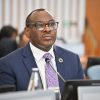
A Premium Is What Africa Pays for Poor Credit Perception
Many African countries are perceived as a credit and investment risk. As a result, they are paying higher borrowing costs than developed countries. African countries often fail to attract international investment and finance as a result of poor credit ratings by international agencies. Only Botswana and Mauritius, out of the 55 African countries, receive an investment grade rating. Lenders view the rest as having 'junk' status, indicating a high risk of loan default. As a result, lenders will demand a higher interest rate to compensate for the perceived increased risk of the borrower.
Trump Accord Sows Discord in US Empire
US President Donald Trump has deliberately sown discord worldwide in attempting to remake the world to serve supposed American interests better. He will not cede influence, let alone power and control, to other nations, let alone people.
‘The International Response Should Follow the Principle of ‘Nothing about Us, Without Us’’
CIVICUS speaks with Ukrainian gender rights activist Maryna Rudenko about the gendered impacts of the war in Ukraine and the importance of including women in peacebuilding efforts. Russia’s full-scale invasion of Ukraine has profoundly impacted on women and girls. Many have been displaced and are struggling with poverty and unemployment. Those who’ve stayed endure daily missile attacks, damaged infrastructure, lack of basic services and sexual violence from Russian forces if they live in occupied territories. Women activists, caregivers and journalists are particularly vulnerable. The international community must increase support to ensure justice for victims and women’s inclusion in peace efforts.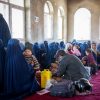
World Immunization Week Highlights the Urgency of Global Vaccine Access
For 2025, the theme of World Health Immunization Week (24-30 April), “Immunization for All is Humanly Possible”, emphasizes the need to eradicate disparities in access to vaccines, particularly for children. By encouraging governments to implement vaccination programs at the local and national levels, the World Health Organization (WHO) seeks t0 ensure worldwide access to life-saving vaccines.
The World Bank, at 80, and the True Goals of Multilateral Cooperation and Global Development
The Rogun Dam in the mountains of Southern Tajikistan, if ever completed, would be the tallest dam in the world. Late last year, the World Bank committed almost $3 billion to finance its development, claiming the project would benefit locals.
Indispensable—Native Hawaiian Elder Says of Indigenous Ocean Management Systems
Indigenous people play a vital role in ocean protection due to their deep-rooted connection to the marine environment and their traditional knowledge of sustainable resource management. They often possess centuries-old practices and stewardship ethics that prioritize ecological balance and community well-being.
Sights Set on Highest Ambition as World Rows Through Toughest Ocean Crisis
Participants from over 100 countries will leave the 10th Our Ocean Conference in Busan, the Republic of Korea, with stark reminders that with sea levels rising dangerously, coastal regions and low-lying areas globally, particularly densely populated areas, are threatened.
Economic Community of West African States: Fifty and Fractured
Half a century after ECOWAS promised peace and prosperity, three breakaway states are testing West African solidarity, sparking a potential trade war.
Mexico Bans GM Corn Cultivation in Constitutional Reform: Action Follows Trade Ruling That Ignored Evidence of Genetic Contamination
On March 17, Mexican President Claudia Scheinbaum signed into law a constitutional reform banning the cultivation of genetically modified (GM) corn. The action followed a December ruling by a trade tribunal, under the U.S.-Mexico-Canada (USMCA) trade agreement, in favor of a U.S. complaint that Mexico's 2023 presidential decree, with broader restrictions on the consumption of GM corn, constituted an unfair trade practice by prohibiting the use of GM corn in tortillas.« Previous Page — Next Page »





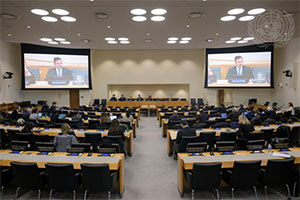 UN Commission on International Trade Law Holds Colloquium on Harmonizing Law in Age of Digital Trade and Finance. Credit: UN Photo/Manuel Elías
Trade has historically been a geopolitical tool that can both be used to propel development as well as entrench inequalities. In various nations in East Asia and Latin America, increased trade, as often seen in export booms, has allowed them to achieve influential standings within the global economy. On the other hand, many low-income countries in Sub-Saharan Africa, Asia, and Latin America struggle to maintain a robust trade performance, and oftentimes are subjugated to exploitative trade dynamics through intense extraction of their natural resources. In recent decades, international trade has reached a new era as emerging economies across the world are rising in economic preeminence. Stable international trade is crucial to world peace as global interconnectedness facilitates reliable diplomacy. Nevertheless, significant challenges are on the rise. Notably, a major wave of United States tariff escalations in January 2025 lifted US import taxes to their highest level since the 1930s, changing market dynamics and forcing renegotiations with global trading partners.These articles are aimed at informing readers about the complexities of trade and its varying effects on development, with a special focus on the consequences of the global economic crisis, the potential of fair trade and the gender implications of trade policies.
Updated by Yilan Batista and Shuli Wong August 2026

The Week with IPS

NEXT STOP - SDGs
Tracking global progress towards a sustainable world
Tracking global progress towards a sustainable world
