Languages
Saturday, October 24, 2026



News and Views from the Global South
Economy & Trade
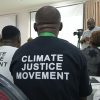
Climate Justice Movement in Nigeria to Tackle Oil Polluters Launched
Greenpeace Africa earlier in May brought together over 40 Nigerian civil society groups in Abuja to launch the Climate Justice Movement, the first of its kind in the country. The goal is to unite various climate efforts nationwide and address the severe impacts of climate change on Nigeria and the African continent.
The 2025 World Social Summit Must Not Be a Missed Opportunity
Rumors circulating at UN Headquarters suggest there is little appetite for ambition at the Second World Summit for Social Development, set to take place in Doha on 4-6 November 2025. Diplomats and insiders whisper of “summit fatigue” after a packed calendar of global gatherings—the 2023 SDG Summit, the 2024 Summit of the Future, and the upcoming June 2025 Fourth International Conference on Financing for Development. Compounding this fatigue is the chilling rise of anti-rights rhetoric and political resistance from some governments, casting a shadow over multilateral efforts. For some, just getting any multilateral agreement is good enough. As a result, the Zero Draft of the Social Summit Political Declaration lacks the ambition required to confront the multiple social crises our world faces.
UNOC3: Bringing Ocean Education and Science to the Global Agenda
A greater understanding and appreciation of the world’s oceans is needed to protect them. As the global community prepares to convene for the ocean conference, they must also prepare to invest in scientific efforts and education that will bolster their joint efforts.
Energy Storage Has Yet to Take Off in Mexico
Researcher Edilso Reguera and his team began studying electric battery manufacturing in 2016, but in 2023, they ramped up efforts to develop a lithium-based prototype for motorcycles.
Kenya Pilots AI System to Protect Black Rhino Calves in Aberdare National Park
Conservationists in Kenya’s Aberdare National Park have piloted an artificial intelligence (AI) system designed to detect and deter hyenas—as part of an effort to protect black rhino calves ahead of their reintroduction to the zone.
Romania’s Electoral Crisis: A Warning Shot for Democracy in the Digital Age
On 6 December 2024, Romania’s Constitutional Court made an unprecedented decision: with just two days to go before a presidential runoff expected to bring a far-right, Russia-sympathising candidate to power, the court took the extraordinary step of annulling the election due to evidence of massive Russian interference. It was the first time an EU member state has cancelled an election over social media disinformation. It may not be the last.
1 in 4 Jobs will be Transformed by Generative AI
Generative artificial intelligence (AI) has increased efficiency and output across numerous industries. However, labour organizations have expressed concern over AI’s ability to radically transform jobs around the world.
South-South Cooperation: An Engine for Transformational Change in Achieving the 2030 Agenda
With just five years to 2030, the world stands at a pivotal juncture. The collective promises of our 2030 Agenda for Sustainable Development – to end poverty, protect the planet, and ensure prosperity for all – remain urgent and vital. Yet, progress is uneven, and in many areas, we risk falling short.
Economic Growth is the Wrong Metric for Our Time
As the United States lurches toward isolationism and authoritarianism, its political problems are now bleeding into pocketbook anxieties that Trump's policies will torpedo economic growth, both domestically and globally.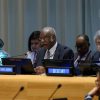
Human Life Hinges on the Preservation of Biological Diversity
Since 2000, the United Nations (UN) recognizes May 22 as the International Day for Biological Diversity, in hopes of promoting international cooperation and conversation surrounding biodiversity issues. Through the 2025 theme; Harmony With Nature and Sustainable Development, the UN seeks to increase public awareness around biodiversity loss and promote progress in the Sustainable Development Goals (SDGs).
How Computational Biology Is Zoning in on the Future of Agriculture
When pioneering agronomist and father of the “Green Revolution” Norman Borlaug set out to breed a disease-resistant, high-yielding variety of wheat, he spent years laboriously planting and pollinating different specimens by hand. He manually catalogued every outcome until he landed on the variety that would transform farming and avert famine. The result was even greater than expected: it is estimated that he saved more than a billion people worldwide from starvation.
Using AI as an Ally: What the latest UNDP Human Development Report Means for Latin America, Caribbean
The United Nations Development Programme’s 2025 Human Development Report (HDR) says crises such as the Covid-19 pandemic have contributed to ‘the flatlining of decades of progress in the Human Development Index,’ with Latin America and the Caribbean facing unique challenges and opportunities.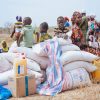
The True Cost of America’s Retreat: How USAID Cuts Threaten Millions of Lives
In January 2025, President Trump signed an executive order that upended humanitarian efforts globally, leaving millions of vulnerable people without lifesaving services. The administration's decision to slash American international aid by 83% is creating daily tragedies in the world's most fragile regions.
UN Ocean Conference Must Inspire Global Ambition
The United Nations Ocean Conference (UNOC) takes place every three years and in just a few weeks, the international community will gather in Nice, France, at a time when the International Science Council has called for the world to address the new reality of a disrupted Earth system.
Seafood Without Transparency is a Recipe for Disaster
Seafood is a staple in my house – fish tacos, paella, sushi. But no matter how good it tastes, I can’t help but wonder: was my fish caught responsibly? Or did something go horribly wrong before it ever reached my plate?
A Shift in the Sands: The Reshaping of Global Influence in the Gulf
The Gulf's most powerful weapon isn't a military, a United Nations (UN) Security Council seat, or a legacy of global diplomacy. Choosing multilateralism and mega-projects over militaries and old-world diplomacy, they are tipping the scale without firing a single shot. Their approach is more modern, where money, alliances, and an active vision for the future are the weapon of choice.
How Mangroves Save Lives, Livelihoods of Bangladesh Coastal Communities
Golenur Begum has faced 12 cyclones in her life. As a child, she witnessed her father’s house destroyed, and as an adult, she watched her home smashed. Saltwater brought by the tidal surges that accompanied the cyclones wrecked their farms and livelihoods. And with climate change, these impacts are becoming more intense and frequent.
From Grief to Action: Demands for Democratic Renewal in the Balkans
Three catastrophic events in the Balkans have sparked powerful movements for systemic change. A train collision that killed 57 people in Greece, a nightclub fire that claimed 59 young lives in North Macedonia and a collapsed railway station roof that left 15 dead in Serbia have ignited sustained anti-corruption protests in all three countries. These weren’t random tragedies but the culmination of systemic failure – neglected safety regulations, illegally issued permits and compromised oversight – with corruption the common denominator.
Asia-Pacific Region Moves into a Resilient Future with International Cooperation
As the United Nations celebrates its 80th anniversary, one message from the UN Charter remains particularly relevant: promoting cooperative solutions to international economic, social, health, and related problems.
Young Africans Priced Out of Cities as Urban Housing Crisis Deepens
After graduating in 2019, Jeremiah Achimugu left Sokoto State in northwestern Nigeria for Abuja, the nation’s capital, in search of better opportunities. But life in the city brought unexpected challenges, especially the high cost of housing.
Mask Off – Recapping the 2025 World Bank Land Conference
Last week, at its annual Land Conference in Washington D.C., (May 5-8), the World Bank showed allegiance to the new US administration by dropping the pretense of promoting land reform for climate action and confirming that its land agenda is about boosting corporate profits.« Previous Page — Next Page »





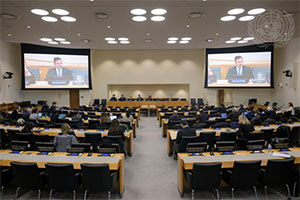 UN Commission on International Trade Law Holds Colloquium on Harmonizing Law in Age of Digital Trade and Finance. Credit: UN Photo/Manuel Elías
Trade has historically been a geopolitical tool that can both be used to propel development as well as entrench inequalities. In various nations in East Asia and Latin America, increased trade, as often seen in export booms, has allowed them to achieve influential standings within the global economy. On the other hand, many low-income countries in Sub-Saharan Africa, Asia, and Latin America struggle to maintain a robust trade performance, and oftentimes are subjugated to exploitative trade dynamics through intense extraction of their natural resources. In recent decades, international trade has reached a new era as emerging economies across the world are rising in economic preeminence. Stable international trade is crucial to world peace as global interconnectedness facilitates reliable diplomacy. Nevertheless, significant challenges are on the rise. Notably, a major wave of United States tariff escalations in January 2025 lifted US import taxes to their highest level since the 1930s, changing market dynamics and forcing renegotiations with global trading partners.These articles are aimed at informing readers about the complexities of trade and its varying effects on development, with a special focus on the consequences of the global economic crisis, the potential of fair trade and the gender implications of trade policies.
Updated by Yilan Batista and Shuli Wong August 2026

The Week with IPS

NEXT STOP - SDGs
Tracking global progress towards a sustainable world
Tracking global progress towards a sustainable world
