
Tuesday, May 5, 2026



News and Views from the Global South
Economy & Trade

Onerous Debt Making Poorest Poorer
Contractionary economic trends since 2008 and ‘geopolitical’ conflicts subverting international cooperation have worsened world conditions, especially in the poorest countries, mainly in Africa, leaving their poor worse off.
Blinken’s Visit to Africa: Is US Counterterrorism Counterproductive?
US Secretary of State Antony Blinken’s week-long tour across four African countries was aimed at strengthening the US-Africa relationship—a relationship, according to some commentators, already waning as China and Russia are increasing their influence.
Building a More Resilient Work Force to Meet Challenges of Tomorrow
Quadrupling in size since 1950, the working age population in Asia and the Pacific now accounts for 67.2 per cent of the total population in the region and is set to peak at 3.3 billion by the mid-2030s.
Should We Attribute All Climate-Related Disasters Only to Global Warming?
The Republic of Mauritius, an island nation, experienced its latest flash floods since the last bad one in 2013. These floods resulted in the loss of lives and hefty bills for car insurers with over 3000 cars have been damaged.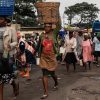
How to Ease Rising External Debt-Service Pressures in Low-Income Countries
As 2024 starts, the good news is that there haven’t been any notable requests by a low-income country for comprehensive debt relief since Ghana’s, more than a year ago. Despite this, vulnerabilities remain, with high debt servicing costs a growing challenge for low-income countries.
Illegal Artisanal Mining Threatens Amazon Jungle and Indigenous Peoples in Brazil
Artisanal mining, or "garimpo" as it is known in Brazil, has returned to the headlines as a factor in the deaths of Yanomami indigenous people, whose territory in the extreme north of Brazil suffers constant encroachment by miners, which has intensified in recent years.
Under the Scorching Sun Kenyan Farmers Find New Ways to Beat Climate Change
In the tranquil village of Kotiang, perched on the shores of Lake Victoria in Kenya's lakeside region, Yvonne Atieno, a dedicated mother in her early thirties, tends to her fish pond under the relentless equatorial sun. Her young daughter eagerly joins her mother in this nurturing endeavor. Yvonne, a certified accountant by profession, reflects on how her decision to embrace regenerative farming has not only enriched her life but also imparted invaluable life lessons.
Beyond the Farm: How Empowering Women Farmers Drives Change in Jordan and Beyond
Dr. Zeinab Al-Momany, a prominent social entrepreneur, sheds light on the journey of empowering women farmers in Jordan and the Arab world, where women often work long hours for low pay and lack labour recognition.
Zimbabweans Gambling for a Living Amid Escalating Hardships
Twenty years after completing high school in Zimbabwe, 38-year-old Tinago Mukono still has not found employment, and in order to survive, he has switched to betting, turning it into a form of employment. Every day throughout the week, Mukono leaves his home to join many others like him in betting clubs strewn across Harare, the Zimbabwean capital, with the hope of making it.
PPPs’ Private Gain at Public Expense
At high cost and with dubious efficiency, public-private partnerships (PPPs) have increased private profits at the public expense. PPPs have proved costly in financing public projects.
Rwanda’s Biodiversity Conservation Gains Momentum With Bird Sounds Recording
Claver Ntoyinkima wakes up early in the morning, at least three times a week, and goes into the Nyungwe rainforest to record bird vocalizations. Ntoyinkima is one of several community members in a remote village in rural southwestern Rwanda who volunteer with a group of scientists to help boost wildlife conservation.
Is Bangladesh Sleep Walking to Dictatorship ?
The parliamentary elections held in Bangladesh on 7 January, 2024, has created much controversy in the country, terming it an “election of the Awami League (AL) government, for the AL government and by the AL government", by many. Internationally, China and India have congratulated the government for victory and organization of a fair election. But, several western countries have termed it as unsatisfactory. However, irrespective of the diverse views, everyone agrees that it was not participatory elections. Voter turn out was significantly low and it was boycotted by the main opposition Bangladesh National Party (BNP).
The Ghost of Oil Haunts Mexico’s Lacandona Jungle
The Lacandona jungle in the southern Mexican state of Chiapas is home to 769 species of butterflies, 573 species of trees, 464 species of birds, 114 species of mammals, 119 species of amphibians and reptiles, and several abandoned oil wells.
Trapped and Trafficked—Fishers Tell of Forced Labor Horror
“The thing is that when you come from an African country, they know that you’re basically trapped,” says Noel Adabblah. “You have the wrong documents; you can’t go home because you’ve already borrowed money there to get here, and you won’t risk losing what work you have, no matter how bad, because of that. They know all the tricks.”
Climate Change Is Taking a Major Toll on Agriculture. Here’s How to Support Farmers
Half the world eats rice. In Bangladesh, everyone eats it. The small, densely-populated nation is the third-highest rice-producing country in the world.
2024: A Year of Cautious Hope for African Economies Facing Worldwide Challenges
As African economies look to the new year, countries across the continent are poised to make moderate economic gains but must navigate the maze of domestic and international challenges.
Mozambique Insurgency Significantly Decreased, Say Experts
There is cautious optimism regarding the conflict that has been raging in northern Mozambique, largely in the province of Cabo Delgado, since 2017. There are encouraging indications that the Islamic State (IS)-driven insurgency has significantly decreased thanks to the deployment of the Mozambique Defense Armed Forces (FADM), Southern African Development Community (SAMIM) forces, and a contingent of Rwandan troops (RSF).
World Bank Enables Foreign Aid Theft
World Bank aid encourages governments to enable illicit financial outflows to offshore tax havens by reducing capital controls, thus draining precious foreign exchange and government resources.
New Era: Unlocking Africa’s Agriculture Potential Through CGIAR TAAT Model
As hunger and food insecurity deepen, Africa is confronting an unprecedented food crisis. Estimates show that nearly 282 million people on the continent, or 20 percent of the population, are undernourished. Numerous challenges across the African continent threaten the race to achieve food security; research and innovative strategies are urgently needed to transform current systems as they are inadequate to address the food crisis.
Here’s How We Can Improve Women’s Participation in International Trade For Economic Prosperity
The World Economic Forum is hosting world leaders in Davos from January 15-19 2024. One of the key themes for the forum this year is “Creating Growth and Jobs for a New Era” with a focus on creating economic gender parity.
Bangladesh: Election with a Foregone Conclusion
Bangladesh just held an election. But it was far from an exercise in democracy. Sheikh Hasina won her fourth consecutive term, and fifth overall, as prime minister in the general election held on 7 January. The result was never in doubt, with the main opposition party, the Bangladesh National Party (BNP), boycotting the vote over the ruling Awami League’s refusal to let a caretaker government oversee the election. This practice, abolished by the Awami League government in 2011, was, the BNP asserted, the only way to ensure a free and fair vote.« Previous Page — Next Page »


Trade has historically been a geopolitical tool, creating significant economic imbalances in developing countries. However, many countries in East Asia and Latin America have been able to alleviate poverty due to increasing trade. Tackling poverty has proven to be much harder in low income countries in sub-Saharan Africa, Asia and Latin America, and their dismal trade performance is one important reason for that. They remain at the margins of world trade and indeed of the world economy. These articles are aimed at informing readers about the complexities of trade and its varying effects on development, with a special focus on the consequences of the global economic crisis, the potential of fair trade and the gender implications of trade policies.

The Week with IPS

Tracking global progress towards a sustainable world
