Languages
Sunday, September 27, 2026



News and Views from the Global South
Economy & Trade

Embodying the Spirit of the Dragon
The Year of the Dragon is upon us. UN Secretary-General António Guterres said in his message for this Lunar New Year, “The dragon symbolizes energy, wisdom, protection and good luck. We need these qualities to rise to today’s global challenges.”
Drought Narrows the Panama Canal, Delays Shipping
At the bar that Sandra manages in Panama City's central financial district, the variety offered on the menu has shrunk due to delays in ship traffic through the Panama Canal, one of the world's major shipping routes.
Neocolonial ISDS, Abused, Biased, Costly, and Grossly Unfair
Investor-State Dispute Settlement (ISDS) provisions in international trade and investment agreements – long abused by opportunists with means – are slowly being rejected by cautious governments.
Landlocked Developing Countries Conference to Address Development
Landlocked developing countries need greater support from the international community so that they are no longer left behind when it comes to progressing with the SDGs, says the UN High Representative of the Least Developed Countries.
Unlocking India’s Potential with AI
India is on the brink of a transformation that could change its economic and social future. Before the end of this decade, more Indians will use AI every day than in any other country in the world. What’s more, people in advanced economies will be surprised by the ways the country will use AI.
Cubans Are Waiting for a Major Boost to Low Emissions Transport
Jorge Sarmientos said he made a good investment when he bought an electric motorcycle to get around and avoid the anxiety suffered by the users of Cuba's deficient public transportation system or the high prices of private alternatives.
Inclusive & Sustainable Businesses Set New Pathways for Sri Lanka
Selyn, a women-led handloom business, offers flexible employment and valuable income opportunities to about 1,000 women artisans and persons from marginalized groups in rural Sri Lanka. Selyn develops and exports high-value craft products in global markets.
Solar Energy Gives Important Boost to Small-scale Farmers in Chile
The installation of photovoltaic panels to use solar energy to irrigate small farms is expanding quickly in Chile because it lowers costs and optimizes the use of scarce water resources.
Nuclear Disarmament: A Natural Buddhist-Catholic Alliance, says Japanese Leader
At the United Nations headquarters in New York City, on the third floor, a solemn statue of St. Agnes, holding her namesake lamb, stands as a disturbing reminder of nuclear destruction.
How Soil Microbes Could save the World
The 500 per cent increase in global agricultural productivity over the past 60 years has largely been made possible by the scientific advances of the “Green Revolution” – from the ability to breed higher yielding varieties to improvements in farm inputs, especially fertiliser.
The Spectre of Migration: A conversation with Hammoud Gallego
Karl Marx’s Manifesto of the Communist Party begins with the now worn-out phrase: “A spectre is haunting Europe – the spectre of communism. All the powers of old Europe have entered into a holy alliance to exorcise this spectre”. Nowadays the word “communism” could easily be substituted by “migration”. All over Europe, politicians claim that Europe is being destroyed by migrants. In country after country, ghosts of yesterday are awakened. Parliaments include xenophobic politicians who might be considered as inheritors of demagogs who once dragged Europeans into hate and bloodbaths.
Prospects for Commonwealth Countries, Addressing Gaps and Shaping Expectations for COP29
The 28th Conference of Parties (COP28) to the United Nations Framework Convention on Climate Change (UNFCCC) marked a pivotal moment in the global efforts to combat climate change. Held in Dubai, United Arab Emirates (UAE) with the participation of delegates from around the world, COP28 showcased a commitment to drive genuine strides in climate action, bringing optimism and progress to the forefront. Here we explore the implications of COP28 outcomes for small and other vulnerable Commonwealth countries and identify the gaps that still need attention. Additionally, it will discuss concrete expectations for COP29, focusing on critical discussions held at COP28.
Onerous Debt Making Poorest Poorer
Contractionary economic trends since 2008 and ‘geopolitical’ conflicts subverting international cooperation have worsened world conditions, especially in the poorest countries, mainly in Africa, leaving their poor worse off.
Blinken’s Visit to Africa: Is US Counterterrorism Counterproductive?
US Secretary of State Antony Blinken’s week-long tour across four African countries was aimed at strengthening the US-Africa relationship—a relationship, according to some commentators, already waning as China and Russia are increasing their influence.
Building a More Resilient Work Force to Meet Challenges of Tomorrow
Quadrupling in size since 1950, the working age population in Asia and the Pacific now accounts for 67.2 per cent of the total population in the region and is set to peak at 3.3 billion by the mid-2030s.
Should We Attribute All Climate-Related Disasters Only to Global Warming?
The Republic of Mauritius, an island nation, experienced its latest flash floods since the last bad one in 2013. These floods resulted in the loss of lives and hefty bills for car insurers with over 3000 cars have been damaged.
How to Ease Rising External Debt-Service Pressures in Low-Income Countries
As 2024 starts, the good news is that there haven’t been any notable requests by a low-income country for comprehensive debt relief since Ghana’s, more than a year ago. Despite this, vulnerabilities remain, with high debt servicing costs a growing challenge for low-income countries.
Illegal Artisanal Mining Threatens Amazon Jungle and Indigenous Peoples in Brazil
Artisanal mining, or "garimpo" as it is known in Brazil, has returned to the headlines as a factor in the deaths of Yanomami indigenous people, whose territory in the extreme north of Brazil suffers constant encroachment by miners, which has intensified in recent years.
Under the Scorching Sun Kenyan Farmers Find New Ways to Beat Climate Change
In the tranquil village of Kotiang, perched on the shores of Lake Victoria in Kenya's lakeside region, Yvonne Atieno, a dedicated mother in her early thirties, tends to her fish pond under the relentless equatorial sun. Her young daughter eagerly joins her mother in this nurturing endeavor. Yvonne, a certified accountant by profession, reflects on how her decision to embrace regenerative farming has not only enriched her life but also imparted invaluable life lessons.
Beyond the Farm: How Empowering Women Farmers Drives Change in Jordan and Beyond
Dr. Zeinab Al-Momany, a prominent social entrepreneur, sheds light on the journey of empowering women farmers in Jordan and the Arab world, where women often work long hours for low pay and lack labour recognition.
Zimbabweans Gambling for a Living Amid Escalating Hardships
Twenty years after completing high school in Zimbabwe, 38-year-old Tinago Mukono still has not found employment, and in order to survive, he has switched to betting, turning it into a form of employment. Every day throughout the week, Mukono leaves his home to join many others like him in betting clubs strewn across Harare, the Zimbabwean capital, with the hope of making it.« Previous Page — Next Page »


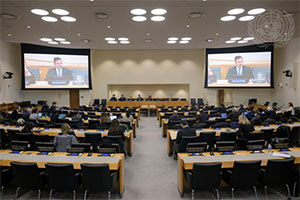 UN Commission on International Trade Law Holds Colloquium on Harmonizing Law in Age of Digital Trade and Finance. Credit: UN Photo/Manuel Elías
Trade has historically been a geopolitical tool that can both be used to propel development as well as entrench inequalities. In various nations in East Asia and Latin America, increased trade, as often seen in export booms, has allowed them to achieve influential standings within the global economy. On the other hand, many low-income countries in Sub-Saharan Africa, Asia, and Latin America struggle to maintain a robust trade performance, and oftentimes are subjugated to exploitative trade dynamics through intense extraction of their natural resources. In recent decades, international trade has reached a new era as emerging economies across the world are rising in economic preeminence. Stable international trade is crucial to world peace as global interconnectedness facilitates reliable diplomacy. Nevertheless, significant challenges are on the rise. Notably, a major wave of United States tariff escalations in January 2025 lifted US import taxes to their highest level since the 1930s, changing market dynamics and forcing renegotiations with global trading partners.These articles are aimed at informing readers about the complexities of trade and its varying effects on development, with a special focus on the consequences of the global economic crisis, the potential of fair trade and the gender implications of trade policies.
Updated by Yilan Batista and Shuli Wong August 2026

The Week with IPS

NEXT STOP - SDGs
Tracking global progress towards a sustainable world
Tracking global progress towards a sustainable world
