Languages
Wednesday, November 18, 2026



News and Views from the Global South
Economy & Trade
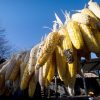
Why Seed Companies Fear México
Last month México’s Supreme Court provided hope for biodiversity, especially in the Global South, while flaming fear for seed companies. In a historic step, it ruled for corn advocates and against genetically modified (GMO) corn. The decision was a momentous act in country where maíz (corn) carries daily and sacred significance.
Double Solution to Ongoing Food and Climate Crises
For the last ten years, Angeline Wanjira’s food stall at Kirigiti Market in Kiambu County has featured the same foods, cabbages, potatoes and carrots, keeping with the community’s most preferred food types.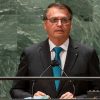
Why Covid-19 Misinformation Works
At the United Nations General Assembly meeting in September, Brazilian President Jair Bolsonaro used his allotted time at the podium to recount his views on Covid-19. He extolled the virtues of treatments that have been rejected by scientists and proclaimed that he had benefitted from the anti-malarial drug hydroxychloroquine.
The Squid Game: The Story about Losers in the Shadow of Glory
Immediately after its release, the Squid Game went viral, grabbing the attention of the world's entertainment stage. The grotesque and hyper-violent thriller has reportedly become Netflix's biggest show, the world's most-watched and the most-talked-about streaming entertainment. Is it a case of art imitating life?
Politicians Subsidise Fossil Fuel with Six Trillion Dollars in Just One Year
It sounds incredible: while politicians have been cackling about the climate emergency and profiling in empty promises to halt it, they have spent six trillion US dollars from taxpayers' money to subsidise fossil fuels in just one year: 2020. And they are set to increase the figure to nearly seven trillion by 2025.
Push for Civil Registration Set to Hit Key Milestone in Asian and Pacific Countries
Most countries in the Asia-Pacific region are on track to reach universal birth registration by 2030: an incredible achievement and a significant milestone in realizing human rights and equality. However, as the COVID-19 pandemic has exposed, many weaknesses remain in official recording systems, creating gaps in knowledge about the population and affecting how authorities respond to crises and reach those in greatest need.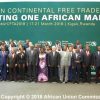
How Effective Communication can Help Boost Intra-African Trade
The African Continental Free Trade Area (AfCFTA) agreement promotes socio-economic growth and development in Africa through liberalised trade processes and structures. So far, the 54 African countries have signed the agreement, resulting in immense potential for the growth of trade between African countries.
WTO Finished Without TRIPS Waiver
Quickly enabling greater and more affordable production of and access to COVID-19 medical needs is urgently needed in the South. Such progress will also foster much needed goodwill for international cooperation, multilateralism and sustainable development.
Growing Digital Divide Threatens Recovery from Covid-19
A growing digital divide is emerging as a major threat to a robust recovery from the Covid-19 pandemic, according to new research by the European Bank for Reconstruction and Development (EBRD).
Inequity in Funding: Africa’s Agripreneurs Pay a High Price for Start Up Finance
Africa has pinned its hopes on agriculture for the creation of jobs and the resulting reduction of poverty. But its role is being stymied by the high cost of financing.
Experts call for Improved Protection of African Fisheries
With subsidies of global fisheries back on the World Trade Organisation’s agenda, experts are calling for African governments to upscale the protection of the sector long plagued by activities that continue to threaten the continent’s blue economy.
Biofuels, the World’s Energy Past and Future
The number of victims of serious burns, some fatal, has increased in Brazil. Without money to buy cooking gas, the price of which rose 30 percent this year, many poor families resort to ethanol and people are injured in household accidents.
COP26 – New Toolkit to Boost Clean Energy Investments in Small Island Nations
A new toolkit launched in the margins of the UN Climate Change Conference COP26 aims to unlock clean energy investments for small island nations, many of whom rely heavily on imported fossil fuels for power generation.
‘West of The Nile and Around The Sudd’
Tensions and hostilities persisted until early 2019, when the regime of Omar al-Bashir - to a large extent symbolized by oppressing minority groups in the Darfurs, Blue Nile state and South Kordofan - finally ended. Meanwhile, many inhabitants of the Nuba Mountains and other parts of South Kordofan, had escaped to South Sudan, which had become independent in 2011. There, they found, however, a country with even more interethnic strains and assaults, resulting, in addition to the innumerable internally displaced persons, the flight of 2.3 million citizens to six countries in the region. An area characterized by perpetual political and ethnic tensions which often resulted in border crossings in opposite ways. The present case of refugees from Ethiopia to the Republic of Sudan is an example of this phenomenon in the IGAD-region. (The Intergovernmental Authority on Development (IGAD) is an eight-country trade bloc in Africa that includes governments from the Horn of Africa, the Nile Valley and the African Great Lakes. Its headquaters is in Djibouti City)
Magical Thinking on Fertilizer and Climate Change
As world leaders wrap up the UN Climate Summit in Glasgow, new scientific research shows that there is still a great deal of magical thinking about the contribution of fertilizer to global warming.
Carbon Tax Over-Rated
Addressing global warming requires cutting carbon emissions by almost half by 2030! For the Intergovernmental Panel on Climate Change, emissions must fall by 45% below 2010 levels by 2030 to limit warming to 1.5°C, instead of the 2.7°C now expected.
A Possible Childcare Solution
A possible solution to childcare needs is polygamy. Polygamy, the practice of having more than one spouse at the same time, was not against the laws in many countries in the past. For example, polygamy was made illegal in China in 1950, in France at the end of the 20th century, in the United States near end of the 19th century and became a felony in the United Kingdom at the start of the 17th century.
Finance Nature-based Solutions to Quiet Nature’s Wrath – Experts
Climate change experts and leaders from the Commonwealth member states rallied behind calls to accelerate climate finance for nature-based solutions to arrest the pace of climate change, land degradation, and biodiversity loss.
At COP26, EBRD Launches Plan to Mobilise Private Capital for Climate Finance
The European Bank for Reconstruction and Development (EBRD) has announced its intention to double the mobilisation of private sector climate financing by 2025.
Zimbabwe’s High-Risk Cross-Border Trade
Thirty-six-year-old Thandiwe Mtshali* watched helplessly as her informal cross-border trading (ICBT) enterprise came to a grinding halt when the Zimbabwean authorities closed the border with South Africa as part of global efforts to stem the spread of the deadly novel coronavirus.
UN Food Systems Summit: Breakthrough or Missed Opportunity?
UNSG Antonio Guterres convened the first-ever UN Food Systems Summit which took place on 23-24 September. The Summit preparation had a well-designed structure with remarkable and appreciated leadership of Amina Mohammed, UN DSG. Due to the hard work of the UN Special Envoy, Agnes Kalibata, and her whole Team, the organisation and logistics of the Summit was excellent.« Previous Page — Next Page »


 UN Commission on International Trade Law Holds Colloquium on Harmonizing Law in Age of Digital Trade and Finance. Credit: UN Photo/Manuel Elías
Trade has historically been a geopolitical tool that can both be used to propel development as well as entrench inequalities. In various nations in East Asia and Latin America, increased trade, as often seen in export booms, has allowed them to achieve influential standings within the global economy. On the other hand, many low-income countries in Sub-Saharan Africa, Asia, and Latin America struggle to maintain a robust trade performance, and oftentimes are subjugated to exploitative trade dynamics through intense extraction of their natural resources. In recent decades, international trade has reached a new era as emerging economies across the world are rising in economic preeminence. Stable international trade is crucial to world peace as global interconnectedness facilitates reliable diplomacy. Nevertheless, significant challenges are on the rise. Notably, a major wave of United States tariff escalations in January 2025 lifted US import taxes to their highest level since the 1930s, changing market dynamics and forcing renegotiations with global trading partners.These articles are aimed at informing readers about the complexities of trade and its varying effects on development, with a special focus on the consequences of the global economic crisis, the potential of fair trade and the gender implications of trade policies.
Updated by Yilan Batista and Shuli Wong August 2026

The Week with IPS

NEXT STOP - SDGs
Tracking global progress towards a sustainable world
Tracking global progress towards a sustainable world
