Languages
Friday, October 9, 2026



News and Views from the Global South
Education Cannot Wait. Future of Education is here
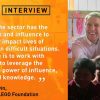
Education Cannot Wait Interviews LEGO Foundation CEO John Goodwin
John Goodwin joined the LEGO Foundation as CEO in April 2017 to pursue a career where he could combine his business skills with his passion for philanthropy and driving positive social impact.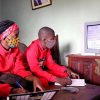
Television Education in Mozambique
"We missed our teachers, they were very friendly and helped us solve the complex exercises, but with the coronavirus, we need to adapt and learn to solve our exercises alone at home," says Alzira Ngomane, 17 years old, and her brother Amilcar Ngomane, 14, from the Albazine district, in the city of Maputo, Mozambique.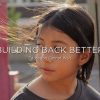
Building Back Better: Education Cannot Wait
 The United Nations General Assembly adopted Resolution 66/170 declaring October 11 as the International Day of the Girl Child, to recognize girls’ rights and the unique challenges girls face around the world.

Scaling Up SDG4 in Crises
Out of global crises spring opportunities for change. In crisis, change is not an option. It is a necessity. And, as Plato famously noted: “Necessity is the mother of invention.” Education Cannot Wait (ECW) is an invention that sprang out of crisis and was borne of necessity.
On the Occasion of World Teachers’ Day, ECW, GPE, UNESCO & UNICEF Call for the Resumption of Salary Payments for Teachers for the Coming School Year in Yemen
This World Teachers’ Day, celebrated under the theme, “Teachers: Leading in crisis, reimagining the future”, the Global Partnership for Education, Education Cannot Wait, UNESCO and UNICEF are calling for the resumption of salary payments for around half of the Yemeni teachers and school-based staff (estimated 160,000) who have not received regular salary payments since 2016. With suspended salary payments and schools regularly coming under attack, many teachers have been forced to find alternative sources of income to provide for their families.
Teachers Shoulder the Burden: Improving Support in Crisis Contexts
Teachers are at the heart of children and young peoples’ educational experiences. Teachers play multiple roles in their students’ lives by supporting their learning, providing them with inclusive and safe environments to grow and develop, and helping them become more confident as they make their way in the world. As we commemorate World Teachers’ Day on Monday, 5 October and its theme--Teachers: Leading in Crisis, Reimagining the Future--we must recognize the inspiring and transformative role that teachers working in armed conflicts, forced displacement, climate change induced disasters and protracted crises play in their students’ lives.
Global Leaders Focus on Education in Emergencies & Protracted Crises at ECW’s Global High-level #UNGA75 Event: ‘the Future of Education Is Here for Those Left Furthest Behind’
Education Cannot Wait (ECW) brought together an impressive, diverse line-up of world leaders, policymakers, youth, teachers, celebrities and global advocates to rally around the cause of education in emergencies and protracted crises during the 75th Session of the United Nations General Assembly under the inspiring theme “The Future of Education is Here for Those Left Furthest Behind.”
Helping Make Education a Reality for the 75 million Children in Conflict Zones
Aryan is a 15-year-old girl from Afghanistan who lives with her family in a shelter in an undisclosed country in Europe. She doesn’t go to school. But she is hugely creative. And it shows in how she occupies her time during the day — writing poetry and making bracelets and earrings that she hopes to sell online one day.
Education Cannot Wait Mobilizes an Additional US$23.6 Million to Increase Support for Vulnerable Children and Youth – Already Affected by Armed Conflict, Forced Displacement and Protracted Crises – Now Doubly Hit by COVID-19 Pandemic
World leaders today committed to expand education in emergency aid for children and youth impacted by the COVID-19 pandemic – girls and boys already suffering the brunt of armed conflict, forced displacement, climate-change induced disasters and protracted crises – with a focus on the most marginalized, including girls, refugees and children with disabilities.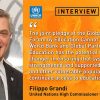
Interview with the UN High Commissioner for Refugees, Filippo Grandi
Education Cannot Wait: As the UN agency mandated by the UN General Assembly to provide international protection and seek solutions for refugees, could you please elaborate on the overall importance of education for refugee children as a component of protection and solutions?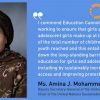
Statement by UN Deputy Secretary-general Amina J. Mohammed at ECW High-level Steering Group
As a friend and strong advocate of Education Cannot Wait, I welcome this opportunity to convey my support for ECW’s critical work and my solidarity with the millions of children and youth who are still being deprived of the opportunity to obtain a quality education because they are caught up in conflict, crisis or disaster.
Education Cannot Wait Responds to Beirut Explosion with US$1.5 Million in Education in Emergency Funding to Rehabilitate Damaged Schools
Education Cannot Wait (ECW) today approved US$1.5 million in new education in emergency funding in response to last month's explosion in Beirut.
Future of Education Is Here
There are moments when the world has no choice but to come together. Those moments become historic turning points. This is one of them. We are now faced with the greatest education emergency of our time. Over one billion children are out of school. The COVID-19 pandemic has created an unprecedented crisis of such magnitude and depth that the next generation might neither have the capacity and tools, nor the will, to rebuild - let alone build back better.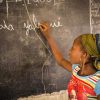
Call for Urgent Action by 275 World Leaders on Global Education Emergency In Face of Covid19
We write to call for urgent action to address the global education emergency triggered by COVID-19. With over 1 billion children still out of school because of the lockdown, there is now a real and present danger that the public health crisis will create a COVID generation who lose out on schooling and whose opportunities are permanently damaged. While the more fortunate have had access to alternatives, the world’s poorest children have been locked out of learning, denied internet access, and with the loss of free school meals - once a lifeline for 300 million boys and girls - hunger has grown.
Education Cannot Wait Interviews EU Commissioners Jutta Urpilainen & Janez Lenarčič
The European Commission (EC) is one of the founders of Education Cannot Wait, which was established at the World Humanitarian Summit in 2016 and aims at increasing funding and efficiency in delivering quality education to some 75 million children and youth affected by conflicts, natural disasters and forced displacement. EC plays a major role since in advancing education in the humanitarian-development nexus during crisis. Please elaborate on the EC vision in driving education to achieve humanitarian-development coherence and deliver quality education in situations of crisis, for refugees, for girls, and other stakeholders who are left furthest behind.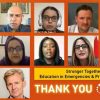
Stronger Together: Education in Emergencies & Protracted Crises
‘Stronger collective efforts and collaboration are key to meeting the urgent education needs of children and youth affected by crises’: this is the unifying message from leaders and youth advocates brought together by Education Cannot Wait (ECW) and Devex in a high-level, Global Discussion held online on 12 August, on the occasion of International Youth Day.
No More Lost Generations: Global Fund Provides Education for Children in Crisis
15-year-old Humaira* sits on the mud floor of her hut in Ukhiya camp, Cox's Bazar, listening as the rain beats down on the tarpaulin roof.
Keeping Education within the Grasp of Refugee Children
“Not being able to go to school is not something I’d wish on any child in this world,” said 21-year-old Nujeen Mustafa, a young advocate for refugees who fled the Syrian war with her sister. Mustafa, who now lives in Germany, is also the United Nations Human Rights Council (UNHCR) high profile supporter.
STRONGER TOGETHER IN CRISES’ – EDUCATION CANNOT WAIT REACHES 3.5 MILLION CHILDREN AND YOUTH IN HUMANITARIAN CRISES WORLDWIDE
Education Cannot Wait launched its ‘Stronger Together in Crises - Annual Results Report 2019’ today, reaffirming itself as the global fund for education in emergencies and protracted crises. Since the Fund’s inception in 2016, its investments have reached nearly 3.5 million children and youth in many of the world’s worst humanitarian crises.
COVID-19 Impact Means Women and Girls Will Still Eat Last, Be Educated Last
Catherine Bertini, former executive director of the World Food Programme, began the IPS United Nations Bureau webinar “The Impact of the COVID-19 Pandemic on Women and Girls” by reminiscing on a talk she gave in 1995 entitled “Women eat last”. She remarked that after 25 years, the phrase is still something that is relevant to the present day.
The World Needs You. Now.
“We may all come on different ships, but we are in the same boat now,” Martin Luther King Jr once said. His timeless wisdom rings truer than ever today for the many challenges the world is facing. COVID-19, continued armed conflicts and forced displacement, climate-change induced disasters, deep divides and widespread discrimination mark the human family in the 21st century.« Previous Page — Next Page »





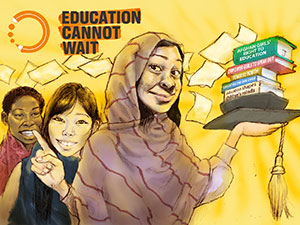
Education Cannot Wait has reached 5 million children and youth since its inception. Yet, the scale and the depth of the education emergency in crisis-affected countries needs to be matched by adeguate and scaled up financial investments to end the learning crisis for those left furthest behind, and to swiftly shift the course towards the SDGs. With 20 times more funding, the estimated 75 million children and youth can be reached. Indeed, financing stands between what is possible and what is not for these vulnerable girls and boys.
- Videos -
- Quote cards -


The Week with IPS

NEXT STOP - SDGs
Tracking global progress towards a sustainable world
Tracking global progress towards a sustainable world
