Languages
Sunday, October 11, 2026



News and Views from the Global South
Education
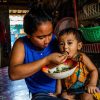
The Impact of Media Literacy for Meat Production
With the emergence of generative artificial intelligence (AI) and social media, the dissemination of public information moves at a faster speed than ever before. Social media platforms have become an integral tool for users of younger generations to access the news. Although this shift has led to public news being more accessible to younger users, it has also led to an overall decline in media literacy.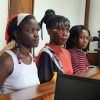
Meet the Young Women Arrested for Fighting Corruption in Uganda
Until recently, Margaret Natabi would never have dreamed of taking her anti-corruption fight on the streets of Uganda’s capital, Kampala.
Attacks on Aid Personnel in Lebanon Impede Relief Efforts
In the midst of Israel’s ground incursion of southern Lebanon, frequent airstrikes have demolished civilian infrastructure, which is only contributing to the increasing rates of civilian casualties and displacement. Humanitarian organizations fear that conditions in Lebanon will soon resemble those of Gaza if a ceasefire isn’t reached soon.
International Day for the Eradication of Poverty 2024

Our world has witnessed unprecedented levels of economic development. The advance of our technological capabilities continues unabated. Our financial resources continue to grow.

‘We Continue Working to Make Sure Afghan Girls and Women Are Heard and Not Forgotten’
CIVICUS discusses Afghanistan’s system of gender apartheid with Shaharzad Akbar, Executive Director of Rawadari, a human rights organisation founded by Afghans in exile.

Child Exploitation on the Internet Threatens the Next Generation
On October 11, the United Nations (UN) and its affiliated organizations hosted a conference discussing the increasingly dangerous and exploitative environment that plagues the internet and what can be done to protect children from being exposed to it. Speakers at this conference detailed the developing technologies that threaten children, such as Artificial Intelligence (AI), which often facilitates sexual abuse, exploitation, and human trafficking. In a world that is centered around digitization and innovation, it is crucial to keep the internet a safe space for the most vulnerable population, children.
Haitians Blame Government After Massacre in Pont-Sondé
Last week, on October 3, a violent gang attack on the residents in the central Haitian city Pont-Sondé resulted in 115 deaths and spread fear among communities. This attack was described as one of the deadliest massacres in recent history in Haiti. Pervasive gang violence threatens to destabilize Haiti as the environment grows more dangerous by the day.
Higher Education Course Rescues Indigenous Guarani Culture in Argentina
A few years ago, Bernardo Olivera moved to Posadas, the capital of the Argentinean province of Misiones, to study mathematics at the public university. Interested in numbers and keen to progress, he felt, however, that the education system put a barrier in his way because of his indigenous origin.
In Zimbabwe’s Rural Areas, Bicycles Keep Girls in School
Rejoice Muzamani is studying in preparation for her next paper during the end-of-term examinations at Mwenje Primary School in Chiredzi, southeast Zimbabwe. The 13-year-old girl, who is in Grade 7 or final year of primary school, is not worried about leaving school early to make the 7-kilometer journey back home before dusk, risking attacks from wild animals.
Death Toll Rises During Israel’s Siege in Lebanon
One week has passed since the beginning of Israel’s invasion of Lebanon. Over the past three weeks, Lebanon has seen a considerable uptick in hostilities from the Israeli armed forces. Routine bombardments have resulted in significant civilian casualties as well as the failure of several critical infrastructures. The United Nations warns that displacement continues to grow as shelters approach maximum capacity.
Pakistan’s Digital Censorship—The Real Cost of Internet Disruptions
Over the past few months, Pakistan has been grappling with a persistent and disruptive internet slowdown, leaving millions of citizens frustrated.
May Teacher Voices Echo Around the Globe
We must build a new social contract for education – a contract based on equality, equity, and universal human rights. At the center of our global efforts to ensure education for all, we must put teachers first in everything we do. They are frontlines heroes who deliver every day to educate children, cultivate young talent, and build a strong society. They are the substitute parents, the mentors and the ones who contribute to shaping the identify of a child in war, in refuge or in climate change.
Education Cannot Wait Interviews UNICEF Representative in Egypt Jeremy Hopkins
Jeremy Hopkins is half Kenyan and half British and graduated with a MA in Arabic and Social Anthropology (Edinburgh) and a MSc in Development Studies (SOAS – University of London). He started his career with WFP in Somalia and then moved to UNICEF also in Somalia as a Child Protection specialist but with an overview on Youth, HIV and C4D portfolios. He worked again as a child protection specialist in Mozambique after which he was a Deputy Representative in Central African Republic, Yemen and Somalia (again!). He has been acting Representative in South Sudan for a short while, Representative in Burundi and is currently Representative in Egypt. Outside the professional realm Jeremy enjoys music, travelling, surfing and photography.

The Approaching Rainy Season Signals Trouble for Gaza
As the humanitarian crisis in Gaza continues to grow more dire as a result of the Israel-Hamas war, concerns of diminishing public health are growing due to prolonged flooding. Repeated airstrikes and forced evacuations in recent weeks have pushed many displaced citizens to flooding hotspots. An influx of torrential rain has greatly exacerbated the failing sanitation system, increasing the risk of contracting waterborne diseases. Health experts fear that conditions will continue to worsen in the coming winter months.
TikTok and WHO Join Efforts to Combat Misinformation
Today’s digital age is centered around TikTok, the short-form social media platform that hosts around 1 billion global users. Sensationalized or reductive videos often get the most engagement with young audiences, leading to the spread of misinformation on a global level.
The Crucial Connection Between Climate Change and Mental Health
“Young people today are growing up with enormous uncertainty about their future. Climate change is a major driver of that uncertainty, but we weren’t talking enough about how the climate crisis impacts mental health,” researcher Dr. Emma Lawrance told IPS from her family home in Australia.
Sustainable Peace in Afghanistan Needs Women on the Frontlines
Women in Afghanistan have continued to advocate for their rights and have called on the international community to not only stand in solidarity but to take decisive action to prevent the erosion of their rights and presence in public space.
Violence, Displacement, and Hunger Plagues Somalia
Somalia is currently in the midst of a dire humanitarian crisis that threatens to destabilize the nation’s security. This crisis is a result of the Somali Civil War, which began in 1991. Altercations between clan-based operations have caused a host of issues over the years, including over 596 civilian casualties, according to the United Nations Assistance Mission in Somalia (UNSOM). Tensions have greatly intensified in 2024, with levels of internal displacement and food insecurity increasing rapidly.
Cultivating a Culture of Peace
The longing for peace transcends time, geography and religion. Based on justice, human rights and universal values outlined in the UN Charter, a culture of peace brings us all together in our common agenda for humanity. We can only co-exist by aligning ourselves with such a world order.
Gang Violence and Mass Displacement Ravage Haiti
Amid the ongoing civil unrest in Haiti due to gang violence, levels of internal displacement have soared. Mass internal displacements in Haiti have led to a host of adverse consequences. This includes a disruption of schooling, increased levels of violence and exploitation, and limited access to essential services such as healthcare.
Typhoon Yagi Devastates Southeast Asia
In early September, Typhoon Yagi, a deadly tropical cyclone, hit Southeast Asia and Southern China, causing widespread destruction. According to the United Nations (UN), wind speeds, reaching 213 kilometers per hour, as well as heavy flooding and severe landslides, have devastated affected areas. Yagi is the strongest natural disaster to hit the South China Sea in three decades, leaving over 500 people killed, 38 missing, and 1,900 injured.« Previous Page — Next Page »





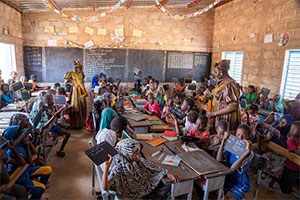 Two teachers work in a classroom in Forces Vives School in Dori, Burkina Faso. Credit: UNICEF/UNI978361
Safe and uninterrupted education is a fundamental right for all children. Education is paramount to global development, as it has been proven that investing in education – especially for girls and children – contributes significantly to economic growth and prosperity. Although more than 1 billion children go to school, many are subjected to conditions that are not conducive to a proper learning environment, including makeshift facilities, a lack of supplies, violence in classrooms, inadequate sanitation, untrained instructors, and widespread school closures. Since 2015, there have been immense gains in education with an increase of 109 million children in school. However, as of 2023, 272 million children are still out of school.
High poverty levels in developing countries also impede children’s access to a proper education. For example, from the early to mid 2000s, Sub-Saharan African nations witnessed a dramatic decline in trained teachers due to inadequate funding in the education sector. Furthermore, major cuts to United States international aid threaten an estimated 23 million additional children's access to education, as USAID‑funded school programmes across Africa and Asia face closure.
Various other factors contribute to the decline of education, notably hunger, which has increased as conflict and climate change interfere with global food production and dissemination. Meanwhile, certain social and cultural practices also impede children’s access to education, with gender inequality, discrimination, child labour, and child marriages preventing millions of children from attending school. Economic conditions such as the inaccessibility of higher education also affect disenfranchised communities across the world. In extreme situations, such as warfare where educational facilities are destroyed in their totality, notably in Gaza and Sudan, entire generations of children might grow up without access to education. Rebuilding educational infrastructure is a long and arduous process, especially when violence persists across generations, and this significantly stunts the development of societal prosperity and stability.
IPS is dedicated to telling the shocking truths about worldwide education through impassioned opinion pieces and comprehensive articles, highlighting global issues that impede worldwide education and the courses of action being taken by organizations such as UNICEF and Education Cannot Wait.

The Week with IPS

NEXT STOP - SDGs
Tracking global progress towards a sustainable world
Tracking global progress towards a sustainable world
