
Sunday, October 18, 2026



News and Views from the Global South
Environment
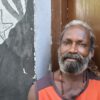
How a Handful of Fishers Show How Harpooning Can Be Ecologically Sustainable
Sudhi Kumar animatedly moves his hands, resembling a graceful dance performance, as he demonstrates how a fishing harpoon is used. He has been on a brief hiatus from harpooning, owing to the recent rough nature of the sea, and doesn’t have the tool with him as we speak. But more than three decades of experience using harpoons is apparent in how vividly he uses his body to mimic the process.
My Name is Dhaka
 My Name is Dhaka is a one-minute experimental film portraying Dhaka as a living, breathing entity with a 400-year history. Through a reflective voice, the city recounts its transformations, crises, and resilience. It captures contrasts between pollution and celebration, hardship and hope, revealing a megacity shaped by climate change, migration, and human survival.

Geospatial Innovations Addressing Critical Water Data Gaps in Asia
Across Asia, new initiatives are showing how satellite Earth observation data and AI-powered technologies can turn fragmented water-related data into actionable insights for managers and policymakers in line ministries and local governments.
Where Water Doesn’t Flow, Equality Doesn’t Grow – Challenging Global Patriarchy this World Water Day
The 2026 campaign on World Water Day’s focuses on Water and Gender – ‘where water flows, equality grows’ . While substantial progress has been achieved across a range of gender indicators spanning education, health and public participation, the situation around WASH (water, sanitation and hygiene) is still marked by deep inequalities with women and girls disproportionately affected – and this reflects the persistence of global patriarchy.
80 Percent of Rural Households Without Direct Water Access – World Water Report
A new United Nations report has warned that global water inequality remains one of the most pressing development challenges of the decade, with billions still lacking safe drinking water and sanitation – while women and girls continue to bear the heaviest burden of water insecurity.

Oil Shocks, Political Upheaval and the One Solution Governments Keep Ignoring
Once again, global oil prices are spiking, driven by the Israeli-US war against Iran. With Iran retaliating by attacking infrastructure and transport hubs and blocking the Strait of Hormuz, through which one-fifth of the world’s oil passes, oil supplies from the region are being choked, pushing up prices. The cost of a barrel of Brent crude – the international benchmark for oil prices – stood at US$73 before the conflict but has surged beyond US$100 since. It could go higher still as war continues.
Tanzania, Mozambique and Malawi Launch $7.12 Million GEF Project to Protect the Ruvuma Basin
At dawn, the Ruvuma River moves quietly through a vast wetland along the border between Tanzania and Mozambique. Its muddy waters appear calm, disturbed only by drifting logs and the occasional ripple.
Housing as Climate Resilience in Asia-Pacific Cities
Access to adequate housing is a foundation of resilient cities. Safe and affordable homes provide stability, allow residents to access essential services, and enhance the capacity for communities to withstand and recover from shocks. Yet housing is often treated as a downstream outcome of urban development or disaster recovery rather than as a strategic investment in resilience.
One in Four Migratory Species Under Threat, But Conservation Efforts Can Reap Rewards
Global wildlife is facing a deepening crisis as the latest United Nations assessment warns that nearly half of the world’s migratory species are in decline due to human activity, habitat destruction, and climate change.
Tanzanian School Launches Energy Club to Promote Clean Cooking
A cloud of steam rises from a giant aluminium pot as Maria Joseph, a middle-aged cook in a toque blanche and faded apron, plants her feet firmly on the tiled kitchen floor. With both hands clasped around a wooden paddle, she plunges deep into the mound of rice, threatening to burn at the bottom.
15 Years After the Great East Japan Earthquake & Tsunami
On 11 March 2011, the powerful 9.0 magnitude Tōhoku earthquake struck off the northeastern coast of Japan, triggering a 40-meter Tsunami. Many coastal towns along Japan’s Pacific coast were devastated. Approximately 20,000 people lost their lives and around 470,000 were evacuated from their homes.
As La Niña Fades, WMO Experts Warn That El Niño Could Set New Global Heat Records
Earlier this week World Meteorological Organization (WMO) announced that the weakening conditions of La Niña conditions are beginning to fade, with climate conditions transitioning toward ENSO-neutral —a phase in which neither El Niño nor La Niña is present and oceanic and atmospheric conditions in the tropical Pacific remain near average. The agency noted that this shift could lead to the development of El Niño later in the year, a pattern typically associated with rising global temperatures and an increased risk of extreme weather events worldwide.
Turning Waste into Hope: A Youth-Led Model for Sustainable Change
From the beginning, this project was a collaboration between student teams in Japan and Korea. Although we live in different countries, we shared one common question: How can young people reduce waste while supporting families facing food insecurities?
Sudan: World’s Worst Humanitarian Crisis
The ordinary sounds of Nahid Ali's home in Khartoum were completely drowned out by the sound of war which began on April 15 2023. Her baby was just 21 days old. The morning started as any typical day for a mother who had just given birth to her baby and needed to nurse her newborn while she took care of her other children. The gunfire began to erupt. The fighting began when two groups started to battle each other in the streets. The fighting which began in her area developed into a destructive countrywide war in Sudan which spread to her street within moments.
The Architecture of Hope Under Siege: One Year of Global Aid Dismantling
A year has passed since a 90-day freeze on U.S. foreign assistance signaled the deepening of a structural dismantling of international solidarity. Today, the "existential threat" to the freedom of association I warned of in my report to last year's General Assembly (A/80/219) is no longer a warning; it is a lived reality.
Financing Africa’s Biodiversity Conservation With Dwindling Donor Support
As the global community marks 2026 World Wildlife Day today (March 3), this year's focus is on Medicinal and Aromatic Plants: Conserving Health, Heritage and Livelihoods. However, beneath these celebrations, a difficult question emerges: who will bear the cost of conservation when traditional donor funding becomes uncertain and in the face of climate change?
How do we Navigate Asia-Pacific’s Climate-Cyber Polycrisis?
Communities globally are increasingly exposed to overlapping threats. Extreme weather, health emergencies and cyberattacks are occurring more frequently and simultaneously, often interacting in ways that amplify risks and strain response systems.
Climate Change Is Coming for Your Morning Coffee
Your morning cup of coffee could soon cost more, thanks to climate change, which is raising the heat on the production of the world's most loved beverage.
Why Tenure Reform Is Key to Curbing Land Degradation
Farmland has long been one of the most important sources of security across generations. Writing about China nearly a century ago, Pearl S. Buck noted in The Good Earth, “If you will hold your land, you can live.” That holds true today. When farmers own land, they invest in it. When they don’t, they extract what they can today without thinking of tomorrow.
Trachoma: What It Takes to Eliminate a Disease in the Pacific Islands
Two Pacific Island nations have been applauded for their successes in the global health campaign to eliminate the infectious eye disease, Trachoma.
As Biodiversity Loss Grows, Rome Talks Urge Nations to Step Up Action
Governments meeting in Rome last week acknowledged that global efforts to protect nature are still not moving fast enough, even as biodiversity loss continues to affect ecosystems, livelihoods, and economies worldwide.« Previous Page — Next Page »





Through our global network of local writers, we are continuing our award-winning coverage of global and local environmental challenges, with a focus on the people for whom the ecosphere matters in a direct way: rural dwellers who have little means to protect themselves against adverse conditions; communities that need to switch to sustainable development in order to survive; poor women and children, who are the most vulnerable in natural disasters. Sponsored by the United Nations Environment Program (UNEP), the United Nations Development Program (UNDP) and The World Bank (WB), IPS also maintains the award-winning Tierramérica, a specialised information service on environment and development.

The Week with IPS

Tracking global progress towards a sustainable world


