
Sunday, November 15, 2026



News and Views from the Global South
Environment
How to Transform UN’s Environmental Goals into a People’s Agenda for Africa
The COVID-19 insurgence has highlighted the need for multilateral cooperation among sustainability stakeholders. As the journey towards achieving Agenda 2030 and the Sustainable Development Goals (SDGs) is fraught with imminent global challenges, global environmental leaders agree that now is the time to act collectively for nature, leaving no one behind.
Prioritising Life or the Economy Will Determine the Post-Pandemic Focus in Urban Areas
The first priority in the COVID-19 pandemic was to save lives, in an effort to avoid even more devastating economic losses if strict lockdown and isolation were not put in place.
Beyond the Crisis
Looking back to the start of 2020, the world has changed almost beyond recognition. To protect public health, the global economy was put into stasis. Shops closed, factories were mothballed, and people’s freedom of movement was severely curtailed. No country has escaped the health, economic, and social impacts of the COVID-19 crisis. Tragically, more than 260,000 people have died and millions have been infected. The IMF is projecting global economic activity to decline on a scale not seen since the Great Depression. It is truly a crisis like no other.
Two-thirds of Tropical Forests ‘Under Threat in Next Decade’
Tropical forests can develop resistance to a warmer climate, but 71 per cent will come under threat in the next decade if global average temperatures reach two degrees Celsius above pre-industrial levels, a new study warns.
The Consequential Effects of Covid-19 on the Climate Crisis
The tragedy of the coronavirus pandemic and its associated challenges have thrown our world into chaos, with the virus destroying lives and livelihoods in its path.
COVID19 and Its Impact on Pacific Island States
 By now, the impact of COVID19 on our daily lives has been well documented, especially in advanced economies. Anxiety about the future continues to grow everywhere. Much of the corporate news coverage we consume has focused on the toll this pandemic will take on mainland countries. Often neglected, however, is the unique position Pacific Island States find themselves in.

Ensuring Biodiversity Now will Prevent Pandemics Later
A future repetition of the current COVID-19 pandemic is preventable with massive cooperation on international and local levels and by ensuring biological diversity preservation around the world, experts recently said.
Innovation Is an Imperative – for Sustainable Food Systems
Hunger and food insecurity continue to rise. The official 2019 statistics refer to 821 million people suffering from hunger all over the world. According the recently launched Global Report on Food Crises, there are further 135 million people facing crisis levels of hunger or worse. WFP estimates that due to the impacts of COVID19, additional 130 million people could be pushed to the brink of starvation by the end of 2020. This means a total increase of 265 million people. If there will be no appropriate and urgent actions, “we could be facing multiple famines of biblical proportions within a short few months”, said David Beasley, WFP Executive Director, addressing the UN Security Council on 21st April.
Crisis Hits Oil Industry and Energy Transition Alike
While it attempts to cushion the effects of the coronavirus pandemic, the Latin American and Caribbean region also faces concerns about the future of the energy transition and state-owned oil companies.
Unite Behind Environmental Science: Transforming Values and Behaviour is as Important as Restoring Global Ecosystems
Restoring damaged ecosystems is vital to avoid the collapse of nature’s most valuable contributions to people, but International Day for Biological Diversity 2020 should also be a wake-up call about the importance of addressing our social, economic and systemic values, because it is these that are driving the destruction of nature.
Biological Diversity is Fundamental to Human Health
 This year’s International Day of Biological Diversity falls amid the coronavirus pandemic and the slow easing, in some nations, of a global lockdown. While the lockdown has forced most people to stay at home, there have been reports of more wildlife being spotted - even in once-busy city centres.
COVID-19: Global Supply Chain Resilience Relies on Soap & Water for Workers
As COVID-19 lockdown restrictions across the globe start to be relaxed, the collective conversation has shifted towards plans for a ‘new normal.’
Cyclone Amphan – ‘We Didn’t Expect Devastation of Such a Scale’
Amid the social distancing measures posed by the COVID-19 pandemic, coastal communities in Bangladesh and India face a double threat as the record-breaking Cyclone Amphan made landfall yesterday (May 20).
Mexico’s Development Banks Fuel the Fossil Energy Trade
Since 2012, Teresa Castellanos has fought the construction of a gas-fired power plant in Huexca, in the central Mexican state of Morelos, adjacent to the country's capital.
To Restore Forests, First Start With a Seed
In 2011, when Rwanda committed to restoring 2 million hectares of land in a global effort to restore 150 million hectares of degraded and deforested areas by 2020 — it seemed like a big ask.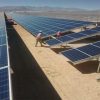
Where Will Global South Rank in New Green Economic Order?
With widespread calls for green transitions in the wake of the COVID-19 crisis, developing countries are predicted to remain at the bottom of the global economic ladder, a study claims.Change is Coming for Youth-led Ocean Activism
The youth’s role in environmental action remains crucial and leaders must ensure that they are given proper access under current circumstances to carry out that work, activists said at a online meeting held this week.
Curbing Land Degradation & Protecting the Environment in Mongolia
Mongolia is one of the most sparsely populated countries in the world. Yet, more than 70 percent of its surface is affected by land degradation. Mining activities in several parts of the country have been a source of humanitarian and environmental concern. However, different stakeholders are coming together to work towards restoration and rehabilitation.
Stay Home? Wash Hands? But 1.8 Billion Remain Homeless & 3.0 Billion Have No Access to Water
The relentless battle against the devastating coronavirus pandemic has been underlined by several widespread advisories from health experts – STAY HOME. WASH YOUR HANDS. WEAR MASK. KEEP SOCIAL DISTANCE.
We Cannot Let the Education Gap Widen at the Start of the Decade of Action
Prior to the COVID-19 pandemic, we estimated that 75 million children and youth - of whom 39 million are girls - were not able to access a quality education in countries impacted by armed conflicts, forced displacement, natural disasters and climate change-induced emergencies. The impact of COVID-19 has both globally and exponentially deepened the already existing critical education crisis.
COVID-19: Why We Must Reset Our Thinking
Covid-19 is the most significant event since the Second World War. It changes everything. It brings great sadness to many of us as we lose loved ones, as we see people losing their jobs, and as we see people around the world suffering immensely.« Previous Page — Next Page »


Through our global network of local writers, we are continuing our award-winning coverage of global and local environmental challenges, with a focus on the people for whom the ecosphere matters in a direct way: rural dwellers who have little means to protect themselves against adverse conditions; communities that need to switch to sustainable development in order to survive; poor women and children, who are the most vulnerable in natural disasters. Sponsored by the United Nations Environment Program (UNEP), the United Nations Development Program (UNDP) and The World Bank (WB), IPS also maintains the award-winning Tierramérica, a specialised information service on environment and development.

The Week with IPS

Tracking global progress towards a sustainable world


