
Monday, November 23, 2026



News and Views from the Global South
Environment
China Breaks Latin America’s ‘Hundred Years of Growth Solitude’
With a shifting global landscape breeding strange bedfellows in the realm of international trade, analysts and economists gathered at the World Bank headquarters Tuesday to discuss what will likely be one of the defining partnership of the decade – China's connection with Latin America and the Caribbean (LAC).
Drylands Not a Lost Cause, U.N. Summit Declares
"If this was a meeting about climate change, I am pretty sure that the room would have been more crowded," Luc Gnacadja, executive secretary of the United Nations Convention to Combat Desertification (UNCCD), commented at a press conference Tuesday.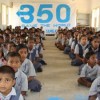
Indian Activists Bring Anti-Coal Campaign to World Bank
As leaders from two of the world's largest financial institutions, the World Bank and International Monetary Fund, met for annual meetings here Tuesday, a delegation of activists from India called on the World Bank to follow through with its proposal to dramatically cut funding for coal-burning power stations.Post-War Libya Urged to Create New Human Rights Regime
As the United Nations celebrated the birth of a new democratic Libya, the National Transitional Council (NTC), which has been duly recognised as the legitimate government, is faced with new political demands - even before it could get off the ground.CLIMATE CHANGE-BRAZIL: Farmers “Have Good Reason to Worry”
Bananas are harvested where apples used to grow; cassava, a traditional crop, is disappearing from the Northeast; and the southeast is losing the fragrance of good coffee. This is the science fiction of a new distribution of crops in Brazil, South America's agricultural powerhouse.NEPAL: Quake Strategy Needs a Jolt
Though Nepal was relatively unscathed by the earthquake that wreaked havoc in the adjacent areas of India this week, it showed up this Himalayan country’s inadequate disaster preparedness.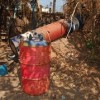
WEST AFRICA: Households Turning to Cow Dung for Energy
There are dusty barrels carefully positioned outside many of the family compounds in the Léona neighbourhood of Kaolack, a city of 20,000 in western Senegal: signs of success for a project to introduce the use of biogas as a source of fuel. Amadou Faye, whose family herds cows, goats and sheep as well as growing groundnuts on the side, is among the early adopters.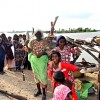
PAKISTAN: Flood Relief by Caste, Creed
With just the clothes on their backs, Moora Sanafdhano, 68, and his family of nine waded through waist-deep flood waters swirling through their village of Allah Ditto Leghari, saving themselves in the nick of time.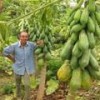
Every Raindrop Counts
Techniques for making optimal use of the scarce rainfall in northeastern Brazil are aimed at a shift in focus from fighting drought to learning to coexist with the semiarid climate.
The Dangerously High Cost of Amazon Beef
A delicious 500-gram Amazonian beef steak produced with 7,000 grams of carbon dioxide and 7,000 liters of water, mixed with belched methane, is the ideal recipe for climate change.Ecobreves – MEXICO: Pemex Violates Clean Fuel Regulations
Mexico’s state-owned oil company Pemex is not meeting its obligation to produce clean fuels, a fact which has serious health, environmental, economic and commercial consequences, says a study conducted by three non-governmental organizations.Ecobreves – ARGENTINA: Geothermal Power Plant on Glacier Rejected
At the request of neighboring communities, an Argentine court has ruled against the proposed construction of a geothermal power plant in the western province of Neuquén.Ecobreves – BRAZIL: Amazon Drought Was the Worst In a Century
The drought that hit the Amazon region last year was the most severe in a century, concluded a study by the National Institute for Space Research (INPE), confirming the suppositions of many scientists.Ecobreves – HONDURAS: School Kids Raise Family Gardens
Students from around 100 schools in Tegucigalpa are raising crops in community gardens as part of the Friends of the Environment project, aimed at raising awareness about the role of children in protecting nature.Bottom Trawling Cuts Wide Swath of Destruction
Bottom trawling, a method of deep-sea fishing, is threatening the existence of ecosystems in the deep oceans, wreaking nearly irrevocable havoc on thousands of species and the very habitat in which they live.
Global Gold Rush Brings Heightened Scrutiny
Bolstered by gold prices hovering above 1,800 dollars an ounce and a global economy slowly recovering, exploration activity for the precious metal in 2010 once again rebounded. Yet, with this surge comes the attendant scrutiny by activists, investors, and the media into the industry's human rights and environmental records abroad.Inheriting the Whirlwind of Extreme Events
The dramatic increase in extreme weather that has affected hundreds of millions across the planet is one of the clearest signs that burning billions of tonnes fossil fuels has seriously and permanently disrupted the global climate, experts say.
INDIA: ‘Women Make Good Business Sense’
Harish Hande believes that involving women in design, manufacture and sales pays dividends in any business, but especially in those making products that women ultimately use.
Record Arctic Ice Melt Threatens Global Security
All the analysis and commentary about safety and security on the tenth anniversary of 9/11 ignored by far the biggest ongoing threat to global security: climate change.
BRAZIL: Beating Drought in Semiarid Northeast
Violent clashes looked inevitable when some 1,500 desperately hungry peasants poured into this small Brazilian town. Riot police were staked out to prevent looting. It was the year 1993, and millions of people in Brazil's impoverished semiarid Northeast had been forced to the brink of starvation by three years of drought.U.S.-SAUDI ARABIA: Agreeing on Less and Less
Accumulating strains between the United States and Saudi Arabia are steadily weakening one of the world's longest lasting and most effective bilateral alliances, according to observers here.« Previous Page — Next Page »


Through our global network of local writers, we are continuing our award-winning coverage of global and local environmental challenges, with a focus on the people for whom the ecosphere matters in a direct way: rural dwellers who have little means to protect themselves against adverse conditions; communities that need to switch to sustainable development in order to survive; poor women and children, who are the most vulnerable in natural disasters. Sponsored by the United Nations Environment Program (UNEP), the United Nations Development Program (UNDP) and The World Bank (WB), IPS also maintains the award-winning Tierramérica, a specialised information service on environment and development.

The Week with IPS

Tracking global progress towards a sustainable world


