
Monday, November 23, 2026



News and Views from the Global South
Environment
ZIMBABWE: Import of Second Hand Japanese Cars to be Banned
For Mathew Marufu, who has a disabled 10-year-old son, owning a second hand Japanese car has been an ‘answer from God’.MALAWI: Village Hands Join to Save Forest for Juice
Seventy kilometres outside Malawi's commercial capital, Blantyre, a profitable cooperative enterprise is providing villagers jobs and preserving forests.
Millions May Soon Be Fleeing the Floodwaters
Mass migration will inevitably be part of human adaptation to climate change, experts agree, since parts of the world will become uninhabitable in the coming decades.Turning Toward the Sun for Energy
One key component of the Plan B climate stabilisation strategy is solar energy. Solar is even more ubiquitous than wind energy and can be harnessed with both solar photovoltaics (PV) and solar thermal collectors.Swiss Bid Disputed Goodbye to Nuclear Energy
Switzerland is witnessing a drastic turnaround in energy policy. Half a year ago, plans for the construction of new nuclear reactors were heavily debated. Now, three months after the disaster in Fukushima, the initial steps for a staged nuclear shutdown have been taken.AFRICA: Eco-Labels “Greenwashing” Forest Exploitation
"Eco-label fatigue" is setting in as green logging certification schemes are undermining proper government management of forest resources while "greenwashing" private ownership of these public resources, critics say.Need to Protect Millions Displaced by Environmental Disasters
Heavy rainfall means that over 500,000 people living in mountainous areas in Uganda need to be relocated as they live in areas at risk to landslides.EUROPE: Trapped Between Droughts and Floods
Extreme weather conditions across Europe have transformed the continent into a climatic roller coaster - while rainfall in May was the lowest ever measured in Germany and France, June began with stormy showers that caused the death of at least one person, and high economic losses.Cautious Push Ahead for Nuclear Energy
Seeking to calm public opinion about the dangers of nuclear energy, government ministers and other representatives from 33 countries have agreed to carry out safety audits and "stress tests" on nuclear plants.Africa Looks To a Green Future
As G20 ministers met here Tuesday to discuss nuclear safety, another meeting has been taking place 6,000km away - to examine green business growth.Solid Growth Forecast for Global South, But Threats Loom
While most of the developing world should enjoy solid economic growth through 2013, several factors could upset such a scenario, according to the latest Global Economic Prospects (GEP) report released by the World Bank here Tuesday.
CLIMATE CHANGE: The Developing South Holds the Key
Developing countries, which have huge potential for growth and are home to the majority of the world's people still living without electricity, will play a fundamental role in combating climate change, according to some experts.
Cities Join Forces to Fight Global Warming
Given that the world's 40 biggest cities account for eight percent of the global population and 12 percent of global greenhouse gas emissions, local governments play an increasingly important role in confronting climate change.
Using Forests to Bridge the Carbon Gap
As global greenhouse gas emissions rise instead of decreasing, forests play an even more crucial role in fighting global warming, since experts believe it will be impossible to prevent a disastrous increase in global temperature without drastically curbing deforestation.Ahmadinejad’s Subsidy Reductions Squeeze Iran’s Producers
Owners of industrial and agricultural enterprises who initially welcomed Iranian President Mahmoud Ahmadinejad's plan to reduce subsidies by lifting the price-support system for basic goods have now become its chief critics.Bike vs Car on a Hot Planet
As global carbon emissions hit record-high levels last year, officials from leading Asian nations told the 2011 International Transport Forum in nearby Leipzig that their citizens want more cars.OP-ED: Climate Talks: Voices of the Vulnerable Must Be Heard
Last week, the world received a warning. A disturbing report from the International Energy Agency, the respected international authority on energy policy, found that CO2 emissions in 2010 were the highest ever recorded.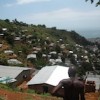
SIERRA LEONE: Deforestation Leaves Poor Vulnerable to Landslides
Samuel Weekes remembers when the hills stretching out beyond the heart of Freetown were green.Ecobreves – VENEZUELA: NGO Fights Capture of Dolphins
Environmental activists are calling on the Venezuelan government to prohibit the capture of Amazon river dolphins from the Orinoco River, after four of the animals died between January and April as the result of contaminated water in their pools at the aquarium in Valencia, an industrial city west of Caracas.Ecobreves – BRAZIL: Grape Waste a Potential Source of Income
Grape bagasse and seeds, now viewed as waste products of wine and juice production, could actually be an additional source of income, according to research by the Food Agroindustry department of the Brazilian Agricultural Research Corporation.Ecobreves – HONDURAS: Government Promotes Agro-Forestry Systems
The government of Honduras plans to implement an agro-forestry systems program in various regions of the country. These systems combine trees, agricultural crops and livestock raising, and are aimed at raising food production while mitigating the impacts of climate change.« Previous Page — Next Page »


Through our global network of local writers, we are continuing our award-winning coverage of global and local environmental challenges, with a focus on the people for whom the ecosphere matters in a direct way: rural dwellers who have little means to protect themselves against adverse conditions; communities that need to switch to sustainable development in order to survive; poor women and children, who are the most vulnerable in natural disasters. Sponsored by the United Nations Environment Program (UNEP), the United Nations Development Program (UNDP) and The World Bank (WB), IPS also maintains the award-winning Tierramérica, a specialised information service on environment and development.

The Week with IPS

Tracking global progress towards a sustainable world


