
Monday, November 23, 2026



News and Views from the Global South
Environment
Ecobreves – BRAZIL: Grape Waste a Potential Source of Income
Grape bagasse and seeds, now viewed as waste products of wine and juice production, could actually be an additional source of income, according to research by the Food Agroindustry department of the Brazilian Agricultural Research Corporation.Ecobreves – HONDURAS: Government Promotes Agro-Forestry Systems
The government of Honduras plans to implement an agro-forestry systems program in various regions of the country. These systems combine trees, agricultural crops and livestock raising, and are aimed at raising food production while mitigating the impacts of climate change.ENVIRONMENT DAY: Radioactive Oil, Fertilisers and Tobacco
Emissions of radioactive materials from the burning of fossil fuels and the production of chemical fertilisers are another reason to come up with sustainable alternatives, experts say.ENVIRONMENT DAY-ECUADOR: Nature’s Rights Still Being Wronged
Recognition of the rights of nature in Ecuador's 2008 constitution was widely applauded by environmentalists around the world. However, putting them into practice is still problematic due to the lack of legislation and an institutional framework.ENVIRONMENT: Business Lobby Resists Ban on ‘Perverse’ Emissions – Part 2
For years, European governments and corporations have made use of a loophole in the Kyoto protocol on climate change to make exorbitant profits. According to some sources, this lucrative scheme has caused more pollution than ever before while lobbyists in Brussels have methodically undermined the European Commission's decision to put a stop to it.Germany to Boost Renewables
The decision by the German government of Chancellor Angela Merkel to phase out nuclear power by 2022 will increase efficiency in the use of energy, boost investment and accelerate technical progress in renewable energy sources, and promote international energy cooperation, according to numerous experts.
ENVIRONMENT DAY: Heavy Rains Expose Venezuela’s Improvidence
Unseasonable rains falling for months and months in much of Venezuela have taken lives, destroyed homes, damaged crops and affected huge numbers of people. Experts blame the high level of damages on the improvised actions of citizens and the state.ENVIRONMENT: Business Lobby Resists Ban on ‘Perverse’ Emissions – Part 1
For years, European governments and corporations have made use of a loophole in the Kyoto protocol on climate change to make exorbitant profits. According to some sources, this lucrative scheme has caused more pollution than ever before.World’s Energy Poor See Receding Light at End of Tunnel
As the world continues to marvel at the widespread progress in modern technology and home electronics, there are still about 2.5 billion people - out of a global population of nearly 6.9 billion - who have little or no access to electricity.
ENVIRONMENT DAY: Better to Plant a Tree Than Curse the Desert
With deforestation claiming 5.2 million hectares annually and governments seemingly incapable of agreeing on a new pact to curb climate-altering carbon emissions, it would be easy to write off the situation as hopeless.Lend Your Car, Save, and Save the World
The world's more than 850 million cars and small trucks are parked 20 to 22 hours a day. Why not use these vehicles more efficiently by letting other people drive them when the owners aren't, asks Robin Chase, CEO of Buzzcar, a car- sharing network to be launched shortly in France.BRAZIL: Activists Call for Stronger Action against Violence in Amazon
Organisations of small farmers and human rights groups are disappointed with the measures announced by the Brazilian government to address the problem of violence in the Amazon jungle region, after four environmental activists were murdered in less than a week.
CHILE: HidroAysen Dam Project is Dividing Communities
The area that will be flooded to build the HidroAysén project's five dams represents barely 0.05 percent of the Chilean region of Aysén. But it is made up precisely of the valleys where the majority of the population lives, according to local residents.ECUADOR: Gov’t Shuts Down Illegal Gold Mines
The Ecuadorian government sent in the army to shut down illegal gold mining operations in the jungles of the northwest province of Esmeraldas, where the highly polluting activity is associated with drug traffickers and protected by armed militias and hired killers.
WORLD: Tropical Forest Summit Opens
Heads of state from the Amazon, Congo and Borneo-Mekong basins are meeting in the Congolese capital, Brazzaville: leaders hope to reach an accord on sound management of valuable rainforest ecoystems, but civil society actors believe the problems faced by local populations may be ignored.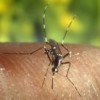
EUROPE: Space Agency Maps Mosquitoes to Combat Tropical Diseases
In times of war, the accurate mapping of enemy positions can be the key to victory. In the war on mosquito-borne diseases such as malaria, mapping the distribution and habitat of mosquitoes can play a crucial role in combating epidemics at the source.
SOUTH AFRICA: Sound Policy Key to Renewable Energy
A radical rethink of current energy policy can cut South Africa's greenhouse gas emissions by 80 percent in 2050 compared to 1990 levels. More than that - after an initial spike in investment - South Africans four decades down the line would pay 23 billion dollars per year less for their electricity compared to business as usual.EUROPE: New Move to Protect Virgin Forests
Seven countries from the Carpathian Region in Eastern Europe have signed a protocol to prevent one of Europe’s last natural and virgin forests from disappearing at the hands of illegal logging.Germany Pledges Nuclear Shutdown By 2022
Germany has decided to shut all its nuclear reactors by 2022 in a drastic policy reversal in the wake of the nuclear disaster at Japan's Fukushima plant.CENTRAL AMERICA: Caught in the Rain Without an Umbrella
"A year ago the river burst its banks; my house was ruined, I lost everything and I'm still waiting for help," Candelaria Peneleu told IPS from her modest home in Palín in the southern province of Escuintla, an area of Guatemala that was devastated last year by tropical storm Agatha.
PHILIPPINES: Biodiversity Threatened Before It’s Discovered
"Every time we go in the water, someone discovers something that's never been seen before," says Dr. Terrence Gosliner, leader of the ongoing 2011 Philippine Biodiversity Expedition.« Previous Page — Next Page »


Through our global network of local writers, we are continuing our award-winning coverage of global and local environmental challenges, with a focus on the people for whom the ecosphere matters in a direct way: rural dwellers who have little means to protect themselves against adverse conditions; communities that need to switch to sustainable development in order to survive; poor women and children, who are the most vulnerable in natural disasters. Sponsored by the United Nations Environment Program (UNEP), the United Nations Development Program (UNDP) and The World Bank (WB), IPS also maintains the award-winning Tierramérica, a specialised information service on environment and development.

The Week with IPS

Tracking global progress towards a sustainable world


