
Thursday, November 26, 2026



News and Views from the Global South
Environment

POLITICS: U.N. Faces Its Own Major Tragedy in Haiti
The major earthquake that struck Haiti Tuesday, causing death and destruction in the capital of Port-au-Prince, may also turn out to be a veritable disaster for the United Nations, which has over 9,000 personnel, including peacekeepers, international staffers and local civilians, scattered throughout the country.BIODIVERSITY: A Tipping Point on Species Loss?
Humanity is destroying the network of living things that comprise our life support system. While this sawing-through-the-branch-we're-perched-on is largely unintentional, world leaders can't say they didn't know what's going on: 123 countries promised to take urgent action in 2003 but have done little to stem the rising tide of extinctions in what's known as the extinction or biodiversity crisis.HAITI: U.S. Residents Mount Humanitarian Aid
A group of Haitian American leaders, state and local officials met late Tuesday night to map out humanitarian relief efforts as the extent of the damage from a devastating magnitude 7.0 earthquake hit Haiti became clearer.ENVIRONMENT: Seeking a Consumer Culture Revolution
The last 50 years have seen an unprecedented and unsustainable spike in consumption, driven by a culture of consumerism that has emerged over that period, says a report released Tuesday by the Worldwatch Institute.BIODIVERSITY: ‘Pious Words Won’t Save Endangered Species’
Less than a month after the world's heads of governments failed to sign an international treaty to address climate change at Copenhagen, they are back at making pious speeches, this time in favour of protecting biodiversity, endangered by global warming and other causes.
MALAWI: Green Belt Initiative Taking Shape
Let the rains fail, even for several successive seasons, and Malawi should still be able to produce enough to feed itself.
Wanted: Methane-Free Livestock
Studies of cattle metabolism and diet seek to reduce gas emissions from the meat industry, another villain in the climate change drama.Ecobreves – ARGENTINA: Complaints Against Dakar Rally
An environmental group from the central Argentine province of Córdoba has charged that no environmental impact studies were conducted for the 2010 Dakar Rally under way in Argentina and neighboring Chile.Ecobreves – BRAZIL: Making Use of E-Waste
The University of São Paulo has begun to recycle electronic waste, creating a center, known as CEDIR, which has started in-house with the university's own obsolete devices of information technology.Ecobreves – MEXICO: Poultry Farmers Promote Certification
Poultry farmers in the Mexico City area want to organize under a system that allows them to certify their production, following models that exist for sectors like corn and sugarcane farmers.
Q&A: ”Copenhagen Was Great for Citizen Mobilisation”
"It is important that we all come together, the Green Party, NGOs and citizens, on major issues such as pollution in big cities or deforestation," says Remus Cernea, the new executive president of the Romanian Green Party. "And we have to use all means, from public protests and working with the media to judicial action and party politics, in order to achieve our goals."
ANGOLA: Togo Footballers Attacked
Armed men have opened fire on a bus carrying Togo's national football squad to the Africa Cup of Nations tournament in Angola, killing the driver and wounding at least two players, officials have said.
NIGERIA: Lake Communities Left High and Dry
The fittest are fleeing the shores of Lake Chad: Adamu Modu, a young fisherman, is joining a stream of able-bodied men heading south to find work in the southern part of the country.URUGUAY: Coming Together to Tackle Climate Change
Fighting the front line battle against global warming, with the participation of all sectors of society, is the cornerstone of a United Nations Development Programme (UNDP) pilot project in Uruguay that is drawing attention from the rest of the world.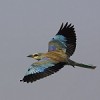
CLIMATE CHANGE: Watch the Birdies
Ornithologists say that climate change is having a profound effect on bird behaviour and suggest that this phenomenon can act as an early warning system to the dangers posed to Earth.MEDIA-US: Afghanistan Dominated TV Foreign News in 2009
Afghanistan and the U.S. military escalation in the civil war there dominated foreign-related news coverage by the three major U.S. television networks in 2009, according to the latest annual review by the authoritative Tyndall Report.SOUTH ASIA: ‘Harness Untapped Renewable Energy Sources’ — Experts
With its vast renewable energy potential, South Asia can lead the world in achieving energy security.URUGUAY: Forestry Industry Boom Brings Jobs and Challenges
"After work, when I'm on my own, I'm bored to death. If you want amenities, you have to bring them yourself," says young forestry worker Alejandro de Leiva, who works on a tree plantation in the western Uruguayan province of Paysandú, where he lives and works for 10 to 12 days in a row, with just two days off.ENVIRONMENT-INDIA: Creeping Deserts and Crouching Hunger
It is just the beginning of the year, but M. Manju Laxmi already feels anxious. In four months or so, she will be back to her old routine: stuffing the wide chinks under her weathered closed doors and windows with her old saris.
BIODIVERSITY: Invasive Species Multiply in U.S. Waterways
As 2010, the U.N.'s International Year of Biodiversity, gets underway, a fight against some of the most damaging invasive species in U.S. waterways is heating up.
URUGUAY: From Open Sewer to Green Parkway
For decades, the Miguelete, the main waterway running through the Uruguayan capital, was a virtual open sewer that the capital had turned its back on, along with its past as the site of the traditional Sunday promenade in the late 19th and early 20th centuries.« Previous Page — Next Page »


Through our global network of local writers, we are continuing our award-winning coverage of global and local environmental challenges, with a focus on the people for whom the ecosphere matters in a direct way: rural dwellers who have little means to protect themselves against adverse conditions; communities that need to switch to sustainable development in order to survive; poor women and children, who are the most vulnerable in natural disasters. Sponsored by the United Nations Environment Program (UNEP), the United Nations Development Program (UNDP) and The World Bank (WB), IPS also maintains the award-winning Tierramérica, a specialised information service on environment and development.

The Week with IPS

Tracking global progress towards a sustainable world


