
Thursday, November 26, 2026



News and Views from the Global South
Environment
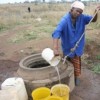
SWAZILAND: More Boreholes, No Water
In the drought-stricken area of Siteki, Tibuyile Maziya has been trying to fill up her four 20-litre buckets with water at a community for the last four hours. With a baby on her back and two more buckets to fill up, 19-year-old Maziya says she walks to this well at least three times a week to get water for her family of 15.
CLIMATE CHANGE: Forests Much More Than Carbon Storage
The world's forests and jungles are much more than carbon storage sites and compensation for greenhouse emissions, experts and activists point out to governments that are negotiating a new global climate change treaty.
CANADA: Ontario Aggressively Woos Green Power Investors
A "feed-in tariff" offering guaranteed premium prices for electricity from wind, solar, biomass and other green sources promises to attract large-scale international investors and developers, especially those aiming to erect wind turbines, to Canada's most populous province.ECONOMY-AFRICA: Pros and Cons to Huge Chinese Investment in DRC
Concerns abound about a nine billion dollar Chinese investment in the Democratic Republic of the Congo, especially around environmental consequences and transparency. And, on the Chinese side, investors complain not only about the lack of security in the DRC but about their own government not providing enough support.
ENVIRONMENT-POLITICS: India-China Deal Reinforces Climate Stand
India and China’s memorandum of understanding signed last week in this capital may have only had "a symbolic value," but it nevertheless showed that two of the world’s major players were serious about finding an alternative path to dealing with climate change while trying to attain sustainable development, said a top United Nations official.CLIMATE CHANGE: 350 PPM Too Ambitious, Say Lawmakers
A future global climate change treaty must limit the concentration of carbon dioxide in the atmosphere to 350 parts per million (ppm), and not 450 ppm, the currently proposed level, Samuel Fankhauser told a meeting of pro-environment legislators from the eight most industrialised countries and emerging economies here. But they felt the goal was not feasible.CHILE: Fashion Finds Green Style
Young Chilean designers are turning their creative energy to recycling, natural fibres and working with disadvantaged groups as they produce clothing and accessories - but it is an effort that is not free of tensions.CLIMATE CHANGE: Budgeting Environmental Justice
There is a consensus that industrialised nations are mainly responsible for the greenhouse gas emissions that cause global warming. It should be equally clear that such responsibility should have political consequences. But it isn't.TRADE: What Will China’s Legacy in Africa be by 2049?
With its recent history of tremendous economic growth, China has a few lessons to teach Africans. But African governments should be vigilant in ensuring that their countries also reap benefits from their relations with China.
Forests Much More Than Carbon Storage
The bid to include forests in initiatives to mitigate climate change is turning out to be a sensitive issue for the planet.
Five-Star Garbage
Decades ago, a Brazilian biologist couple put into practice the principle of using for their own construction materials what others throw away.Ecobreves – BRAZIL: One Tire Sold, Another Collected
Starting this month a new environmental policy requires Brazilian industries and importers to collect and appropriately dispose of as many "unusable" automobile tires as they sell new.Ecobreves – MEXICO: Proven Eroding of Aquifers
Mexico's watersheds have deteriorated in recent years, threatening environmental health across vast areas, warn non-governmental groups.Ecobreves – HONDURAS: 'Green' Garbage Cans Get Government Attention
Honduran tourism and environmental officials are promoting an eco-garbage can project to foment a culture of recycling and garbage classification among residents in the capital, home to 1.7 million people.ENERGY: World Bank Looks for the Cleaner Way
With new energy and environment strategies in the pipeline, the World Bank and its critics are going head to head on issues of fossil fuel funding and clean energy. The Bank will now call in outside experts to ensure that its coal power financing is justifiable, but critics would prefer it to go for truly clean energy.MIDEAST: ‘France, U.S. Pushing Arabs Into Nuclear Race’
The decision by the oil-rich United Arab Emirates to build nuclear reactors has unleashed frenetic, politically backed competition between giant corporations from France, the U.S., Japan and South Korea to win contracts estimated at more than 40 billion dollars.CAMBODIA: Climate Fight an Uphill Battle, But All’s Not Lost
As one of the world’s poorest nations, Cambodia is by definition one of those least able to protect itself from the effects of climate change. As an agrarian society, it is one of those most susceptible to climate change.
ZAMBIA : Fishing in Troubled Waters
In two decades of fishing on the Zambezi, Darius Wamulume has never seen anything like this. With deep ulcerations and tissue decay, the fish he has caught recently is too unsightly to sell and too suspect to eat.
WATER-UGANDA: Reducing Run-off To Protect Lake Victoria
The Ggaba landing site on Lake Victoria is the nearest wholesale fish market to the Ugandan capital, Kampala. More than 6,000 people live and work in this fishing community.WATER-BOTSWANA: A Garden In the Heart of the Village
Look, there's no drama with the borehole in Mokobeng. And that's the way it should be.
CLIMATE CHANGE: Grassroots Campaign Calls for Bold Steps
Through nearly 5,000 different actions planned in 170 countries for Saturday, climate change activists will try to raise public awareness on the need for a new global climate treaty which would set an upper limit for atmospheric carbon dioxide that would effectively prevent environmental catastrophes.« Previous Page — Next Page »


Through our global network of local writers, we are continuing our award-winning coverage of global and local environmental challenges, with a focus on the people for whom the ecosphere matters in a direct way: rural dwellers who have little means to protect themselves against adverse conditions; communities that need to switch to sustainable development in order to survive; poor women and children, who are the most vulnerable in natural disasters. Sponsored by the United Nations Environment Program (UNEP), the United Nations Development Program (UNDP) and The World Bank (WB), IPS also maintains the award-winning Tierramérica, a specialised information service on environment and development.

The Week with IPS

Tracking global progress towards a sustainable world


