
Friday, November 27, 2026



News and Views from the Global South
Environment
BRAZIL: Eco-Friendly (and Bullet-Proof) Homes
Plans to build low-cost housing in shantytowns in this Brazilian city using thermally and acoustically-insulating material, as part of a national plan to bridge the housing deficit, raised unexpected controversy when it came out that the houses would also be bullet-proof.HAITI: Battered and Unready for Looming Storm Season
Haiti’s environmental degradation is a time bomb that needs urgent attention if the country is to preserve its already strained social and economic stability, says a new briefing from the International Crisis Group (ICG).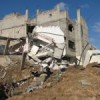
MIDEAST: Environment Emerges as a Major Casualty
Countless fruit groves across the Gaza Strip are now gone, entire farms bulldozed. The remains of thousands of destroyed homes emit toxic asbestos, while dilapidated infrastructure dumps raw sewage into the Mediterranean Sea. An already deepening environmental crisis in the besieged Gaza Strip has been further compounded by the recent war.
Chernobyl Kids Keep Arriving in Cuba
More than 24,000 people affected by Ukraine's 1986 Chernobyl nuclear disaster have been treated in Cuba since 1990.
Mexico's Future Hinges on Near-Empty Science Classrooms
The suspension of classes in Mexico due to the swine flu epidemic is not the only reason science and technology university courses have been nearly deserted.
Foreigners Lead Global Agricultural Land Rush
Corporations and governments with financial resources to spend are buying up agricultural land in poor countries as a means to ensure food and energy supplies.Ecobreves – BRAZIL: Productive Plan to Save Biodiversity
Technical training, access to credit and strengthening the market are the key points of the national plan for socio-biodiversity productive chains, signed in late April by Brazil's President Luiz Inácio Lula da Silva.Ecobreves – CHILE: Anti-Dam Campaign Reaches Europe
May 8 will mark the end of a two-week tour through Spain and Italy by activist Juan Pablo Orrego, international coordinator of the Patagonia Defense Council, which is fighting the construction of five dams in the southern Chilean region of Aysén.Ecobreves – VENEZUELA: National Park Restricts Vehicles
Access of all-terrain four-wheel-drive vehicles is being limited in the Cainama National Park, in southeastern Venezuela, bordering Brazil and part of the Guiana massif.
Q&A: Wanted – A Truly Clean Development Mechanism
The Clean Development Mechanism established under the Kyoto Protocol on climate change "should go beyond pure compensation" and produce "a net atmospheric benefit," argues Lambert Schneider, an expert with Germany's Institute for Applied Ecology.ENVIRONMENT: Israel Stripping West Bank Quarries
Israeli human rights organisation Yesh Din is taking the Israeli Defence Forces (IDF), the Israeli civil administration and a number of Israeli mining companies to court.CLIMATE CHANGE: Two-Degree Rise Ever More Likely, Scientists Warn
Climate scientists are calling for a phase-out of fossil fuels because humans are now pumping so much carbon dioxide (CO2) into the atmosphere that the '2-degree-C climate balloon' will burst otherwise, new studies show.HEALTH-ARGENTINA: Half of Children at Risk for Lack of Clean Water
More than half of all children in Argentina are at risk of illness because of lack of access to clean, running water, while a large proportion are also threatened by polluting industries and the use of pesticides in agriculture, according to a study by the ombudsman’s office.ENERGY-BRAZIL: Two-Pronged Policy
The Brazilian government announced it is overhauling the country's energy basket with more emphasis on renewable resources, while continuing to plan for future expansion of local production of traditional fossil fuels, like oil and gas.
CLIMATE CHANGE: Biggest Emitters Seek an Early Consensus
A two-day meeting in Washington of the 17 nations that collectively emit three-quarters of the world's greenhouse gases concluded Tuesday with optimism that it helped provide a springboard toward more comprehensive talks on a successor to the Kyoto Protocol at the end of the year.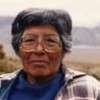
RIGHTS: Indigenous Wisdom Against Climate Change
While industrialised countries like Canada continue to emit ever-higher levels of greenhouse-effect gases, indigenous peoples around the world are working to survive and adapt to an increasingly dangerous climate.ICELAND: Taking the First Turn Left
Iceland's Social Democratic Alliance and the Left-Green Party won the majority of the seats in the Apr. 25 election, and will continue to work together for the next four years as the ruling coalition.
EDUCATION-US: Women Reach for Technology Lifeline
When Brunila lost her job as a flight attendant after 10 years on the job, she realised she needed to find a more stable career.
CLIMATE CHANGE: Burden Lies with Rich Polluters, Native People Say
Already suffering significant impacts from climate change, indigenous peoples at the close of an international summit here rejected the concept of carbon trading and offsets. Many also called for a moratorium on all new oil and gas exploration in their traditional territories and the eventual phase-out of fossil fuels.
Indigenous Wisdom Against Climate Change
Native peoples, with their ancestral links to the land, have learned some useful lessons over the millennia about how to fight and adapt to climate change.
Wanted: A Truly Clean Development Mechanism
The international climate rules that emerge in 2012 should contain a reformulated Clean Development Mechanism, says German expert Lambert Schneider in this Tierramérica interview.« Previous Page — Next Page »


Through our global network of local writers, we are continuing our award-winning coverage of global and local environmental challenges, with a focus on the people for whom the ecosphere matters in a direct way: rural dwellers who have little means to protect themselves against adverse conditions; communities that need to switch to sustainable development in order to survive; poor women and children, who are the most vulnerable in natural disasters. Sponsored by the United Nations Environment Program (UNEP), the United Nations Development Program (UNDP) and The World Bank (WB), IPS also maintains the award-winning Tierramérica, a specialised information service on environment and development.

The Week with IPS

Tracking global progress towards a sustainable world


