
Friday, November 27, 2026



News and Views from the Global South
Environment

PERU: Talks Fall Flat; Indigenous Protests Rage On
The Peruvian government resumed talks with indigenous groups after a violent crackdown on protests left 10 injured and around 20 under arrest. But the dialogue has not yet brought results, and the demonstrations against decrees that affect indigenous lands and the rainforest continue, while a state of emergency remains in place in several Amazon regions.BRAZIL: Vigil Against Farming Offensive in Amazon
Celebrities and environmental organisations held a vigil at the Brazilian Congress in an effort to block passage of a bill that they say could cause an even greater "environmental disaster" in the Amazon jungle.EUROPE: Help the Economy, Hurt the Environment
The European Economic Recovery Plan devised by the European Commission last year to help deal with the financial crisis is likely to fast-track environmentally damaging projects in the new member states.BRAZIL: Flooding Highlights Lack of Disaster Prevention
Several weeks of unusually heavy rainfall and flooding that has affected nearly one million people in 10 of Brazil’s 26 states have revealed a problem that only becomes news when tragedies occur: the lack of public investment in disaster prevention, experts warn.HEALTH: Killer Diarrheal Diseases Eclipsed on Donor Agendas
Interest in reducing the harm caused by diarrheal diseases has waned among the global health and aid communities, said two new reports released Tuesday in Washington.
ENVIRONMENT: Scientists Shepherd Dwindling Right Whales
When a North Atlantic right whale swimming near Boston bellows at 3 a.m., a phone rings in a small town in upstate New York.HEALTH: WHO Shifts Away from DDT for Malaria Control
While much of the public health community’s attention is consumed by the H1N1 human swine flu outbreak, efforts are quietly being made to plug away at the continued threat of malaria.
Q&A: More Investment in Production Won’t Cure African Food Crisis
The food crisis in African states will not be solved by investment to spur agricultural production because the problem is not food output but poverty that is making food unaffordable for urban Africans.
Science on the Trail of New Flu's Secrets
Using genetic studies, scientists are seeking conclusive answers about influenza virus A/H1N1, which continues to mutate.
The Nuclear Club's New Clothes
It's false that electricity production from nuclear reactors does not produce carbon dioxide, the leading greenhouse gas, explains Chilean environmental expert Sara Larraín in this exclusive Tierramérica column.Ecobreves – BRAZIL: Biodegradable Plastic from Sugarcane
Brazil will produce 200,000 tons a year of biodegradable plastic made from sugarcane. This raw material could be used to make fuel tanks for vehicles and containers for yogurt, milk, detergents and other products.Ecobreves – LATIN AMERICA: Unionists Demand Eco-Jobs
Labor unionists in Latin America and the Caribbean are calling for greater participation in sustainable development through the promotion of jobs in environmentally friendly technologies.Ecobreves – MEXICO: Nudist Resort Destroys Mangrove
Residents of Marquelia, a coastal town of some 15,000 people in the southwestern Mexican state of Guerrero, have complained that municipal authorities allowed the destruction of mangrove forests in an area where a nudist resort is to be built.Ecobreves – CENTRAL AMERICA: A Digital System to Avoid Natural Disasters
The countries of Central America will set up a digital platform to detect areas of risk of natural disasters, and to share experiences in prevention and mitigation, reported the Honduran Permanent Commission for Contingencies, Copeco.
MEXICO: Nation’s Future Hinges on Near-Empty Science Classrooms
Many solutions for sustainable development in Mexico lie in the scientific and technological training of its younger generations, say academics. But students in this country, where everyone wants to be a doctor or accountant, are ignoring those fields.AUSTRALIA: Climate Change – Further Threat to Aboriginals
Climate change will further marginalise Australia’s Aboriginal communities, forcing them out of their traditional lands, destroying their culture and significantly affecting their access to water resources, indigenous rights advocates warn.
CLIMATE CHANGE: Snow Cover Turning to Lakes in the Himalayas
As climate change takes hold, even the mighty Himalayas and Hindu Kush mountain ranges are now losing their snow and ice.
HEALTH: Chernobyl Kids Keep Arriving in Cuba
Thousands of kilometres from Ukraine, where the worst nuclear accident in history occurred 23 years ago, the sun and fresh air of a Cuban beach provide therapy for Ukrainian children, who continue to be born with problems stemming from the disaster.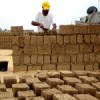
MIDEAST: Palestinians Rebuild With Mud
Jihad el-Shaar is pleased with his mud-brick house in the Moraj district of Gaza. The 80-square metre home is a basic one-storey, two-bedroom design, with a small kitchen, bathroom and sitting room, made mostly with mud and straw.POLITICS: Maritime Treaty Would Boost U.S. Interests, Report Says
The U. S. should quickly accede to the U.N. Convention on the Law of the Sea, according to a new Council on Foreign Relations (CFR) report.ENVIRONMENT: Coral Reefs Lucky – This Time
Scientists have been surprised by the rapid recovery of coral reefs from mass bleaching on Australia's iconic Great Barrier Reef, but they warn that reefs remain particularly vulnerable to the effects of climate change.« Previous Page — Next Page »


Through our global network of local writers, we are continuing our award-winning coverage of global and local environmental challenges, with a focus on the people for whom the ecosphere matters in a direct way: rural dwellers who have little means to protect themselves against adverse conditions; communities that need to switch to sustainable development in order to survive; poor women and children, who are the most vulnerable in natural disasters. Sponsored by the United Nations Environment Program (UNEP), the United Nations Development Program (UNDP) and The World Bank (WB), IPS also maintains the award-winning Tierramérica, a specialised information service on environment and development.

The Week with IPS

Tracking global progress towards a sustainable world


