
Friday, November 27, 2026



News and Views from the Global South
Environment

Wake of Controversy Sails with the Polarstern
Stimulating the growth of phytoplankton by adding iron to the sea could be another way to absorb excess carbon that causes climate change, say the scientists involved in a controversial study in the Atlantic Ocean.
Amazon Teetering on the Edge
Four scenarios laid out in the GEO report, ranging from the horrific to the barely optimistic, provide a view of what the Amazon could look like in just 17 years.
“Environmental Key Lies with Young People”
Civil society members gathered in Nairobi, hosted by UNEP, called for involving young people in the official delegations that negotiate environmental agreements, like the climate change treaty, says Argentine activist Cecilia Iglesias in this Tierramérica interview.Ecobreves – BRAZIL: Zoo Saves Water
The São Paulo Zoo is saving 1.3 million liters of water per month since it started following the Rational Water Use Program (PURA, for its Portuguese acronym).Ecobreves – HONDURAS: Military Engages in Operation Forest
The Honduran government announced that at month's end it will deploy a military contingent to protect 23,000 hectares of forest in the protected areas that are most in danger of fire in the dry season.Ecobreves – VENEZUELA: Schoolchildren Protect Fish
Gustavo, age 10, is happy to join his classmates in moving a hundred young cachama fish (Colossoma macropomum) to a pond in the Francisco de Mirando Park in the Venezuelan capital.Ecobreves – CHILE: Mapuches Question Validity of Gov't “Consultation”
Leaders of the Mapuche people are challenging the legitimacy and usefulness of the First National Consultation of Indigenous Peoples that the national government has extended to Mar. 2.Ecobreves – CUBA: Danger: Fire
The three hurricanes that thrashed Cuba in 2008 have increased the threat of forest fires during the current dry season, which lasts until early May, experts told Tierramérica.
ENVIRONMENT: Fighting for the Right to Fish
"When my belly is crying I must fill it. I can sit on the side of the road and beg for bread, but there is the bread right there," says Hahn Goliath, a fisherman in the small village of Doring Bay on South Africa's West Coast, as he points furiously at the Atlantic Ocean.ENVIRONMENT: Ministers Say Yes to Mercury Treaty
Six thousand tonnes of mercury enter the environment every year, posing a threat to human and animal health. Environment ministers meeting in Kenya have agreed to negotiate a treaty to reduce the supply and use of mercury worldwide.
BIODIVERSITY: So Long, Salamanders
Mesoamerica's salamanders appear to be joining the global decline in amphibian species, like frogs, adding to the evidence of ecological change around the planet.BIODIVERSITY: Frigid Polar Regions Teeming With Life
Earth's two ice-covered polar oceans may be the most inhospitable places on the planet, but more than 12,000 species of animals have been found there, according to new research released at the annual meeting of the American Association for the Advancement of Science here.
POLITICS: Rhetoric and Reality Clash on Obama’s First Foreign Visit
On his first foreign visit as U.S. president, Barack Obama's rhetoric of "hope" and "change" came face to face with the hard, divisive policy realities of climate change from Canada's tar sands, a growing insurgency in Afghanistan and the sputtering world economy.
ENVIRONMENT: Climate Change Threatens Livelihoods Along Africa's Coast
Environmental experts warn that climate change will lead to oceanic acidification and increase surface water temperatures, especially around the African continent.HEALTH: Warmer Climate Gives Malaria New Hunting Grounds
Climate change is bringing malaria to regions of Africa where the disease was previously unknown, researchers report from the conference of the American Association for the Advancement of Science in Chicago this week.
ENVIRONMENT: Food Crisis Under the Spotlight
Worldwide demand for food is expected to grow steadily over the next 40 years, but 25 percent of the world's food production may be lost to 'environmental breakdowns' by 2050 unless urgent action is taken.CORRUPTION-PERU: Parliament Investigates PetroTech Sale
At the government's request, the Peruvian parliament has set up a commission to investigate alleged irregularities in the sale of Petro Tech Peruana (PTP) to Ecopetrol, the Colombian state oil company, and the South Korean National Oil Corporation (KNOC). But opposition politicians are sceptical of the outcome and have refused to participate.
DEVELOPMENT: U.N. Seeks a Green Revolution in Food
The food crisis that spilled over from last year could take a turn for the worse in the next decade if there are no explicit answers to a rash of growing new problems, including declining agricultural production, a faltering distribution network and a deteriorating environment worldwide.ENVIRONMENT-AUSTRALIA: Bushfires Highlight Global Warming Danger
While the bushfires which ravaged parts of the state of Victoria earlier this month - the most devastating in the nation’s history - are not being blamed directly on the effects of climate change, it is clear that global warming was indeed a factor.
VENEZUELA: Ten More Years, If He Can Woo a Divided Country
Venezuelan President Hugo Chávez won Sunday's referendum with 54 percent of the vote, which will allow him to stand for reelection indefinitely. But he will have to exercise leadership over a country that is stubbornly split in two.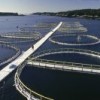
DEVELOPMENT: Aquaculture Awaits Its Heyday
With wild fish catches in sharp decline, aquaculture, which now accounts for nearly half of all seafood consumed, is expected to double production over the next two decades.« Previous Page — Next Page »


Through our global network of local writers, we are continuing our award-winning coverage of global and local environmental challenges, with a focus on the people for whom the ecosphere matters in a direct way: rural dwellers who have little means to protect themselves against adverse conditions; communities that need to switch to sustainable development in order to survive; poor women and children, who are the most vulnerable in natural disasters. Sponsored by the United Nations Environment Program (UNEP), the United Nations Development Program (UNDP) and The World Bank (WB), IPS also maintains the award-winning Tierramérica, a specialised information service on environment and development.

The Week with IPS

Tracking global progress towards a sustainable world


