
Saturday, November 28, 2026



News and Views from the Global South
Environment
G8: Climate Change High On Summit Agenda
The leaders of the world's most industrialised nations are now arriving in Japan for the Group of Eight (G8) Summit, Jul. 7-9. In the northern mountain resort of Lake Toyako they will confront challenges of climate change, the food shortage, and development, especially in Africa. Other agenda items are likely to include Japan’s recent bilateral summit with Hu Jinatao of China, as well as measures to control rising global fuel prices and nuclear proliferation.
INDIA: Sansar Chand Acquitted Again
Notorious wildlife trader Sansar Chand - who according to official investigations was responsible for the death of at least 10 tigers in the Sariska Tiger Reserve in 2005 - has been acquitted by a court of law in two cases related to wildlife crime for want of evidence by the prosecution. "It seems that there are no charges from the wildlife department, who was the prosecution in charge of the case," said Alok Kumar Aggarwal, additional chief metropolitan magistrate (ACMM) in New Delhi, "I am of the opinion to discharge him in this specific case, but the trial would go on in other wildlife cases, as per law."
CHINA: Quake Highlights Urban Privilege
1970 - The height of the Cultural Revolution. A severe quake ripples through rural China’s Yunnan province in the south. The response from the communist leadership in far away Beijing arrives swiftly - tens of thousands of little Red Books with quotations from chairman Mao Zedong and as many badges with his image. The rescue efforts are complete with thousands of letters of sympathy from the capital.
ENVIRONMENT-EUROPE: Mobile Phones Change Birds’ Tune
Many wild birds are able to imitate the simple ringtones of mobile telephones, German ornithologists report, underscoring the influence of humans on the evolution of birds.
HEALTH-MALAWI: Water Woes in Model Hospital
Gladys Mawera's face is contorted with pain -– both she and her newborn baby survived a complicated birth three days ago - but she has not been able to take the painkillers and antibiotics prescribed to her by the medical personnel at the Chiradzulu District Hospital in southern Malawi. The hospital has been without water for five days.POLITICS: U.S. and China Go Bump in the Middle East
For China these days it seems that nothing - not rising energy prices; not sanctions aimed at its more unsavoury business partners, Burma and Sudan; not even the prospect of a nuclear Iran - can curb its thirst for oil.ENVIRONMENT: Is Whale Conservation Negotiable?
Whale conservation organisations attending the 60th meeting of the International Whaling Commission (IWC) in the Chilean capital have reacted cautiously to a decision by the organisation’s member countries to create a small negotiating group to determine the future of whales.
REFUGEES-CHAD: Water and Wood Shortages Worsen
Every morning soon after sunrise, Fatne Abdaraman walks a short distance across the Iridimi refugee camp in eastern Chad hauling a twenty-litre plastic jug. She lines it up along with other women's containers at the water distribution point, then awaits her turn to draw her daily allotment of one of Central Africa's scarcest resources, one that underpins ongoing conflict in the region.HEALTH-KENYA: Malaria Rises to Highland Areas
The end of June marks the start of the malaria season in East Africa. After the long rains, conditions in lowland swamps and coastal regions are more conducive for mosquito breeding. But in recent years malaria has also appeared in the highland areas where it was previously unheard of.ECONOMY-AFRICA: Russian Tourist Market Ripe For the Picking
The number of Russian tourists visiting African destinations is steadily increasing due to rising incomes and the desire to have uncommon wildlife experiences, according to travel agencies.
The Global Food Crisis and the Latin American Paradox
As world leaders left the Rome Summit with plans to aid the world’s poor struggling with record food prices, it is important to consider some unique characteristics of Latin American and Caribbean countries. High commodity prices present an opportunity for the region to increase food supply while confronting the urgent challenge to help those most in need during this crisis.ENERGY: U.S. Sees World Use Soaring Despite Rising Costs
World energy demand and carbon dioxide emissions will grow by about 50 percent over the next two decades despite soaring oil prices as developing countries outpace rich ones in consumption, the U.S. government predicts.MALAYSIA: Opposition Pledges Yet Unfulfilled
Even as the Anwar Ibrahim-led opposition Peoples Alliance coalition celebrates 100 days in office this week with huge rallies across the country, the public euphoria that brought them into power is beginning to cool off as people tighten their belts in the face of a slowing economy and escalating cost of living. Demands are rising for the opposition to implement their pledges.CLIMATE CHANGE: U.S. Intelligence Cites Litany of Dangers
While the United States is relatively well placed to cope with the likely consequences of global warming over the next 20 years, many developing countries, especially in Africa, South, Central and East Asia, and Central America, could suffer serious problems, particularly related to water scarcity and migration, according to testimony here Wednesday by a top U.S. intelligence officer.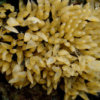
BIODIVERSITY: O Sponge, Your Names Are Many
The Breadcrumb sponge found on floats and rocks in most oceans has been "discovered" 56 times, the first dating to 1766. And 56 different scientists over the span of 250 years have had the satisfaction and pleasure of giving the lowly sponge 56 different names.CORRUPTION: Graft Sapping Precious Water Resources
The world's growing water crisis - with nearly 1.2 billion people lacking a steady water supply and more than 2.6 billion without adequate sanitation - is fundamentally a crisis of governance, with corruption as one root cause, says a new report by Transparency International.PERU: Rights Groups Warn of Authoritarian Tendencies
The government of Peruvian President Alan García has demonstrated an authoritarian bent in its intolerance of social protest or any form of criticism, and has sponsored draft laws that treat demonstrations as criminal activity, say human rights groups and academics.CLIMATE CHANGE: 100-Percent Renewables Not a Pipe Dream
North America's abject failure to meet the challenge of climate change has been "un-American", environmentalist and scientist David Suzuki told delegates Tuesday at the World Wind Energy Conference, the first ever in the region.ECONOMY-US: Private Jets Targeted as Symbols of Inequality
Crusaders against inequality are accusing the private jet set of flying high at the expense of the environment, the national air traffic system, and lower-class taxpayers.
DEVELOPMENT-CHINA: Temblor Throws Shadow on Big Dam Ambitions
China’s deadly earthquake last month appears to have shifted more than just tectonic plates in the country’s picturesque Sichuan province. The May 12 temblor has given a boost to China’s green lobby that has been calling for a review of Beijing’s zealous dam-building programme and may tilt the balance of public opinion in favour of such appeals.ENVIRONMENT: Whaling Commission Seeks Consensus on Future
The International Whaling Commission’s (IWC) 60th annual meeting, which is testing the future of the organisation itself, kicked off this week in Chile with a strong conservationist message from President Michelle Bachelet.« Previous Page — Next Page »


Through our global network of local writers, we are continuing our award-winning coverage of global and local environmental challenges, with a focus on the people for whom the ecosphere matters in a direct way: rural dwellers who have little means to protect themselves against adverse conditions; communities that need to switch to sustainable development in order to survive; poor women and children, who are the most vulnerable in natural disasters. Sponsored by the United Nations Environment Program (UNEP), the United Nations Development Program (UNDP) and The World Bank (WB), IPS also maintains the award-winning Tierramérica, a specialised information service on environment and development.

The Week with IPS

Tracking global progress towards a sustainable world


