
Saturday, November 28, 2026



News and Views from the Global South
Environment
Ecobreves – MEXICO: Discovery to Remove DDT from Soil
Placing trays of carbon on soil contaminated with DDT eliminates up to 60 percent of this insecticide, a persistent organic pollutant, according to a study at the Autonomous University of Mexico.CLIMATE CHANGE-EUROPE: There's Money in Emissions
'Cap and trade' has become one of the stock phrases that one is almost guaranteed to hear at any European conference on climate change these days.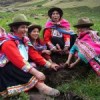
PERU: Women – The Guardians of Potato Biodiversity
In South America’s Andes mountain region, indigenous women have traditionally been responsible for selecting, conserving and managing seed potatoes from the countless native varieties of the crop, thus ensuring diversity and continued production while contributing to food security among their people.CHINA: Quake Helps Mend Image After Tibet Crackdown
A sense of solemnity has enveloped most activities in the Chinese capital these days. Even the avant-garde shows in town strike a note of bereavement for the 50,000 people estimated to have perished in the deadly earthquake this week.PERU: Summit Discusses Climate Change as Glaciers Melt
Peru is one of the countries most vulnerable to climate change, which is already having perceptible effects in this country. According to a report by the National Environment Council (CONAM), the area of glaciers in the Andes has shrunk from 2,042 to 1,596 square kilometres in just 25 years.PHILIPPINES: Deforestation – MNCs, Militants, Soldiers, Farmers Blamed
Outside the office of the Department of Environment and Natural Resources (DENR) in Compostela Valley province sits a pile of confiscated, milled hardwood - a monument to the deforestation caused mainly by parties to a festering armed conflict.LATIN AMERICA: European Corporations on Trial
Twenty European corporations are being tried for human rights violations before an ethical tribunal at the Peoples’ Summit, organised for the third time by the Bi-Regional Network "Enlazando Alternativas" (Linking Alternatives) in Lima. The organisers announced that they hope to take some of these cases to ordinary courts of justice in Peru.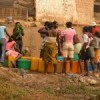
SOUTHERN AFRICA: Water "Undervalued and Not Treated With Respect"
A two-day conference on water issues in the Southern African Development Community (SADC), which opened Wednesday in Maseru, Lesotho, has seen representatives of government, civil society, the private sector, donors and other groups discuss the likely effects of climate change on development in the region.
Q&A: Can Save the MDGs Yet
White banners were draped across public buildings in much of Europe during 2005 as an unlikely coalition of celebrities, church groups and trade unionists took part in the Make Poverty History campaign. The Group of Eight (G8) top industrialised countries and the European Union responded by promising to double their aid to Africa by 2010 at a summit in Gleneagles, Scotland.EGYPT: Giving With One Hand, Taking Back With the Other
In an effort to offset soaring inflation, President Hosni Mubarak last month announced generous salary increases for all public sector employees. The gesture lost its lustre days later, however, when the government drastically raised prices of subsidised fuel.ENVIRONMENT: Only the Cover Is Green
Notice how green the public relations campaigns of multinational corporations have become.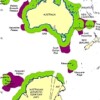
AUSTRALIA: Diffident on UN Grant of Larger Continental Shelf
While last month’s landmark ruling by a United Nations body granting Australia jurisdiction over an additional 2.5 million square kilometres of seabed has been hailed as a "potential bonanza", a leading expert on international law expects the government to proceed with caution.Q&A: Portugal’s ‘Mayor of the Future’ in Green Energy
He is mayor of one of Portugal’s smallest and poorest municipalities. But his perseverance in using solar energy to drive development in his region has brought José Maria Prazeres Pós-de-Mina attention from the rest of the country and from other members of the European Union (EU).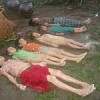
BURMA: Foreigners, Cameras Banned in Cyclone-Hit Areas
Images of the dead keep trickling out of Burma. The most moving are those of children who died when Cyclone Nargis tore through their world in the populous Irrawaddy delta.CUBA: ‘Green’ Farming Techniques to Boost Production
The application of agroecological techniques and the salvaging of traditional farming methods have revolutionised food production in rural areas along the southern edge of the Cuban capital.
DEVELOPMENT: Can Sorghum Solve the Biofuels Dilemma?
A new crop that provides food, animal feed and fuel at the same time promises to help developing countries redirect money spent on oil imports to benefit their own farmers. Is sweet sorghum biofuel's "holy grail"?HEALTH-KENYA: Months After Dump Scare, Problems Persist
Every day, the Dandora dumpsite in the eastern part of Nairobi receives 2,000 tonnes of rubbish - about half of the waste generated daily by the capital's 4.5 million people. The 12-hectare site is a low mountain of smouldering trash. Vultures and marabou storks circle overhead in anticipation of a meal.CHINA: Temblor – Test of Openness
As the death toll from a devastating earthquake in south-western China continues to climb, the disaster is proving a credibility test for the government, whose mandate is derived from maintaining stability and social order and providing for the welfare of people.EUROPE: New Safety Concerns Raised Over Nuclear Plants
Some international organisations and governments in industrialised countries are pushing for further development of nuclear power, but amidst growing doubts over the safety of several nuclear installations.
Top-Rated Agro-Science Has Achilles Heel
Brazil achieved excellence in agricultural technology as the result of a state network of research centers that played a key role in the country's farming boom.
Food Price Inflation Threatens Children
Breast feeding, enriched foods and monitoring of children's growth are among the basic weapons for fighting a potential new wave of childhood malnutrition in Latin America, say experts.« Previous Page — Next Page »


Through our global network of local writers, we are continuing our award-winning coverage of global and local environmental challenges, with a focus on the people for whom the ecosphere matters in a direct way: rural dwellers who have little means to protect themselves against adverse conditions; communities that need to switch to sustainable development in order to survive; poor women and children, who are the most vulnerable in natural disasters. Sponsored by the United Nations Environment Program (UNEP), the United Nations Development Program (UNDP) and The World Bank (WB), IPS also maintains the award-winning Tierramérica, a specialised information service on environment and development.

The Week with IPS

Tracking global progress towards a sustainable world


