
Saturday, November 28, 2026



News and Views from the Global South
Environment
Food Price Inflation Threatens Children
Breast feeding, enriched foods and monitoring of children's growth are among the basic weapons for fighting a potential new wave of childhood malnutrition in Latin America, say experts.Ecobreves – CHILE: Citizens Halt Dams in Capital
The withdrawal of a project to build to hydroelectric dams on Chile's Maipo River, planned by the AES Gener company, is a "citizen triumph", according to the Maipo River Citizen Organization.Ecobreves – BRAZIL: Native Plants to Clean Up Contaminated Soil
Brazil could recuperate and decontaminate soil poisoned with mercury, lead, nickel and other metals that are dangerous to human health, using native plants. The technique is known as "phytoextraction" and was developed at the University of Sao Paulo.Ecobreves – HONDURAS: Funds to Preserve Environmental “Lungs”
Honduras is asking for 50 million dollars in international cooperation to preserve the Plátano River Biosphere Reserve and generate sustainable production projects for the local communities, according to official sources.Ecobreves – VENEZUELA: Ávila National Park Has New Friends
Biologists, anthropologists, environmentalists, palm gatherers and volunteers last week adopted the "Caracas Manifesto for the Warairarepano", the indigenous name for the Ávila National Park.
BURMA: 'Junta Aid Blocks Could Multiply Cyclone Toll'
Burma’s military regime may soon face charges of allowing tens of thousands of its own people to die through incompetence and bureaucratic red-tape placed in the way of international relief efforts for over one million cyclone victims in the country.ENVIRONMENT-ASIA: Mekong Commission Fends Off Credibility Charges
The head of the Mekong River Commission (MRC) has defended the regional body against charges that it faces a crisis of credibility arising from inability to guide hydropower development on the Mekong mainstream.Q&A: "Literally, This Is Energy From Dirt"
You've heard of solar power, and also wind power. Now, you might start hearing about soil power as well.
BURMA: Junta Holds Referendum in Cyclone Aftermath
Shortly after sunrise on Saturday, a few men and women in this town on the banks of a river broke their morning routines to cast ballots - an act unusual in the military-ruled country.
CLIMATE CHANGE-CUBA: Prized Wetland in Danger
If the worst outcomes predicted for climate change in Cuba become reality, a large portion of the Ciénaga de Zapata, the largest and best preserved wetland in the islands of the Caribbean Sea, could disappear by the second half of this century.BRAZIL: Sugarcane Alcohol Tarnished by U.S. Maize Ethanol
Recent efforts by President Luiz Inácio Lula da Silva to clearly mark the difference between Brazilian ethanol and the agrofuels produced by the United States are an admission that signing an agreement with Washington to promote a global bioethanol market was a serious political mistake, say analysts.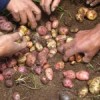
PERU: Highlands Families Work to Save Their Birthright – the Potato
A plate of parboiled potatoes of various sizes, shapes and colours welcomes the visitor to Huama, a town in the southern Peruvian Andes, at an altitude of 4,500 metres.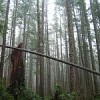
BIODIVERSITY-US: Loggers, Owls Not Out of the Woods Yet
Some wounds heal slowly, and the wounds of the logging community on the U.S. northwest Pacific coast are still smarting nearly 20 years after measures to protect a threatened species devastated their industry.
ICELAND: Road Threatens Heritage
Environmentalists are concerned that a proposed new road will threaten the ecology of Lake Thingvallavatn, Iceland's second largest lake.ENVIRONMENT-BRAZIL: Controversy Over Indigenous Land and Biofuels
The legal status of an indigenous territory in the far north of Brazil, and biofuels, are two hot potatoes at the Third National Conference on the Environment being held in the capital city, which is focusing on climate change.ENERGY-AFRICA: From Kerosene to the LED, O-HUB and O-BOX
In many of Africa's towns and villages, smoky kerosene lamps are all that keeps the darkness at bay after sunset. However, kerosene is a dangerous and increasingly expensive source of light for Africans who do not have access to electricity - about three-quarters of those living on the continent, according to the World Bank.
BURMA: Junta Gives Referendum Priority Over Cyclone Relief
Disregarding the disaster caused by Cyclone Nargis, Burma’s military rulers are bent on holding a constitutional referendum on Saturday, said to be designed to enhance the junta’s grip over the country.MEXICO: Pemex Oozes Corruption
Funds belonging to the Mexican state oil monopoly, Pemex, have paid in recent years for liposuction treatment for the wife of the company’s chief executive, a presidential candidate’s campaign, contracts with firms facing legal action, and the whims of trade union leaders who are not required to account for their expenses.
BURMA: Cyclone Nargis Exposes Junta's Anti-People Attitude
Cyclone Nargis - Burma’s worst natural disaster in living memory - has reinforced the image of the military in that country as a force interested solely in perpetuating its grip on power, regardless of costs to the people it claims to protect.DEVELOPMENT: NGOs Pressure AsDB to Strengthen Safeguards
Behind-the-scenes lobbying by non-governmental organisations (NGOs) paid off by the end of the annual meeting of the Asian Development Bank (AsDB) concluding here Tuesday. Leading financial officials from a host of European countries came out in favour of the strong "safeguard policies" that activists are championing.
CLIMATE CHANGE: Indians Speak Out Against Carbon Markets
International policymakers are facing fierce criticism from leaders of the world's 370 million indigenous peoples over plans to use carbon markets as one of the tools to mitigate climate change.« Previous Page — Next Page »


Through our global network of local writers, we are continuing our award-winning coverage of global and local environmental challenges, with a focus on the people for whom the ecosphere matters in a direct way: rural dwellers who have little means to protect themselves against adverse conditions; communities that need to switch to sustainable development in order to survive; poor women and children, who are the most vulnerable in natural disasters. Sponsored by the United Nations Environment Program (UNEP), the United Nations Development Program (UNDP) and The World Bank (WB), IPS also maintains the award-winning Tierramérica, a specialised information service on environment and development.

The Week with IPS

Tracking global progress towards a sustainable world


