
Saturday, November 28, 2026



News and Views from the Global South
Environment
ARGENTINA: Smoke Was a Long Time Coming
"The work has been relentless. We finish putting out one big fire and another one breaks out in the same area." This remark by a firefighter in Argentina, frustrated at the grass fires on the islands in the Paraná river delta, was not made this month, while smoke has covered Buenos Aires and even the capital of neighbouring Uruguay, but in 2004.FINANCE: Oil Majors Rapped Over Secrecy, Corruption
Leading oil firms impede efforts to stamp out poverty and corruption by shrouding their financial dealings in secrecy, says a global watchdog.SOUTH AFRICA: Water Supply Proposal Sparks Controversy and Suspicion
A plan to increase the supply of potable water to two coastal towns in South Africa's Eastern Cape Province is provoking heated debate.INDIA: Blames West For High Food, Energy Prices
While moving firmly to curb inflationary trends, India’s coalition government, which faces a general election next year, continues to blame a poorly managed international financial system for spiralling food and energy prices at home.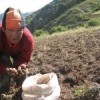
PERU: Preserving the Potato in Its Birthplace
Thousands of varieties of potato (Solanum tuberosum), one of the most widely-eaten and well-known foods in the world, have been developed in the heart of South America’s Andes mountains, where the crop was domesticated more than 8,000 years ago.DEVELOPMENT-BRAZIL: Activists Opposed to Rebuilding Amazon Highways
Nearly four decades after they were first planned, three highways through the jungles and swamps of Brazil’s Amazon region are being rebuilt. Neglected in the past when they became economically obsolete, they are once again a focus of environmental criticism.CLIMATE CHANGE: Displacements Set To Increase
Climate change is likely to lead to an increase in conflicts and forced migrations of poor people in the south, a new report warns. Developing countries can reduce this impact by adopting preventative measures now, while international law and human rights principles need to be updated.
No Place for Small Farmers at the Supermarkets
Efforts by small farmers in Mexico to avoid intermediaries and get their products on supermarket shelves have failed due to the chains' strict rules, say farmers groups.
“Doctor” Nature in Danger
Your health, and the health of your loved ones, is interlinked with that of a much larger family -- one we call "nature", says a new book about medicine and biodiversity.Ecobreves – BRAZIL: Lumber Auction to Finance Illegal Logging
The Environment Secretariat of Pará, the largest state of Brazil's eastern Amazon, announced an unprecedented auction for May 15 of 5,500 cubic meters of illegally extracted timber. The revenues from the sale will be used to fight environmental crimes.Ecobreves – CHILE: Nuts for Biodiesel
Sometime between May 15 and 30, the first plantations of physic nut (Jatropha curcas) will be ready in Chile as part of a project for distilling biodiesel in the northern part of the country.Ecobreves – VENEZUELA: Glaciers Disappear
The glaciers of Venezuela's Sierra Nevada mountains, more than 4,800 meters above sea level, lost 94 of their total 137 hectares in 30 years and will disappear by 2020, says Angel Viloria, of the governmental Venezuelan Institute of Scientific Research.Ecobreves – CUBA: Dragnets Threaten Manatees
Experts in the central Cuban province of Villa Clara hope that the discovery of three dead manatees (Trichechus manatus) will speed up the regulation of dragnet fishing in this area, where these large marine mammals are abundant.Ecobreves – HONDURAS: Local Governments Protect Environment
In Honduras, 102 of the country's 298 municipalities have joined an initiative for watershed preservation, reforestation and environmental education, say official sources.CHILE: Environmentalists Withdraw Backing from Government
Twenty-three environmental groups in Chile withdrew their support from President Michelle Bachelet, complaining that she had failed to live up to an agreement they had signed with her during her election campaign.ECONOMY-MEXICO: Sunny Today, Cloudy Tomorrow
So far, the Mexican economy has not fallen prey to the ills affecting its principal trading partner, the United States, and is surviving internal political tensions arising from government initiatives to reform the state-owned oil company. But conditions could deteriorate in the second half of the year.
ASIA: 'Neglect of Farming Led to Rice Crisis'
The headlines screaming about a global food shortage have not aroused surprise in a leading non-governmental organisation (NGO) working with farming communities across Asia. To its members, warnings of hunger on a biblical scale are hardly news.
ENVIRONMENT: Alien Species Plague the Land That Time Forgot
Juicy, wild-growing blackberries, guava and passion fruit plants may be savoured by humans and animals alike, but in this particular part of the world - sometimes called the Land That Time Forgot for its largely pristine biodiversity - they are three problematic invasive species.Q&A: “Transgenic Seed Companies Lie and Bribe”
Biotech corporations that developed genetically modified seeds are bribing authorities and carrying out costly advertising campaigns "plagued with lies in order to create monsters that attack life," says Jesús León Santos, an indigenous man who is one of this year's winners of the Goldman Environmental Prize.NICARAGUA: A Hard Rain Is Gonna Fall
Having been hit by three hurricanes and 25 tropical storms in less than 10 years, Nicaragua is looking ahead to the next rainy season, due to begin in May, with wariness and trepidation.
HEALTH-DR CONGO: Water Everywhere, But Is It Safe To Drink?
The rain falls in battering sheets, rolling eastward along the Congo River through Kinshasa, capital of the Democratic Republic of Congo (DRC). It is midday, but the sky turns black and soon the potholed streets of this decrepit yet vibrant metropolis are filled with pond-sized puddles, many of them larger than the cars that traverse them.« Previous Page — Next Page »


Through our global network of local writers, we are continuing our award-winning coverage of global and local environmental challenges, with a focus on the people for whom the ecosphere matters in a direct way: rural dwellers who have little means to protect themselves against adverse conditions; communities that need to switch to sustainable development in order to survive; poor women and children, who are the most vulnerable in natural disasters. Sponsored by the United Nations Environment Program (UNEP), the United Nations Development Program (UNDP) and The World Bank (WB), IPS also maintains the award-winning Tierramérica, a specialised information service on environment and development.

The Week with IPS

Tracking global progress towards a sustainable world


