
Sunday, November 29, 2026



News and Views from the Global South
Environment
PARAGUAY: Praying for Rain to Douse the Flames
Satellite images show Paraguay’s territory covered with small red dots. Fires have devastated 400,000 hectares, and over 15,000 people are homeless. The government is being accused of excessive delay in acting on the emergency.Q&A: "The Involvement of the Government Is Still Mixed"
Some cause for optimism, but several reasons for concern...That's the message from Amadou Wassouni as regards efforts to address desertification in Cameroon.
SCIENCE: Geneticists Crack the Species Code
Scientists are enthusiastic about a new DNA barcoding technology that will help keep illegal fish and timber out of global markets, slow the spread of invasive pests, and improve food safety and disease prevention and offer better environmental monitoring.ENVIRONMENT: Can Networking Teenagers Save the World?
Global trends indicate a looming environmental catastrophe, and engaging high school students around the world may be the only hope.
ENVIRONMENT-FIJI: Turtle Slaughter Exposes Toothless Ban
Following reports of the slaughter of 84 turtles, as part of festivities for an annual church conference, conservationists have called on Pacific Island countries to enforce legislations that ban the killing or molestation of the endangered sea reptiles.ENVIRONMENT: U.S., U.N. Stage Dueling Climate Meets
Are the United Nations and the United States trying to outdo each other by hosting two parallel summit meetings on the same subject - climate change - during the same week at the end of September?PERU: Clean Development as Business Opportunity
As part of Peru’s focus on diversifying exports, it is looking at "green" alternatives, and could take in around 400 million dollars between 2008 and 2012 through the sale of carbon credits to industrialised countries.TRADE: It’s Not Just About Tyres
Old tyres might sound like the unlikely cause of a diplomatic row over potential implications for the level of protection poor countries can offer to the environment or public health.
CULTURE-JAPAN: Flushing Away Toilet Taboos
The evolution of the toilet in Japan, from the humble squat latrines of a few decades ago to today’s hi-tech, cockpit-like contraptions, parallels the dramatic rise of this country from post-war ruination to global technological leadership.ENVIRONMENT: Parliaments Said to be "Weak" in Fighting Desertification
Legislatures have been taken to task over their track record in addressing desertification, this at the eighth session of the Conference of the Parties to the United Nations Convention to Combat Desertification (COP8), currently underway in the Spanish capital, Madrid.
ENVIRONMENT: Worst Places on Earth Are Home to Millions
Rapidly industrialising India and China have claimed four of the top 10 most polluted places on the planet for the first time, according to a report by U.S. and European environmental groups.ENVIRONMENT: Warming May Trigger Agricultural Collapse
India could lose up to 40 percent of its agricultural output because of global warming even as it becomes the world's most populous country, warns a new study.PERU: Mining Project Hurting Highland Ecosystem
The preliminary results of a study by researchers at the University of Texas have shown that the exploration phase of the Río Blanco mining project in Peru’s northwestern Andes mountains caused damages to the area’s biological diversity.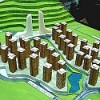
ENVIRONMENT-MALAYSIA: Mega City Project Robs Common Green
Alarmed civil society groups are coming together to oppose a massive urban development project that could result in 33 tower blocks of over 40 storeys each being built on one of the last huge green spaces left on land-starved Penang island.EL SALVADOR: Closing of Dumps Necessary But Not Sufficient
After several years’ delay, authorities in El Salvador are about to permanently close down the unofficial open-air rubbish dumps that have polluted the country for decades.ENVIRONMENT-COTE D’IVOIRE: Soya By Way of War
When the failed coup of September 2002 led to a prolonged period of isolation for northern Côte d'Ivoire, farmers in this rebel-held region counted the cost.ARGENTINA: Camping in the Treetops to Save Forests
Greenpeace activists are camped out in the treetops in the Yungas forest in northwestern Argentina to press the Senate to pass a new law that would curb the heavy logging of native forests, and to draw attention to the destruction.
ENVIRONMENT-GERMANY: What a Lake Says About Climate Change
When the East German nuclear power plant Rheinsberg was shut down almost 20 years ago, environmentalists expected that fauna and flora in nearby Stechlin lake would survive without further damage.
ENVIRONMENT: Getting Some More Blue Into the Danube
The biggest river research expedition of the year is on its way to see if the Danube can be the Blue Danube again.
ENVIRONMENT: Critics Weigh In as IFC Tightens Mining Rules
The International Finance Corporation (IFC) faces pointed criticism in coming days as an effort to lessen the damage wrought by large mining projects enters a new phase.
ENVIRONMENT: Breakthrough on Mystery of Vanishing Bees
Over the past year, honey bees have been dying across North America in unprecedented numbers and, until this month, no one seemed to be able to prove beyond a reasonable doubt what the cause may have been.« Previous Page — Next Page »


Through our global network of local writers, we are continuing our award-winning coverage of global and local environmental challenges, with a focus on the people for whom the ecosphere matters in a direct way: rural dwellers who have little means to protect themselves against adverse conditions; communities that need to switch to sustainable development in order to survive; poor women and children, who are the most vulnerable in natural disasters. Sponsored by the United Nations Environment Program (UNEP), the United Nations Development Program (UNDP) and The World Bank (WB), IPS also maintains the award-winning Tierramérica, a specialised information service on environment and development.

The Week with IPS

Tracking global progress towards a sustainable world


