
Sunday, November 29, 2026



News and Views from the Global South
Environment
CLIMATE CHANGE: ‘Incentives Offered to Destroy Forests’
Instead of providing positive incentives to tropical nations to conserve their rainforests and so reduce greenhouse gases emissions, the world indirectly gives "perverse incentives" to destroy them by demanding goods produced by intensive logging, a leading environmental activist says.BALKANS: Hot Summer Takes Its Toll
As rain falls and autumn approaches, countries across the Balkans are taking stock of the damage caused by one of the hottest summers in recent times, with temperatures in the 40s since mid-June until the beginning of September.
BRAZIL: Amazon Logging Means Short-Lived Prosperity
Devastation, violent land conflicts and rapid - but short-lived - economic growth are the traces left by deforestation in the Brazilian Amazon over the last 30 years, according to a new study.
ENERGY-CANADA: Wind vs. Water in Giant Dam Dispute
A controversial hydroelectricity expansion project in Quebec has drawn sharp criticism from aboriginal and environmental organisations on both sides of the Canadian-U.S. border.
ENVIRONMENT-SRI LANKA: Tsunami Alert Systems Working – Too Well
A tsunami alert, last week, sent thousands of Sri Lankans living along the coasts of this island nation fleeing inland, but authorities were exultant that the early warning systems installed after the disastrous Dec. 26, 2004 Indian Ocean tsunami were working.ENVIRONMENT-LATIN AMERICA: Coming Together to Rescue the Reserves
Many reserves in Latin America are walking a tightrope between degradation and isolation. To overcome these problems and appreciate the contribution of natural heritage areas to fighting poverty, Argentina will host an international congress attracting wide participation at the end of this month.
ENVIRONMENT: Experts Call for Action on Ocean Preserves
As much as 50 percent of the world's fish stocks are fully exploited and 17 percent are over-exploited, putting marine biodiversity at severe risk, according to a new report released Tuesday by the Worldwatch Institute.DEVELOPMENT-PAKISTAN: For Village Women an Indoor Latrine Is Heaven
For as long as Hatal Bibi, 50, can remember, women in her village, Ahmed Khaskheli, 250 km east of this port city, in Sindh province’s Sanghar district, spent hours fetching water from a canal four km away and used an enclosed communal patch to relieve themselves.ICELAND: Hydropower Scheme Generates Heat
Controversy is building up over a proposal to erect a set of three hydroelectric power plants and their associated dams in the lower Thjorsa river in South Iceland.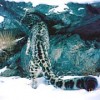
ENVIRONMENT-INDIA: Snow Leopards Earn Their Keep in Tourist Dollars
Tsring Angmo a student from Rumbak village in Ladakh attended a workshop conducted by the Snow Leopard Conservancy (SLC) in India out of sheer curiosity. "I came away feeling responsible for the safety of the endangered animal,’’ she said.PERU: Communities Say ‘No’ to Mining Company in Vote
For the second time in Peru, a mining project was rejected by local communities in a popular referendum. More than 90 percent of those who came out to vote in three districts in the northern province of Piura said "no" to the mining operations of the Minera Majaz company.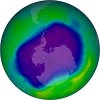
ENVIRONMENT: Ozone Treaty Could Slow Climate Change
Delegates from 191 nations are in Montreal, Canada this week to celebrate and extend the world's most successful environmental treaty, the Montreal Protocol to protect the ozone layer.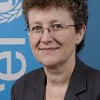
Q&A: “It’s a Brave Politician Who Will Talk About Toilets”
When it comes to discussing the critical health problem of inadequate sanitation, few politicians want to take the lead, despite the mountains of scientific evidence that poor hygiene and lack of proper toilet facilities are the cause of many deadly but preventable diseases.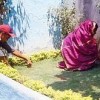
DEVELOPMENT-INDIA: Women Hold Key to Accepting Indoor Toilets
Like other women in this largely tribal, central Indian state, Draupati Bhosale was averse to the idea of having toilets built within homes, but went along because the government was building them at heavily subsidised costs. ‘’I thought it would give me extra storage space,’’ she said.
HONDURAS: Small Improvements in Hurricane Preparedness
With the 2007 hurricane season well underway, Honduras shows improved reaction capacity, but the country still lacks policies to reduce its vulnerability to natural disasters, such as preventing people from building in flood plains like those devastated nine years ago by Hurricane Mitch, say experts.
Amazon Logging Means Short-Lived Prosperity
Life in the Amazon is marked by waves of ephemeral bonanza followed by depression, says a study of economic, environmental and social indicators from the last three decades.
Canada Losing Water Through NAFTA
Water resources are being negotiated in the North American integration process. Experts warn that Canada will come out the loser in this deal.Ecobreves – GLOBAL: Ozone Protocol Also Curbs Climate Change
Twenty years after the Montreal Protocol entered into force, United Nations officials are celebrating the fact that this pact has gone beyond its objective of protecting the atmospheric ozone layer to reducing emissions of gases that cause climate change.Ecobreves – MEXICO: Dolphins Mistreated and Killed in Captivity
Corruption and complicity of authorities allows some 20 dolphin aquariums to operate in Mexico, with more than half dying prematurely from pneumonia, stress and trauma from beatings.Ecobreves – BRAZIL: Sugarcane Doesn't Need the Amazon
The ethanol fuel boom is driving the expansion of sugarcane plantations in Roraima, Brazil's northernmost state, because of its stable climate and flat terrain -- ideal for mechanized harvest.FRANCE: Sarkozy Hedges Free Market With Gov’t Control
Following nearly two years of squabbling, this month France’s national gas utility, Gaz de France, finally agreed to team up with the Franco-Belgian utility Suez, to create an energy behemoth with some 72 billion euros in revenue.« Previous Page — Next Page »


Through our global network of local writers, we are continuing our award-winning coverage of global and local environmental challenges, with a focus on the people for whom the ecosphere matters in a direct way: rural dwellers who have little means to protect themselves against adverse conditions; communities that need to switch to sustainable development in order to survive; poor women and children, who are the most vulnerable in natural disasters. Sponsored by the United Nations Environment Program (UNEP), the United Nations Development Program (UNDP) and The World Bank (WB), IPS also maintains the award-winning Tierramérica, a specialised information service on environment and development.

The Week with IPS

Tracking global progress towards a sustainable world


