
Sunday, November 29, 2026



News and Views from the Global South
Environment
ENVIRONMENT-INDONESIA: Plastic Bottles Plus Sun Rays = Potable Water
Used plastic bottles and sun rays are all that the impoverished residents of Bintaro, South Jakarta, need for their families to have clean potable water.
CLIMATE CHANGE-CARIBBEAN: Uniting Against Future Adversity
Adapting to climate change in the island nations of the Caribbean, a region particularly vulnerable to rising sea levels, requires strengthening collective responses based on exchange and cooperation.ENVIRONMENT-MEXICO: Critics Sceptical of Gov’t Reforestation Statistics
Two hundred and fifty million trees are to be planted in Mexico from now until November, in a programme that will make the country the "world leader in reforestation," the government has announced. But independent observers warn that valuable native forests are still being destroyed.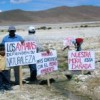
CHILE: Aymaras Don’t Want to Disappear
Twenty years ago, close to 100 indigenous Aymara people lived in the village of Cancosa, but today only 10 remain. The same is true of many indigenous communities in the Chilean Altiplano, as their members have moved out in search of jobs and educational opportunities.
ENVIRONMENT: Replanting the Planet
In reviewing the literature on soil erosion, references to the "loss of protective vegetation" occur again and again. Over the last half-century, we have removed so much of that protective cover by clearcutting, overgrazing, and overplowing that we are fast losing soil accumulated over long stretches of geological time.DEVELOPMENT-INDONESIA: Poverty, Trauma – Aceh's War, Tsunami Legacy
The road that links Iskandar Muda airport to the provincial capital of Banda Aceh buzzes with renovation work. The trucks loaded with construction material and the taxies that ply up and down the road, once bristling with security check points, are sure signs of Aceh’s recovery.GERMANY: Breakdowns Renew Case Against Nuclear Energy
A series of technical breakdowns in two of the oldest nuclear power stations in Germany has led to renewed demands to phase out nuclear energy.
CLIMATE CHANGE: Pop Stars Belt Out Global Wake-Up Call
One person may not be able to save the world, but former U.S. Vice President Al Gore won't give up his quest to do so without a fight - make that a green revolution.BRAZIL: Steel and Eucalyptus Heat Up Eastern Amazon
Brazil's Environment Ministry entered a minefield when it proposed a sustainable forest district to contain deforestation in the steel-making centre of Carajás, one of the most devastated and violent areas in the Amazon.
ENVIRONMENT-INDIA: Mangroves – Key to Coastal Protection
Against the deep grey monsoon clouds looming large over the sparkling greenery of northern Kerala, Kallan Pokkudan stood like a hero, bearing his canoe's oar, a pole and a water bottle. "I am going to inspect the mangrove,’’ said the stocky, middle-aged farmer.ENVIRONMENT-INDIA: Dow Unable to Shake Off Bhopal Legacy
Try as it might Dow Chemical Company is unable to shake off the criminal liability it inherited for the 1984 Bhopal gas disaster and also responsibility to clean up toxic contamination at the site of the pesticides plant, originally owned and operated by Union Carbide Corporation.ENVIRONMENT-COTE D’IVOIRE: The Knock-on Effect of Disappearing Forests
Sogbéné Soro claims to be able to treat a variety of ailments: leprosy, diarrhea and ringworm to name a few. But, this traditional healer is finding it increasingly difficult to ply his trade. "I am faced with a shortage of certain plant species that have medicinal properties," he told IPS.
Uncertainty in Carbon Absorption Project Near Galápagos
Just off the environmentally protected Galápagos Islands, a company is preparing to enrich seawater with iron in order to promote phytoplankton growth and the absorption of carbon from the atmosphere.Ecobreves – ARGENTINA: Residents Put Brakes on Real Estate Boom
The residents of the Argentine capital who want to see a halt to the uncontrolled construction have scored a victory in stopping work on about a hundred buildings.Ecobreves – MEXICO: Hydrogen from Organic Waste and Plastics
Mexican researchers are developing a system to produce hydrogen from solar energy, gasification of biomass and plastic waste.Ecobreves – PERU: Oil Firms Asked Not to Contact Isolated Tribes
The Inter-Ethnic Association for the Development of the Peruvian Jungle on Jul. 5 asked international oil companies to refrain from oil exploration in areas inhabited by indigenous tribes who live in isolation by choice.Q&A: “The Sahel Should Already Have Been Green”
For 'newTree-nouvelarbre', a non-governmental organisation (NGO) that works largely in Burkina Faso, good fences don't only make good neighbours - they also make a line of attack against land degradation.POLITICS: Global Compact with Business ‘Lacks Teeth’ – NGOs
The U.N.'s Global Compact with international big business "at the moment is so voluntary that it really is a happy-go-lucky club," says Ramesh Singh, chief executive of ActionAid, a non-governmental organisation.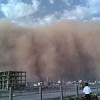
SUDAN: UN Says Ailing Environment a Key “Stress Factor”
A report by the U.N. Environment Programme assessing Sudan's environmental degradation, scheduled for a national launch in Khartoum on Jul. 8, has spurred debate for linking decades of conflict in the war-torn region to broader problems like climate change.WEST AFRICA: Shared River Basins, Common Problems
Nigeria and Niger, in West Africa, are neighbouring states. But the two countries have more than a border in common; they are also share a number of river basins that are under threat, and the responsibility for conserving them.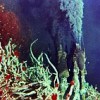
SCIENCE: 350 Degrees Is Bathwater to These Animals
Marine scientists returned to the Galapagos Islands this week to celebrate a discovery that Charles Darwin never dreamt of: bizarre animals that live in total darkness around active deep-sea volcanoes.« Previous Page — Next Page »


Through our global network of local writers, we are continuing our award-winning coverage of global and local environmental challenges, with a focus on the people for whom the ecosphere matters in a direct way: rural dwellers who have little means to protect themselves against adverse conditions; communities that need to switch to sustainable development in order to survive; poor women and children, who are the most vulnerable in natural disasters. Sponsored by the United Nations Environment Program (UNEP), the United Nations Development Program (UNDP) and The World Bank (WB), IPS also maintains the award-winning Tierramérica, a specialised information service on environment and development.

The Week with IPS

Tracking global progress towards a sustainable world


