
Sunday, November 29, 2026



News and Views from the Global South
Environment
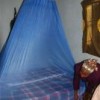
HEALTH-MOZAMBIQUE: Enter Malaria, Another Companion of HIV/AIDS
Anita Elena looks frail after months of chronic diarrhoea. ‘‘I prefer this illness to malaria because malaria kills you rapidly,’’ says Elena, sitting on a reed mat in front of her makeshift two-roomed stick and mud home, which she shares with her husband and three children. ‘‘My older brother died of malaria five years ago. He went rapidly.’’
HAITI: A Land Crumbling Beneath Their Feet
Dardy Saint-Jean gazes at the rock-strewn river coursing through his village and shakes his head in disgust.ENVIRONMENT: UNEP Faults Asian Development Bank Project
A sharp difference of opinion between the Asian Development Bank (AsDB) and the United Nations Environment programme (UNEP) has surfaced over a flagship venture of the Manila-based financial institution.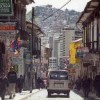
BOLIVIA: La Paz Struggles Against Suffocation
The noise of traffic, dissonant car horns, people marching and shouting slogans, and firework and dynamite explosions is beginning to suffocate the urban centre of La Paz, Bolivia's seat of government, and is forcing consideration of medium term solutions.MALAWI: ”All-Day Electricity”-As Long As It Is Not Peak Time
Patients have over many years frequently been denied scheduled surgical operations at the Holy Family Hospital in Malawi’s southern region due to abrupt power cuts.ALBANIA: Preserving a Beauty Called Biodiversity
It takes a short walk from the famous Velipoja beach in Shkodra town on the Adriatic coast to put behind the stresses of modern life, and the beach attractions themselves.Ecobreves – HONDURAS: Financing for Indigenous Farming
From August and for the next five years, the Honduran government will grant loans totaling 15 million dollars to 45,000 indigenous families in the western part of the country in an effort to promote sustainable development projects.Ecobreves – VENEZUELA: Mysterious Oil Spill
An oil spill of unknown origin and quantity has since Jun. 29 affected nine beaches along about 50 kilometers of the northeastern Venezuelan peninsula of Paria, near Trinidad and Tobago.Ecobreves – CHILE: Garbage Collectors, Unite!
On Jul. 11 in Chile, the National Movement of Garbage Collectors was born. With more than 200 members, the celebrated by marching under the slogan "Organized collectors will never be stepped on".
Unknown State of Caribbean's Whales and Dolphins
Accidents involving fishing nets, which kill 300,000 cetaceans -- whales, dolphins and porpoises -- each year, are difficult to estimate in the Caribbean, where artisanal fishing is the norm.Ecobreves – BRAZIL: Sao Paulo Organic Oranges for the World
Of every 10 glasses of organic orange juice consumed in Europe and the United States, 8.5 are produced from fruit grown in groves in the north of Brazil's Sao Paulo state that are members of Grupo Montecitrus.Ecobreves – CUBA: Preparing Mangroves for Climate Change
Experts and residents of Cuba's Ciénaga de Zapata, one of the largest marshes in the Caribbean islands, are preparing for the impacts of climate change on the area's mangroves, coastal vegetation that provides a home to a great array of animal life.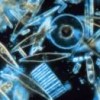
ECUADOR: Doubts Surround Carbon Absorption Project Near Galapagos
Later this month a U.S. company, Planktos Inc., plans to dump 100 tonnes of iron dust into the ocean near Ecuador's Galápagos Islands, despite opposition from environmental groups and marine scientists.
Q&A: "Climate Change Will Be Important for Years to Come"
This week, Florida's Republican governor announced that he would set a target of cutting the state's greenhouse gas emissions to 20 percent of 1990 levels by 2050, boost energy efficiency standards in new construction and require utilities to produce 20 percent of their electricity from renewable sources.ENVIRONMENT-JAPAN: Moving Towards Sustainable Forestry
Tighter forest regulations and rising consumption of wood in the world are forcing Japan to depend less on timber imports and concentrate on sustainable harvesting its own forests - a long awaited change, point out experts here.TRADE: Following Oil Boom, Biofuel Eyed In Africa
While oil profits have flooded into countries such as Angola and Nigeria in recent decades, some African observers see new potential for the continent in the form of increasingly in-demand biofuels.SOUTH-EAST ASIA: Big Bucks Behind Forest Blaze, Haze
The annual phenomenon that is oddly called the ‘haze’ is back and beginning to blanket parts of Malaysia, Singapore and Brunei in thick, acrid smoke from the forest fires in Indonesia, mainly from the Kalimantan and Sumatra islands.
DEVELOPMENT-WEST AFRICA: History Just Waiting to Repeat Itself
Two years ago, several West African states found themselves in the grip of severe food shortages - with some three million people affected in Niger alone. Children died, aid officials wrung their hands, people marched in Niger's capital, Niamey, to demand food...But were lessons learned - really learned - to ensure that the crisis does not recur?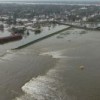
ENVIRONMENT-US: The Lessons of the Levees
Despite mounting data that storms coming out of the Gulf of Mexico could bring catastrophic flooding to the U.S. Gulf Coast, the U.S. Army Corps of Engineers (USACE) failed to implement a proposed barrier plan in New Orleans that would have used floodgates to keep storm surge out of Lake Pontchartrain and the canals leading into the city.ALBANIA: Thermal Plant Threatens Tourism
The building of a thermal power plant in Vlora could reduce Albania's electricity deficit, but it would also damage one of the country's most beautiful tourist destinations. The local population is fighting to have the factory built elsewhere.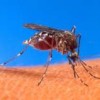
HEALTH: South-east Asia Grapples With Dengue
End June saw health officials in Singapore confronted with a worrying trend in the affluent, squeaky-clean city-state. During two separate weeks that month, dengue fever cases had reached epidemic levels.« Previous Page — Next Page »


Through our global network of local writers, we are continuing our award-winning coverage of global and local environmental challenges, with a focus on the people for whom the ecosphere matters in a direct way: rural dwellers who have little means to protect themselves against adverse conditions; communities that need to switch to sustainable development in order to survive; poor women and children, who are the most vulnerable in natural disasters. Sponsored by the United Nations Environment Program (UNEP), the United Nations Development Program (UNDP) and The World Bank (WB), IPS also maintains the award-winning Tierramérica, a specialised information service on environment and development.

The Week with IPS

Tracking global progress towards a sustainable world


