
Sunday, November 29, 2026



News and Views from the Global South
Environment
ENERGY-U.S./LATIN AMERICA: An OPEC for Ethanol?
U.S. President George W. Bush will visit Latin America next week seeking a strategic alliance with Brazil to develop biofuels - and Venezuela, the region's main oil exporter, is taking this as a warning sign.ENVIRONMENT-MEXICO: Farmers and Scientists See Risks in Wind Energy
With the blessing of development agencies, transnational corporations and environmentalists, the Mexican government is breaking ground for a big wind energy project. But peasant farmers and bird experts aren't too happy about it.ENVIRONMENT-SENEGAL: Setting Fire to the Future
It's the season for bush fires in Senegal, and there are once again concerns that vast tracts of fertile land could be set alight, and ravaged.ENVIRONMENT: Understanding Climate Change in Drake Passage
Infamous for its storms and shipwrecks, Drake Passage, which separates South America from Antarctica, will now be the focus of a multidisciplinary study by scientific researchers from nine countries, with the aim of assessing the impact of climate change on the ecosystem.ENVIRONMENT-CHAD: Rats, Where There Once Were Elephants
Leaving the Chadian capital, N'Djamena, isn't what it used to be.ENVIRONMENT: The Niger River in Intensive Care
Stretching over more than 4,000 kilometres, the Niger is West Africa's longest river, and greatly threatened in the country of the same name by environmental degradation that is causing the water course to silt up.BRAZIL: Soap Opera Actors Stand Up for Amazon Jungle
An open letter demanding "an immediate halt to the deforestation of the Amazon jungle" has been released by Brazilian television stars taking part in the Globo Network series " Amaz- nia, de Galvez a Chico Mendes" (Amazonia, from Galvez to Chico Mendes).BURMA/THAILAND: Dams on Salween Threaten Indigenous Groups
Being a village headman means little if you live in a community nestling in the hills close to Thailand's northern border with Burma. More so, if officials have plans to use your village for a large ‘development' project.ENVIRONMENT: Fighting Warming Key to Anti-Poverty Goals
Driven by increased concerns and mounting evidence of the threats posed by global warming, some of the world's most eminent scientists are telling policymakers to get their act together before it is too late to avoid a doomsday scenario.ENVIRONMENT-ALGERIA: Fighting Desertification Through Conservation
In May, Algeria will inaugurate a reserve around a small oasis in the south-west where plants and animals are to be protected in the service of a broader goal. Hopes are that the Taghit National Park will help stop the advance of the Sahara Desert, which already stretches across almost all of this North African country.ENVIRONMENT: Melting Ice Offers Window on Polar Ecosystem
The collapse of Antarctic ice shelves due to climate change is providing the first views of marine life hidden deep under the polar ice for more than 5,000 years.FINANCE: African Dam Fails Global Benchmarks – Study
Two international non-governmental organisations say a controversial dam in Uganda that is getting funding from the World Bank deserves failing marks for coming up short on economic viability and transparency standards set out in a highly-acclaimed international benchmark study on dams.DEVELOPMENT-ZIMBABWE: A Herculean Effort Is Needed
‘‘You cannot talk of halving poverty when our country is going in the opposite direction. We are totally lost,’’ says Maxwell Tambarare, a teacher in Chiredzi, a region to the south east of Zimbabwe.ENVIRONMENT-INDONESIA: Jakarta Floods Linked to Illegal Constructions
The worst ever floods to hit the Indonesian capital, which submerged 60 percent of the city and killed 85 people earlier this month, are being attributed to uncontrolled construction rather than unusually heavy rain, by a broad spectrum of analysts here.WEST AFRICA: Investments Against Desertification Deliver the Goods
Experts from the Inter-State Committee to Fight Drought in the Sahel (Comité inter Etats de lutte contre la sécheresse au Sahel, CILSS) are calling on donors to invest further in the fight against desertification in this region, because of the positive economic effects such investment would have.HEALTH-INDONESIA: Mothers Join Bird Flu Awareness Campaign
Not content with the government’s public awareness campaign against bird flu, a group of parents in Bekasi regency has taken the initiative in educating the poor and the marginalised about the deadly disease.LATIN AMERICA: Protests Mount Against Mining Giant
Dangerous levels of lead and arsenic have been found in the blood of Honduran villagers living downstream from a controversial gold and silver mine owned by Canada's Goldcorp Inc., the world's third largest gold mining firm.Ecobreves – CHILE: Heavy Rains Threaten Vegetable Crops
The intense and unexpected rainfall over central Chile in mid-February will affect the production of various fresh vegetables, mostly onions for export, the Chilean vegetable producers association, Hortach, announced.
Farmers and Scientists See Risks in Wind Energy
Mexico intends to erect as many as 3,000 wind turbines on the Isthmus of Tehuantepec by 2030. Peasant farmers have doubts about the project's benefits for the local community, and scientists warn about potential hazards to birds.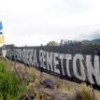
Mapuches Return to Benetton-Held Land
Six indigenous families are returning to live on a plot of land that the Italian clothing company Benetton owns in the Patagonia region. Benetton has not yet decided what, if any, legal action it will take.Ecobreves – BRAZIL: Zero-Carbon for Sao Paulo Carnival
Greenhouse gases produced by Sao Paulo's Carnival, Feb. 16-24, will be "compensated" by the planting of trees through an agreement with the environmental group SOS Mata Atlantica.« Previous Page — Next Page »


Through our global network of local writers, we are continuing our award-winning coverage of global and local environmental challenges, with a focus on the people for whom the ecosphere matters in a direct way: rural dwellers who have little means to protect themselves against adverse conditions; communities that need to switch to sustainable development in order to survive; poor women and children, who are the most vulnerable in natural disasters. Sponsored by the United Nations Environment Program (UNEP), the United Nations Development Program (UNDP) and The World Bank (WB), IPS also maintains the award-winning Tierramérica, a specialised information service on environment and development.

The Week with IPS

Tracking global progress towards a sustainable world


