Languages
Tuesday, October 27, 2026



News and Views from the Global South
Featured

Housing as Climate Resilience in Asia-Pacific Cities
Access to adequate housing is a foundation of resilient cities. Safe and affordable homes provide stability, allow residents to access essential services, and enhance the capacity for communities to withstand and recover from shocks. Yet housing is often treated as a downstream outcome of urban development or disaster recovery rather than as a strategic investment in resilience.
Nigeria: Lessons from the Aba Women’s Riots for Today’s Women’s Movements
The Aba Women’s Riots of 1929 remain one of the most powerful demonstrations of Nigerian women’s collective resistance. Thousands of market women, farmers, traders, and mothers mobilized across districts in the then Eastern Nigeria to challenge colonial taxation and the extension of warrant chiefs’ authority over their lives. They organized without formal structures and without institutional support.
Syria’s Mobile Cultural Bus: Championing Cultural Justice, Delivering Art and Literature to Children of War
In the Al-Azraq camp in northern Syria, 10-year-old Abeer Al-Qaddour sits, browsing a colourful book with intense focus and curiosity. Nearby stands a bus, elegantly inscribed with the words 'The Cultural Bus'.
Only 1 in 7 Countries is Led by a Woman– as Global Political Power Remains Dominated by Men
Across the world, women remain vastly under-represented in political leadership, with the most powerful decisions still overwhelmingly made by men. In 2026, only 28 countries are led by a woman Head of State or Government, while 101 countries have never had a woman leader, according to the latest data released by Inter-Parliamentary Union (IPU) and UN Women.
One in Four Migratory Species Under Threat, But Conservation Efforts Can Reap Rewards
Global wildlife is facing a deepening crisis as the latest United Nations assessment warns that nearly half of the world’s migratory species are in decline due to human activity, habitat destruction, and climate change.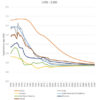
The Most Appropriate Response to Falling Birthrates? Embrace Them
As birthrates continue to decline in many industrialized countries, anxious governments are running out of schemes to keep women procreating.
VENEZUELA: ‘An Economically Stable Authoritarian Model Could Become Entrenched’
CIVICUS discusses the situation in Venezuela following US intervention and the ousting of President Nicolás Maduro with Verónica Zubillaga, a Venezuelan sociologist who specialises in urban violence, state repression and community responses to armed violence.

Tanzanian School Launches Energy Club to Promote Clean Cooking
A cloud of steam rises from a giant aluminium pot as Maria Joseph, a middle-aged cook in a toque blanche and faded apron, plants her feet firmly on the tiled kitchen floor. With both hands clasped around a wooden paddle, she plunges deep into the mound of rice, threatening to burn at the bottom.
The Cost of Being Seen: Exposure versus Exploitation
I have often been asked a simple but important question: How can we make it sustainable if we are not being compensated for it?
15 Years After the Great East Japan Earthquake & Tsunami
On 11 March 2011, the powerful 9.0 magnitude Tōhoku earthquake struck off the northeastern coast of Japan, triggering a 40-meter Tsunami. Many coastal towns along Japan’s Pacific coast were devastated. Approximately 20,000 people lost their lives and around 470,000 were evacuated from their homes.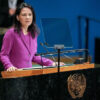
Gender Discrimination: It’s Time to Flip the Narrative
We have heard it all: • When a woman raises her voice, she’s too emotional. • When she stands her ground, she’s too difficult. • When she leads, she’s too ambitious. • If she wears dark suits they whisper ‘why does she always look like a man’ • But oh my gosh! if she shows up in a colorful dresses and high heels….
Global Arms Flow Jump Nearly 10 per cent as European Demand Soars due to Transfers to Ukraine
The ongoing military conflict between Ukraine and Russia—which began February 2022, with no visible signs of ending—has triggered major arms transfers to Europe.
International Women’s Day 2026: Justice for Women and Girls Needs Action and Political Will
On International Women’s Day (March 8), global leaders and advocates gather around the rallying cry to strengthen justice systems for all women and girls in a time of increasing pushbacks on gender equality.
International Women’s Day 2026: A Resistance Stronger than the Backlash
Consider what International Women’s Day looked like a few years ago, and what it looks like now: the same date, the same global moment of reflection, but a vastly changed global landscape. Gender rights are facing the most coordinated and wide-ranging attack in decades. Anti-rights forces are dismantling protections secured after generations of struggle, destroying infrastructure built to address gender-based violence and realise reproductive rights and rewriting legal frameworks to roll back rights, with a specific focus on excluding transgender people. This is the result of a deliberate, carefully crafted, handsomely funded and globally coordinated strategy.
International Women’s Day 2026: This Year’s International Women’s Day Calls for Electing a Woman as the next Secretary-General
As we observe International Women’s Day (IWD) this year, the global community does so in a time of continuing turbulence, conflicts and uncertainty about the future of our planet.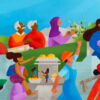
International Women’s Day 2026 The Gender Architecture of Betrayal: Stop Elite Impunity
International Women’s Day 2026 (IWD 2026), which was commemorated March 8, under the theme, "Rights. Justice. Action. For ALL Women and Girls", calls for action to dismantle all barriers to equal justice: discriminatory laws, weak legal protections, and harmful practices and social norms that erode the rights of women and girls. It demands an end to systemic violence and misogyny, including calls for justice for Epstein survivors.
Nigeria’s Failing Road Transport System Leaves Commuters at the Mercy of Robbers
Abimbola David still remembers being robbed twice in taxis in Abuja, Nigeria’s capital. The most recent incident occurred in 2023 when the robbers, who pretended to be passengers, took her belongings while the car was moving.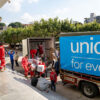
UN: Amid Security Risks in Middle East, Humanitarian Work is Underway
As military fighting breaks out across the Middle East with increasing frequency and intensity, the United Nations promises to ramp up its humanitarian response on the ground.
Turning Waste into Hope: A Youth-Led Model for Sustainable Change
From the beginning, this project was a collaboration between student teams in Japan and Korea. Although we live in different countries, we shared one common question: How can young people reduce waste while supporting families facing food insecurities?
The Impact of Artificial Intelligence in Nuclear Decision-Making
As artificial intelligence (AI) threatens to dominate every aspect of human lives —including political, economic, social and cultural --there is also the danger of the potential militarization of AI.
Caribbean Civil Society Gathered in Jamaica to Strengthen Resilience Amid Global Shifts
Civil society groups from across the Caribbean met in Jamaica in February 2026 for a landmark regional conference, with development leaders urging stronger governance, digital readiness and deeper partnerships to adapt to a shifting and increasingly complex geopolitical landscape.« Previous Page — Next Page »





The Week with IPS

NEXT STOP - SDGs
Tracking global progress towards a sustainable world
Tracking global progress towards a sustainable world
