Languages
Sunday, November 8, 2026



News and Views from the Global South
Featured
Pressure on an Atomic Level
Violence in the Middle East has escalated dramatically since the Hamas terrorist attack in October 2023 and the fallout that has since followed. There is tension, if not a state of war, between all the major opponents on the ground.
Over 150 NGOs Urge World Governments to Help End War Crimes in Gaza
As it continues to leave a mounting trail of death and destruction in Gaza, Israel has come under severe attack from the international community, including the United Nations and its humanitarian agencies, Western allies, the International Criminal Court (ICC) and scores of human rights experts.
By Choosing What We Eat, We Choose the World We Want To Live In
“How we prepare and eat food should not be at the expense of our biodiversity,” says 3-Michelin-starred chef Mauro Colagreco, who is on a mission to change our relationship with food and what we choose to eat. Colagreco, the owner of Mirazur, an award-winning restaurant in Menton, France, is a tribute to gastronomy. Among other world rankings, Mirazur's fine food and service have earned it first place in the World's 50 Best Restaurants. In the 2020 edition of the "100 Chefs" world ranking, Colagreco's peers named him the Best Chef in the World and Chef of the Year in 2019.
At COP16, Biodiversity Credits Raising Hopes and Protests
At the end of the first week at the 16th Conference of Parties on Biodiversity (COP16), finance emerges as the biggest issue but also shrouded in controversies. On Saturday, as the COP moved closer to its most crucial phase of negotiations, resource mobilization—listed under Target 19 of the Kunming-Montreal Global Biodiversity Framework (KMGBF)—took centerstage, with most parties demanding faster action, greater transparency and the adoption of true solutions to halt biodiversity loss.
Press Freedom in Sri Lanka: A Long Road to Justice
Anyone interested in unsolved murders and disappearances will find much to study in Sri Lanka. Fifteen to twenty years ago, the country made global headlines, not only for the government’s military offensive against the Liberation Tigers of Tamil Eelam (LTTE) guerrillas but also for the numerous murders of journalists. The newly elected president, Anura Kumara Dissanayake—often referred to as AKD—seems determined to address the culture of impunity.
The Impact of Global Megatrends on Poverty in Asia & the Pacific
In the coming decades, the Asia-Pacific region faces a series of challenges that threaten to exacerbate poverty. Among these, climate change, demographic shifts, particularly population ageing and the rise of digital technologies stand out as three interconnected global megatrends.
Without Accelerated Action, We Will Miss the Chance to Limit Warming to 1.5°C, Says UNEP Chief Climate Advisor
Anne Olhoff, Chief Climate Advisor at UNEP, underlined the urgent need for accelerated climate action ahead of COP29 in an exclusive interview with IPS. “The next six years are crucial—without accelerated action, we will miss the chance to limit warming to 1.5°C,” she warned.
UNEP’s 2024 Emissions Gap Report Warns: ‘No More Hot Air, Please’
The United Nations Environment Programme’s (UNEP) Emissions Gap Report 2024 delivered a stark reminder that the world is still far from meeting its climate commitments.
Between Harris and Trump, More Doubts Than Certainties for Latin America
Migration, trade, the defence of democracy, the confrontation with China and the collapse of multilateralism are issues that shed more doubts than certainties on Latin America's expectations of the imminent presidential elections in the United States.
Unlocking Urban Climate Finance: Key insights from Indonesia
Over half of Asia-Pacific's population now live in cities. While urbanization brings people closer to opportunities and better services, many urban dwellers are also experiencing the adverse impacts of climate change such as floods, urban heat and infectious diseases. Urban activities are among the major contributors to greenhouse gas (GHG) emissions.
Egyptian Parliament Moves to Strengthen Support for People with Disabilities and the Elderly
In a significant move to address the challenges faced by people with disabilities and the elderly, six Egyptian parliamentary committees met in Cairo on October 12 to discuss national strategies and legislative efforts.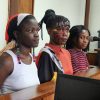
Meet the Young Women Arrested for Fighting Corruption in Uganda
Until recently, Margaret Natabi would never have dreamed of taking her anti-corruption fight on the streets of Uganda’s capital, Kampala.
Syrian Displaced Children Go Hungry, Stunting Their Growth
Children in northern Syria are suffering from hunger, illness, and malnutrition as a result of poverty, poor living conditions for most families, and the collapse of purchasing power amid the soaring prices of all essential food commodities. Displacement and a lack of job opportunities make this worse.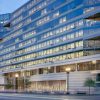
The IMF Just Made the Case for its Own Irrelevance
This month, the International Monetary Fund (IMF) had an opportunity to end one of its most reviled policies and lift billions of dollars of debt off the backs of crisis-stricken developing countries. It chose not to.
Russia-Africa: Developing Media Partnership
At a recent media briefing, Maria Zakharova, the spokesperson for Russia's Foreign Ministry, criticized the United States for its support of educational programs, media and NGOs in Africa. Zakharova argued that these efforts are part of a broader attempt by the U.S. to impose Western values and governance models on sovereign African states, framing it as a form of neo-colonialism.
COP16 – Is This Our Last Chance to Save Nature?
As COP16 approaches, we have been reflecting on the state of our planet in 2024; the word "crisis" feels insufficient to describe the devastation we're witnessing.
Capacity Building Is Key to Africa’s Digital Sequencing Success Story
Christian Tiambo has always wished to uplift local farmers’ communities through cutting-edge science. As climate change wreaked havoc on local agriculture, Tiambo, a livestock scientist at the Centre for Tropical Livestock Genetics and Health (CTLGH) and at the International Livestock Research Institute (ILRI), focused on conserving and developing livestock that could withstand environmental stress.
Salt: Bangladesh Communities On the Frontline of Climate Change
Global warming has far-reaching effects, and certain countries, particularly those with low lying coastal regions, are more vulnerable than others. Bangladesh, the largest delta in the world, is at the forefront of the global warming crisis. Its coastal areas are increasingly exposed to rising sea levels, natural disasters, and salinization, all of which have devastating effects on its population.
Reviving the Spirit of the Steppe: Kazakhstan Has Hosted the 5th World Nomad Games
In a vibrant display of culture and tradition, Kazakhstan recently hosted the 5th World Nomad Games in Astana, celebrating the enduring spirit of nomadic heritage against a backdrop of modernity and globalization. This biennial event, which drew competitors and spectators from around the globe, served not only as a showcase of traditional sports but also as a poignant reminder of the resilience of a culture that faced near extinction under Soviet rule.
A Glimpse into Tanzania’s Political Turmoil Ahead of 2025 Election
At a rally to mark International Youth Day on August 12 in Tanzania’s southern Mbeya region, John Mnyika stood with a determined expression, addressing his supporters. The air was charged with anticipation. Mnyika, the Secretary-General of Tanzania’s opposition party, Chadema, was preparing to speak about the upcoming elections when the chaos erupted. Without warning, heavily armed police officers stormed the event, grabbed Mnyika, and dragged him away.
Biodiversity Goal Can Be Achieved in the Southern Ocean
COP16, the much-anticipated follow-up talks to the 2022 Kunming-Montreal Global Biodiversity Framework (GBF) agreement, which aims to reverse an alarming loss of nature on land and sea, opens in Cali, Colombia.« Previous Page — Next Page »





The Week with IPS

NEXT STOP - SDGs
Tracking global progress towards a sustainable world
Tracking global progress towards a sustainable world
