Languages
Sunday, November 8, 2026



News and Views from the Global South
Featured
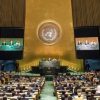
Who Should be the Next UN Leader?
PART 2
When the conversation turns to who might replace António Guterres as UN Secretary-General, the name of Mia Mottley, Prime Minister of Barbados, is on many insiders’ lips. In addition to being Prime Minister, she also serves as her country’s Minister of Finance, Economic Affairs and Investment, as well as its Minister of National Security and Public Service.

Leaders Need to Break the Chokehold of Debt and Austerity. Our Health Depends on it
As leaders gather for the Spring Meetings of the IMF and World Bank amid the cherry blossom trees of Washington, DC, there is some good news to celebrate.
Pioneering Digital Initiative Empowers Pacific Islands to Tackle Climate Disasters
Winning a battle for survival requires understanding the opponent. And, for the peoples of 22 island nations and territories scattered across more than 155 million square kilometres of Pacific Ocean, the volatility and wrath of the climate are their greatest threats.
Who Should be the Next UN Leader?
Part 1
Could a UN insider take the top job? Amina J. Mohammed is the current Deputy Secretary-General of the United Nations. She has been in the role since early 2017, making her something of a veteran within senior circles.

Secondary Education Is a Bottleneck in Brazil
Alice went for eight weeks without Portuguese language classes after starting her first year of high school on Feb. 5 in this Brazilian city. Her chemistry teacher taught only two classes and disappeared. But the worst part is the classroom without air conditioning in the heat of more than 35 degrees Celsius some days during the southern hemisphere summer.
The Climate Alarm Is Ringing – It’s Time to Stop Silencing It
The heat records keep tumbling – 2023 was the hottest year in recorded history. Extreme weather events keep mounting up. And yet the voices most strongly calling for action to prevent climate catastrophe are increasingly being silenced.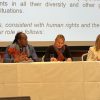
IPCI 2024: Oslo Commitment Protects Sexual and Reproductive Rights Across All Contexts
Parliamentarians from 112 countries have adopted the IPCI statement of commitment to protect and promote sexual and reproductive health rights, committing to the principle that "life or death is a political statement." As IPCI Oslo drew to a close on Friday, April 12, 2024, parliamentarians adopted a new Statement of Commitment that was “the collective effort of every single delegate,” said Alando Terrelonge, MP from Jamaica and chair of the drafting committee.
IPCI 2024: Technology as a Tool to Advance and Threaten Sexual and Reproductive Health Rights
Technology emerged as a core theme of IPCI Oslo for its relevance in advancing the objectives of the Cairo Programme of Action. When channeled for good, it is an effective tool that can fill accessibility gaps in the health sector and spread awareness of sexual and reproductive health rights. Yet, the way in which digital technology has been weaponized against SRHR is of great concern for parliamentarians, especially for women.
Climate Governance, Adaptation, and Digital Solutions
Let's take a moment to reflect on a critical question: In the decade since the Third International Conference on Small Island Developing States (SIDS3), what tangible progress have we made in addressing the challenges faced by our SIDS?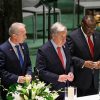
Rwanda: A Ravaged Country That Bounced Back
As we contemplate the clouded futures of Gaza, Ukraine, and other dire conflict zones that get far less coverage, it may be instructive to recall the surprising success story of a ravaged country that bounced back: Rwanda.
Women Affected by ‘Gender-Biased’ Climate Change Deserve Justice
While research into the unequal impacts of climate change on women is growing, more is needed to enable them to realize their rights to climate justice. Researchers argue that women and girls have unequal access to food, water, health, education, and even income, thanks to climate change. This makes them more vulnerable.
When the Man Who Built the Bombs Met the Man Who Dropped the Bombs…
The award-winning Hollywood movie Oppenheimer portrays the life of J. Robert Oppenheimer, who helped create the atomic bomb, which claimed the lives of an estimated 140,000 to 226,000 people and devastated the two Japanese cities of Hiroshima and Nagasaki in August 1945.
IPCI 2024: Oslo Conference Focuses on Parliamentary Power over Reproductive Rights
Gearing up for the 30th anniversary of the International Conference on Population and Development (ICPD), the world’s parliamentarians and ministers are meeting in Oslo to determine the course of action needed to promote sexual and reproductive human rights (SRHR).
Kwibuka30: Learning from the Past, Safeguarding the Future Against Genocide
One should never lose sight that for people who experienced genocide, the warning signs were there. Genocide is a process. It requires preparation and capacities to carry it out.
UN Staff Warned Against Public Comments on the Devastating Conflict in Gaza
The deadly six-month-old Israeli-Hamas war, which has claimed the lives of more than 32,000 Palestinians in Gaza and over 1,200 in Israel, has sharply divided the world with vociferous protestors on both sides of the conflict. But the United Nations is no exception with some of the estimated 35,000 staffers—both in New York and UN affiliates worldwide-- have been increasingly vocal, mostly on social media, critical of either Israel or Hamas.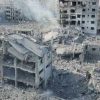
In the Shadows of the Wars in Ukraine & Gaza, Iran and Russia are Growing Ever Closer
Russia and Iran currently appear to be pulling firmly in the same direction in terms of foreign policy; ‘What has caused humanity’s suffering is unilateralism and an unjust global order, one manifestation of which can be seen in Gaza today.’ These were the words of Iranian President Ebrahim Raisi during a meeting with his Russian counterpart, Vladimir Putin, on 7 December.
30 Years On, Genocide Survivors Embark on a Journey To Build a Resilient Future
A minute of silence was observed on April 7 across Rwanda as the country held a memorial ceremony to mourn more than one million people, overwhelmingly Tutsis, who were systematically killed in the 100 days of atrocities between April and July 1994.
Following Asian Countries’ Leads, Climate Action Opportunity for Developing Nations
In the deserts of Gujarat, something remarkable is happening. On my recent visit I saw hundreds of trucks moving under the warm Indian sun. Thousands of hardworking young people from all corners of Bharat, as Indians now often call their nation, are turning around the previously empty and harsh landscape.
‘Scattered Measures’ in Humanitarian Aid for Gaza Are Not Enough – UN Secretary General
As the humanitarian crisis in Gaza drags into its sixth month on Sunday, April 7, the UN Secretary-General calls for a “true paradigm shift” in the delivery of humanitarian aid. On Friday April 5, 2024, Secretary-General António Guterres spoke before reporters to mark six months since the October 7 attacks, where 1,200 civilians in Israel were killed in a terrorist attack led by Hamas, which has since led to a military campaign by the Israel Defense Forces (IDF) into Gaza.
Senegal’s Democracy Passes Crucial Test
The fact that Senegal’s election took place on 24 March was in itself a triumph for civil society. That an opposition candidate, campaigning on an anti-establishment and anti-corruption agenda, emerged from jail to become the continent’s youngest leader offered fresh hope for democracy.
Has the World Progressed or Regressed, 30 Years After a Landmark Population Conference?
As the world commemorates the 30th anniversary of the landmark International Conference on Population and Development (ICPD) held in Cairo in 1994, one lingering question remains: Has the world progressed-- or regressed-- in implementing some of the recommendations in the Programme of Action (PoA) approved by 179 UN member states.« Previous Page — Next Page »





The Week with IPS

NEXT STOP - SDGs
Tracking global progress towards a sustainable world
Tracking global progress towards a sustainable world
