Languages
Thursday, October 8, 2026



News and Views from the Global South
Gender Identity
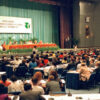
Gender Equality: The Key to Peace, Prosperity, and Sustainability
On Monday, three decades on from the historic Fourth World Conference on Women, the General Assembly meets to discuss recommitting to, resourcing, and accelerating the implementation of the 1995 Beijing Platform for Action – an historic agreement which mapped the path to achieving gender equality and the empowerment of all women and girls.
From Matriarchy to Victims: An Ongoing Story of Indigenous Women in Canada
If European colonialism had never happened in Canada, matriarchy would still have been strong in Indigenous culture.
The Right to Care: A Feminist Legal Victory That Could Change the Americas
On 7 August, the Inter-American Court of Human Rights delivered a groundbreaking decision that could transform women’s lives across the Americas. For the first time in international law, an international tribunal recognised care as an autonomous human right. Advisory Opinion 31/25, issued in response to a request from Argentina, elevates care – long invisible and relegated to the private sphere – to the level of a universal enforceable entitlement.
‘The Surge in Executions Shouldn’t Be Mistaken for Strength – It’s a Desperate Act of a Collapsing Dictatorship’
CIVICUS speaks about the Iranian regime’s execution of political prisoners with Safora Sadidi, a human rights activist with the Women’s Committee and Foreign Affairs Committee of the National Council of Resistance of Iran. Safora lost her father and six family members to the theocratic regime, and has dedicated over two decades to the Iranian Resistance’s international efforts.

Sexual Exploitation & Abuse at UN Reveals “Significant Underreporting”
A system-wide UN survey of sexual exploitation and abuse (SEA), described as “grave violations of human rights”, has revealed that in 2024, there were 675 allegations reported. A UN message to staffers last week says this is “widely believed” to be “significant underreporting” because the real numbers may be much higher.
Accountability on Trial: UN’s Unabated SEA Crisis Erodes Trust in World Body’s Leadership
After taking oath of office in December 2016 as Secretary-General, Mr. Antonio Guterres described the eradication of sexual offenses by UN peacekeeping and all other UN personnel as the first item on his reform agenda.
From the Margins to the Courts: St Lucia Joins Caribbean Fight to Dismantle Anti-LGBTQI+ Colonial Laws
When Kenita Placide co-founded United and Strong, St Lucia’s first LGBTQI+ organisation in 2001, death threats were routine. Over the years, several friends were murdered for being gay. But 24 years on, Kenita’s Caribbean island nation has become the latest to overturn a colonial legacy that criminalised LGBTQI+ people.
Women in Afghanistan Face a Total Lack of Autonomy
Nearly four years ago, the Taliban took control of Afghanistan and issued a series of edicts that significantly restricted women’s rights nationwide. This has resulted in a multifaceted humanitarian crisis, one marked by a notable decline in civic freedoms, stunted national development, and a widespread lack of basic services.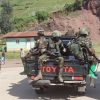
Civilians Face Humanitarian Disaster in Great Lakes, Horn of Africa Conflicts
Political instability and conflicts in the Great Lakes, the Horn of Africa, Sudan, and South Sudan have led to massive displacements and civilian suffering, and because the whole region is in crisis, the civilian population has few places to find refuge.
‘Trump Is Advancing a 21st-century US Variant of Fascism, Backed by a White Nationalist Ideology’
CIVICUS speaks about democratic decline in the USA with humanitarian and civil society activist Samuel Worthington, former president of the US civil society alliance InterAction and author of a new book, Prisoners of Hope: Global Action and the Evolving Roles of US NGOs.
A Feminist Future for the UN: Why the Next Secretary-General Must Champion Civil Society
Climate change is threatening to engulf small island states such as Maldives and the Marshall Islands. Gender apartheid is still practiced in theocratic states such as Afghanistan and Saudi Arabia. War crimes and genocide are taking place in the Occupied Palestinian Territories and Sudan.
How to Turn the Tide: Resisting the Global Assault on Gender Rights
This year’s session of the United Nations Commission on the Status of Women (CSW69), the world’s leading forum for advancing gender equality, confronted unprecedented challenges. With Saudi Arabia in the chair and anti-rights voices growing increasingly influential in the forum, the struggle to hold onto international commitments on gender equality intensified dramatically. On 8 March, International Women’s Day mobilisations also took on added urgency, with demonstrations from Istanbul to Buenos Aires focusing on resisting the multiple manifestations of gender rights regression being felt in communities worldwide.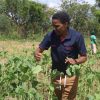
Blamed for ‘Causing’ Droughts: Zimbabwe’s LGBTQI Community Faces Climate Crisis Head-on
Takudzwa Saruwaka is hoeing weeds in a cowpea field in eastern Zimbabwe one morning in February, trying to beat torrential rains threatening from the gray clouds above.
World’s Largest Religious Gathering Becomes Trans-Inclusive Despite Controversies
Despite a blazing sun and growing heat, Pavitra Nandagiri sits on a cot smiling. Clad in a saffron robe and headgear with her forehead painted with turmeric and vermillion, Nandagiri is a Mahamandaleshwar—one of the highest-ranking monks of the Kinnar Akhada (Transgender Arena) at the Maha Kumbh, the world’s largest religious gathering currently underway in northern India.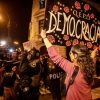
What is Not Good for Democracy in Peru is Not Good for Women
"We are facing a deeply conservative government that is opening the doors to all kinds of setbacks. We have a failed state with a democracy that is no longer a democracy," said Gina Vargas, a Peruvian feminist internationally recognized for her contributions to women's rights.
The Reckless and Dangerous Misogyny of Zuckerberg and Musk
In anticipation of Donald Trump’s inauguration his gold-studded Florida estate, Mar-a-Lago, is at the heart of political power games, where influential businessmen like Mark Zuckerberg and Elon Musk are positioning themselves as key players in his orbit. Apparently unfazed by legal controversies and scandals, Trump is preparing for his return in collusion with already powerful men, who in their pursuit of personal gain and political influence reflect a disturbing trend of billionaire oligarchy merging with politics. A worrying development that might have significant consequences for the future of free speech and women’s rights.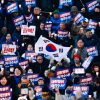
South Korea’s Democracy Defended
Democracy is alive and well in South Korea. When President Yoon Suk Yeol tried to impose martial law, the public and parliamentarians united to defend it. Now Yoon must face justice for his power grab.
UNiTE: Violence Against Women—A Plight That Spares No Country Across All Continents
Despite the 1,583 legislative measures in 193 countries around the world, violence against women has not been eradicated or even abated.
Human Rights Violations Against Women Rises in Afghanistan, While Taliban Enjoy Impunity
It has been three years since the 2021 Taliban offensive and the humanitarian crisis in Afghanistan continues to grow more dire. Human rights violations are committed by the Taliban insurgent group on a frequent basis, with gender-based discrimination and violence being regular occurrences for millions of Afghan women. Gender inequalities are pervasive, with freedom of speech and mobility being significantly limited. The humanitarian crisis is exacerbated by widespread impunity enjoyed by members of the Taliban.
How Megatrends Affect Advancement of Gender Equality & Women’s Empowerment in Asia and the Pacific
The Beijing Declaration and Platform for Action, adopted in 1995 during the Fourth World Conference on Women, remains a cornerstone in the global pursuit of gender equality and women's empowerment. With the Asia-Pacific Ministerial Conference on the Beijing+30 Review fast approaching, now is the time to reflect on the progress made and the challenges that remain in Asia and the Pacific.
Meet the Young Women Arrested for Fighting Corruption in Uganda
Until recently, Margaret Natabi would never have dreamed of taking her anti-corruption fight on the streets of Uganda’s capital, Kampala.« Previous Page — Next Page »





The Week with IPS

NEXT STOP - SDGs
Tracking global progress towards a sustainable world
Tracking global progress towards a sustainable world
