Languages
Monday, September 28, 2026



News and Views from the Global South
Gender
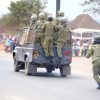
A Glimpse into Tanzania’s Political Turmoil Ahead of 2025 Election
At a rally to mark International Youth Day on August 12 in Tanzania’s southern Mbeya region, John Mnyika stood with a determined expression, addressing his supporters. The air was charged with anticipation. Mnyika, the Secretary-General of Tanzania’s opposition party, Chadema, was preparing to speak about the upcoming elections when the chaos erupted. Without warning, heavily armed police officers stormed the event, grabbed Mnyika, and dragged him away.
Overlapping Crises Hinder Global Social Development and Poverty Reduction
Social development in a global context shows the risk of trending downwards and not recovering if countries do not minimize the long-term impacts of multiple crises and work towards building up their resilience. As much as this will require national political will, it will also need global cooperation for it to be possible.
International Day for the Eradication of Poverty 2024

Our world has witnessed unprecedented levels of economic development. The advance of our technological capabilities continues unabated. Our financial resources continue to grow.
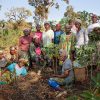
The Growing Gender Gap in Social Protection
Published ahead of the International Day for the Eradication of Poverty on 17 October, UN Women issued the 2024 World Survey on the Role of Women in Development Report. This is the UN Secretary-General’s Report, which is mandated by the Economic and Financial Committee (Second Committee) of the UN General Assembly, and focuses on macroeconomic policy, sustainable development, financing and poverty eradication.
A Staggering 2.0 Billion Women Live With No Access to Social Protection
The growing gender gap between men and women is reflected not only in the world’s highest political hierarchies but also in the daily social and economic lives—with most women fighting a losing battle against poverty. The latest flagship report from UN Women reveals a widening gender gap in social protection -– the raft of policies, including cash benefits, unemployment protection, pensions and healthcare – which leaves women and girls more vulnerable to poverty.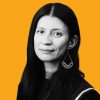
‘We Continue Working to Make Sure Afghan Girls and Women Are Heard and Not Forgotten’
CIVICUS discusses Afghanistan’s system of gender apartheid with Shaharzad Akbar, Executive Director of Rawadari, a human rights organisation founded by Afghans in exile.
Child Exploitation on the Internet Threatens the Next Generation
On October 11, the United Nations (UN) and its affiliated organizations hosted a conference discussing the increasingly dangerous and exploitative environment that plagues the internet and what can be done to protect children from being exposed to it. Speakers at this conference detailed the developing technologies that threaten children, such as Artificial Intelligence (AI), which often facilitates sexual abuse, exploitation, and human trafficking. In a world that is centered around digitization and innovation, it is crucial to keep the internet a safe space for the most vulnerable population, children.
Afghan Girls Share Their Despair and Visions for the Future Under Taliban Rule
In line with the 2024 International Day of the Girl theme, ‘Girls’ vision for the future’, a dozen Afghan girls speak up to express their hardships and resilience. They also share their visions for the future.
In Zimbabwe’s Rural Areas, Bicycles Keep Girls in School
Rejoice Muzamani is studying in preparation for her next paper during the end-of-term examinations at Mwenje Primary School in Chiredzi, southeast Zimbabwe. The 13-year-old girl, who is in Grade 7 or final year of primary school, is not worried about leaving school early to make the 7-kilometer journey back home before dusk, risking attacks from wild animals.
The Future of Civic Freedoms: Lessons from My Time at CIVICUS
When I joined CIVICUS in 2019, I came in with two decades of work on influencing and monitoring public policies through grassroots and global activism. Joining CIVICUS as Secretary-General felt familiar, like returning home after a period of separation. My first international role in 2006 – as Campaign Director of the Global Call to Action against Poverty – was initially hosted by CIVICUS. One of my most memorable campaign endeavours, The World We Want 2015, was conceptualised in the basement of CIVICUS House in 2011.
Republicans Blame Women for America’s Low Birth Rate
Countries around the world are experiencing low birth rates. In 2022, more than one hundred countries, representing two-thirds of world’s population, experienced fertility rates below the replacement level of 2.1 births per woman.
May Teacher Voices Echo Around the Globe
We must build a new social contract for education – a contract based on equality, equity, and universal human rights. At the center of our global efforts to ensure education for all, we must put teachers first in everything we do. They are frontlines heroes who deliver every day to educate children, cultivate young talent, and build a strong society. They are the substitute parents, the mentors and the ones who contribute to shaping the identify of a child in war, in refuge or in climate change.
Dominican Republic Orders the Expulsion of Thousands of Haitian Migrants
Over the past few months, the escalation of gang violence and mass displacement in Haiti have been of great concern for humanitarian organizations. Severe levels of armed violence have resulted in significant instability, with food insecurity, sexual violence, civilian casualities, and restricted freedom of movement plaguing the nation. Displacement cases have risen sharply, to the extent that the Dominican Republic has ordered the return of thousands of Haitian migrants.
Prostitution an ‘Egregious Violation of Human Rights’—UN Special Rapporteur
Reem Alsalem, the UN Special Rapporteur on Violence Against Women and Girls, calls prostitution a “system of violence” that does not benefit society at all, especially the women and girls forced into this system.
Cuba’s Coastal Dwellers Mitigate the Effects of Climate Change
Every time a hurricane clouds the skies over the city of Manzanillo, in the eastern Cuban province of Granma, the sea pounds the Litoral neighbourhood, forcing many of the 200 families who live there to evacuate inland because of flooding. When the weather is calm, the sea penetrates subtly and constantly, salinizing the water table and eroding the coast, affecting the foundations of houses and artesian wells.
How the Geneva Consensus Declaration Threatens International Cooperation and Development
Last week, UN member states adopted the Pact of the Future – and its two annexes: the Global Digital Compact and the Declaration for Future Generations. These action-oriented documents are envisaged to counter emerging threats to development and acceleration of progress on Agenda 2030. Nonetheless, there remains little political prioritization of reproductive justice on this agenda.
Georgia’s Dangerous Anti-LGBTQI+ Law
Georgia’s ruling party has put LGBTQI+ people firmly in the firing line ahead of next month’s election. On 17 September, parliament gave final approval to a highly discriminatory law that empowers the authorities to censor books and films with LGBTQI+ content, stop discussion of LGBTQI+ issues in schools, ban people from flying rainbow flags and prevent Pride events. The law excludes LGBTQI+ people from adopting children, bans gender affirmation surgery and refuses to recognise same-sex marriages of Georgians conducted abroad.
Inequality in Access to Abortion Rights in Latin America
The struggle for women's right to decide in Latin America and the Caribbean, for their access to legal, safe and free abortion continues in the region, with some countries fully criminalising it, others with severe regulations, and a few guaranteeing better conditions, while threats of regression persist.
World Governments, NGOs Announce $350m Investments in Sexual and Reproductive Health Services
On the heels of the Summit of the Future and the sidelines of the United Nations High-Level Meeting Week, governments and philanthropies pledged to commit at least USD 350 million to boost family planning, sexual and reproductive health and supplies on the national and global level. As enshrined in the newly-adopted Pact for the Future, seeking new international finance models is critical to solving the issues that the world faces today. The decision to pledge forward is a demonstration of commitment to ongoing health issues.
The Crucial Connection Between Climate Change and Mental Health
“Young people today are growing up with enormous uncertainty about their future. Climate change is a major driver of that uncertainty, but we weren’t talking enough about how the climate crisis impacts mental health,” researcher Dr. Emma Lawrance told IPS from her family home in Australia.
Sustainable Peace in Afghanistan Needs Women on the Frontlines
Women in Afghanistan have continued to advocate for their rights and have called on the international community to not only stand in solidarity but to take decisive action to prevent the erosion of their rights and presence in public space.« Previous Page — Next Page »


Women make up half the world's population, but don't nearly share half of the world's wealth, well-being and opportunity. Two-thirds of the world poor are women, disproportionally exposing women to precarious living conditions, disease and unmitigated natural disasters. The media, meanwhile, remains a male-dominated sector in much of the world, contributing to women's voices lacking a crucial amplifier to put their concerns on political agendas and unleash the development potential of their ingenuity. Rather than then stereotypical victims of local and global forces, women are also organizer, innovators, conservators and community builders. These are some of their stories.

The Week with IPS

NEXT STOP - SDGs
Tracking global progress towards a sustainable world
Tracking global progress towards a sustainable world
