Languages
Thursday, October 1, 2026



News and Views from the Global South
Gender
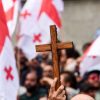
Georgia’s Dangerous Anti-LGBTQI+ Law
Georgia’s ruling party has put LGBTQI+ people firmly in the firing line ahead of next month’s election. On 17 September, parliament gave final approval to a highly discriminatory law that empowers the authorities to censor books and films with LGBTQI+ content, stop discussion of LGBTQI+ issues in schools, ban people from flying rainbow flags and prevent Pride events. The law excludes LGBTQI+ people from adopting children, bans gender affirmation surgery and refuses to recognise same-sex marriages of Georgians conducted abroad.
Inequality in Access to Abortion Rights in Latin America
The struggle for women's right to decide in Latin America and the Caribbean, for their access to legal, safe and free abortion continues in the region, with some countries fully criminalising it, others with severe regulations, and a few guaranteeing better conditions, while threats of regression persist.
World Governments, NGOs Announce $350m Investments in Sexual and Reproductive Health Services
On the heels of the Summit of the Future and the sidelines of the United Nations High-Level Meeting Week, governments and philanthropies pledged to commit at least USD 350 million to boost family planning, sexual and reproductive health and supplies on the national and global level. As enshrined in the newly-adopted Pact for the Future, seeking new international finance models is critical to solving the issues that the world faces today. The decision to pledge forward is a demonstration of commitment to ongoing health issues.
The Crucial Connection Between Climate Change and Mental Health
“Young people today are growing up with enormous uncertainty about their future. Climate change is a major driver of that uncertainty, but we weren’t talking enough about how the climate crisis impacts mental health,” researcher Dr. Emma Lawrance told IPS from her family home in Australia.
Sustainable Peace in Afghanistan Needs Women on the Frontlines
Women in Afghanistan have continued to advocate for their rights and have called on the international community to not only stand in solidarity but to take decisive action to prevent the erosion of their rights and presence in public space.
Violence, Displacement, and Hunger Plagues Somalia
Somalia is currently in the midst of a dire humanitarian crisis that threatens to destabilize the nation’s security. This crisis is a result of the Somali Civil War, which began in 1991. Altercations between clan-based operations have caused a host of issues over the years, including over 596 civilian casualties, according to the United Nations Assistance Mission in Somalia (UNSOM). Tensions have greatly intensified in 2024, with levels of internal displacement and food insecurity increasing rapidly.
Gang Violence and Mass Displacement Ravage Haiti
Amid the ongoing civil unrest in Haiti due to gang violence, levels of internal displacement have soared. Mass internal displacements in Haiti have led to a host of adverse consequences. This includes a disruption of schooling, increased levels of violence and exploitation, and limited access to essential services such as healthcare.
Summit of the Future: On the Need for Civil Society to Make Its Voice Count at the UN
In a context of shrinking civic space that threatens civil society participation in an increasing number of countries and all the way to some UN processes, world leaders will gather to discuss the “multilateralism we want” at the Summit of the Future at the United Nations headquarters in New York.
Using Education To Stop the Generational Cycle of Violence Against Women in the Pacific
Parliamentary representation by women in Pacific Island countries remains stubbornly low at 8.4 percent. Yet women leaders across the region have been meeting every year for the past four decades to discuss goals and drive action to address gender inequality and the most pressing development challenges in the Pacific.
Amid Great Challenges, Hope Reigns As More Children Reached with Education Support
Amid unprecedented global challenges and a growing list of countries in crisis, there is an existential threat to decades of development gains—with the global community marked by intensified armed conflict, forced displacements, and the debilitating effects of climate crises.
ECW Delivers Holistic Education Against All Odds, But More Funding Needed
Education Cannot Wait (ECW) has delivered quality education to children in crisis "against all odds," ECW Executive Director Yasmine Sherif said at the United Nations today. "And you can imagine the odds. We are seeing more armed conflict, a growth of climate-induced disasters and the biggest refugee movement since World War 2."
We Stand with the Girls and Women of Afghanistan
Today, we stand with solemn hearts as the world marks this week the three-year ban on girls’ secondary education in Afghanistan. Today and every day, we must stand up for the millions of Afghan girls and women living under the yoke of gender-apartheid: systematized and institutionalized oppression, exclusion, and marginalization based exclusively on their gender. However, standing in solemnity for their suffering is not enough. We must act to remove the oppression and injustice. Against all odds, we must continue to deliver results to provide the girls access to an education well beyond grade sixth.
Building Inclusive Smart Cities: Bridging the Gender Gap
When the Beijing Declaration was adopted in 1995, it called for the removal of systematic and structure barriers that prevent women and girls from enjoying their human rights across social, economic, political and environmental domains. Over the last decade, the proportion of population with access to the internet has increased from 36 per cent in in 2013 to 67 percent today.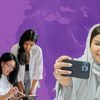
Women Lead Record Number of Central Banks, but More Progress is Needed
Women are leading more central banks than ever before, thanks to appointments in the past year, but recent gains still leave the share of female governors far short of parity.
How Much Damage Can Be Done by a Few? The Tragedy in Gaza, Part 2
Hungarian-Swedish microbiologist George Klein, who in 1944 escaped from a train destined to Auschwitz, once wrote that his father jokingly used to say that he had caused World War I. While working as a medical doctor in Bosnia he had cured a young boy called Gavrilo Princip from a deadly disease. As an adult Gavrilo shot and killed Archduke Franz Ferdinand, presumptive heir to the throne of Austria-Hungary, whose death became the immediate cause of World War I. Can a single person, knowingly or unknowingly, change the course of history? We talk about “Putin’s war” and “Trump’s USA”. Are individuals so important? Lev Tolstoy wrote in War and Peace that it was absurd to attribute historical events to acts of individuals. The French revolution could quite easily have produced another person like Napoleon. He insisted that the French emperor knew as little of what was happening in the battle of Borodino as the meanest soldier serving under him.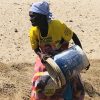
El Niño-Induced Water Crisis Drubbing Villagers in Zimbabwe
Side-by-side with fellow male villagers, Enia Tambo uses a white 25-liter plastic bucket to dig out mounds of sand in the Vhombozi River, in Mudzi district located in Zimbabwe’s Mashonaland East Province. The woman, in her late 50s, is digging to reach the water that is lying deep beneath the soil.
Rural Survival: Guardians of Mother Earth Saving Mau, Revitalizing Native Lands
The Great Rift Valley is part of an intra-continental ridge system that runs through Kenya from north to south. A breathtaking, diverse mix of natural beauty that includes dramatic escarpments, highland mountains, cliffs and gorges, lakes and savannas. It is also home to one of Africa’s greatest wildlife reserves—the Maasai Mara National Reserve.
At 76, India’s ‘Super Granny’ to Run Marathon in Australian Masters Event
Kmoin Wahlang, a 76-year-old woman, starts her running training every morning at 4 a.m. Dressed in track pants, a jacket, and running shoes, she sets out to navigate the hilly terrain of the small village of Shngimawlein in the southwest Khasi Hills district of Meghalaya, a state in northeastern India.
INDIA: ‘Civil Society Organisations Are at the Forefront of the Fight Against Gender-based Violence’
CIVICUS discusses the recent wave of protests against gender-based violence (GBV) in India with Dr Kavitha Ravi, a member of the Indian Medical Association (IMA).

Lack of Accountability for War Crimes in Libya Raises Instability
The situation in Libya continues to grow more dire every year since the emergence of the al-Kaniyat militant group. From 2013 to 2022, al-Kaniyat had been responsible for a multitude of human rights violations, including mass killings, kidnappings, forced displacements, torture, and sexual violence. The lack of accountability for these injustices has spurred renewed conflict, which threatens to destabilize Libya years later.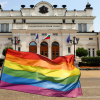
New Bulgarian LGBT+ Law Marginalizes Communities, Rights Groups Warn
A law banning the portrayal of LGBT+ identities in Bulgarian educational institutions is just the latest piece of repressive legislation in a wider assault on minorities and marginalized communities across parts of Europe and Central Asia, rights groups have warned.« Previous Page — Next Page »


Women make up half the world's population, but don't nearly share half of the world's wealth, well-being and opportunity. Two-thirds of the world poor are women, disproportionally exposing women to precarious living conditions, disease and unmitigated natural disasters. The media, meanwhile, remains a male-dominated sector in much of the world, contributing to women's voices lacking a crucial amplifier to put their concerns on political agendas and unleash the development potential of their ingenuity. Rather than then stereotypical victims of local and global forces, women are also organizer, innovators, conservators and community builders. These are some of their stories.

The Week with IPS

NEXT STOP - SDGs
Tracking global progress towards a sustainable world
Tracking global progress towards a sustainable world
