Languages
Tuesday, November 17, 2026



News and Views from the Global South
Global Geopolitics
Small Step Forward in Resolving Okinawa Base Impasse
It's a deal that's been more than 15 years in the making and the unmaking. The United States and Japan have been struggling since the 1990s to transform the U.S. military presence on the island of Okinawa, the southernmost prefecture of Japan.
U.S.-Afghan Pact Won’t End War – Or SOF Night Raids
The optics surrounding the Barack Obama administration's "Enduring Strategic Partnership" agreement with Afghanistan and the Memorandums of Understanding accompanying it emphasise transition to Afghan responsibility and an end to U.S. war.Filipinos Decry New U.S. Military Agreement
Civil society groups and local politicians are reacting with anger to a new agreement by the United States that would increase its military engagement with the Philippines.U.S.: Israeli Dissent May Create More Space for Iran Nuclear Deal
The threat of a military attack on Iran's nuclear facilities this year appears to have substantially subsided over the past several weeks as a result of several developments, including the biting criticisms voiced recently by former top national security figures of Israeli Prime Minister Benjamin Netanyahu and his defence minister, Ehud Barak.Indonesia Knocks at BRICS’ Door
Indonesia’s keen interest in becoming the newest member of BRICS – a bloc of emerging-market nations comprised of Brazil, Russia, India, China and South Africa – has sparked off a round of debate on the future and efficacy of South-South groupings.Report on Iran’s Nuclear Fatwa Distorts Its History
The Barack Obama administration's new interest in the 2004 religious verdict, or "fatwa", by Iran's Supreme Leader Ayatollah Ali Khamenei banning the possession of nuclear weapons, long dismissed by national security officials, has prompted the New York Times to review the significance of the fatwa for the first time in several years.Taliban Attacks Weaken U.S., NATO Position
Sunday's well-orchestrated - if unsuccessful - attacks by Taliban forces on Kabul and three provincial capitals in eastern Afghanistan could further shake ebbing public confidence in the U.S. and its allies that their strategy for securing Afghanistan is working.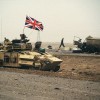
Economic Crisis Takes a Bite From Military Spending
The global economic crisis - which had its origins back in 2008 - has had a spreading negative impact on military spending worldwide, according to a new study released by the Stockholm International Peace Research Institute (SIPRI).
U.S.’s Kim Prevails in First World Bank President Contest
Capping an unprecedented multinational contest for the post, the World Bank's executive board upheld a nearly 70-year tradition Monday by selecting the U.S. candidate, global health expert Jim Yong Kim, to be the Washington-based agency's next president.North Korea’s Failed Fireworks
In early February, Iran launched its third successful commercial satellite in three years. The Barack Obama administration, the United Nations, and the news media barely acknowledged the accomplishment. North Korea, on the other hand, has created a furor each of the three times its satellites failed to reach orbit.
War on Terror Traumatises Pakistani Women
Collateral damage caused by the ‘war on terror’, prosecuted by the United States and its allies in Afghanistan since 2001, may well extend to psychological trauma sustained by thousands of women in the bordering areas of northwestern Pakistan.U.S. Allies Call for Drug Legalisation
The Summit of the Americas, normally a subdued tri-annual gathering of regional leaders, could be more interesting than usual this year, as right-wing governments are set to clash with their U.S. allies over the war on drugs.Tighter Security Ignores Root Causes of Somali Crises
As Western forces step up their military presence in Somalia, locals and experts are worried that the country – struggling under multiple crises from piracy, to drought – is doomed to churn in a cycle of violence that fails to acknowledge root causes of the problems.U.S.-Israel Deal to Demand Qom Closure Threatens Nuclear Talks
The Barack Obama administration has adopted a demand in the negotiations with Iran beginning Saturday that its Fordow enrichment facility must be shut down and eventually dismantled based on an understanding with Israel that risks the collapse of the negotiations.U.S., Latin America Growing More Distant, Warns Think Tank
Relations between the United States and Latin America have "grown more distant" in importance part due to the latter's persistent disagreement with U.S. policies on immigration, drugs, and Cuba, according to a new report released here Wednesday on the eve of this year's Summit of the Americas in Cartagena, Colombia.Stop Threatening, Start Talking
We are currently witnessing the worst features of the state system: trading insults and threats, sanctions, readiness to use extreme violence, forward deployment of U.S. troops in Israel as hostages to guarantee U.S. involvement in a possible war, disregard for common people and the effects of warfare in the Middle East and the world.Eastern Europe, a Cold War Relic, Still Alive at U.N.
A politically intense battle between Lithuania and Serbia for the post of president of the next General Assembly sessions has shifted the focus on an anomaly of the Cold War era: the existence of the long-defunct Eastern Europe.Cold Spring Forecast in Iran-Turkey Relations
Ties between Turkey and Iran appear to be headed downward in the wake of Tehran's statement earlier this week that it would prefer not to hold the negotiations with the P5+1 group on its nuclear programme in Istanbul, as had been announced last week by Turkish Prime Minister Recep Tayyip Erdogan and U.S. State Secretary Hillary Clinton.Uzbekistan Takes Hardline Approach on Containing Turkish Soft Power
Religion is a wedge that is driving Uzbekistan and Turkey apart.
OP-ED: The United States as Number Two
Politicians in the United States must ritualistically assert that the U.S. is and always will be the world's leading economic, military and political power. This chant may help win elections in a country where respectable people deny global warming and evolution, but it has nothing to do with the real world.
Q&A: U.S. Funding Cuts in UNESCO More Audible than Visible
When the 194-member General Conference of the U.N. Educational, Scientific and Cultural Organisation (UNESCO) was on the verge of admitting Palestine as a full-fledged member of the Paris-based U.N. agency last year, the United States warned against it - and threateningly.« Previous Page — Next Page »


Is the world dominated by three great empires -- the U.S.A, China and the European Union? How much power do the great behemoths of the south -- India, Brazil, and South Africa -- wield? And where does Russia fit in that equation? Are we in the middle of a new Cold War? What are the implications of the armed conflict with Georgia? What about the new axis: Venezuela-Russia? And what role does Turkey play? What about issues like Climate Change and other global forces like the food crisis and the high energy prices? How is all this reshaping the world's forces? IPS looks for some answers.

The Week with IPS

NEXT STOP - SDGs
Tracking global progress towards a sustainable world
Tracking global progress towards a sustainable world
